Loading...
Analysis will be generated on first visit.
Scores and timeline are available below. The page will refresh automatically when ready.
Ancus Marcius vs Napoleon Bonaparte
Napoleon Bonaparte leads by 27.4 pts · 2 figures compared
…

Ancus Marcius
Emperor · Ancient
55.0Total
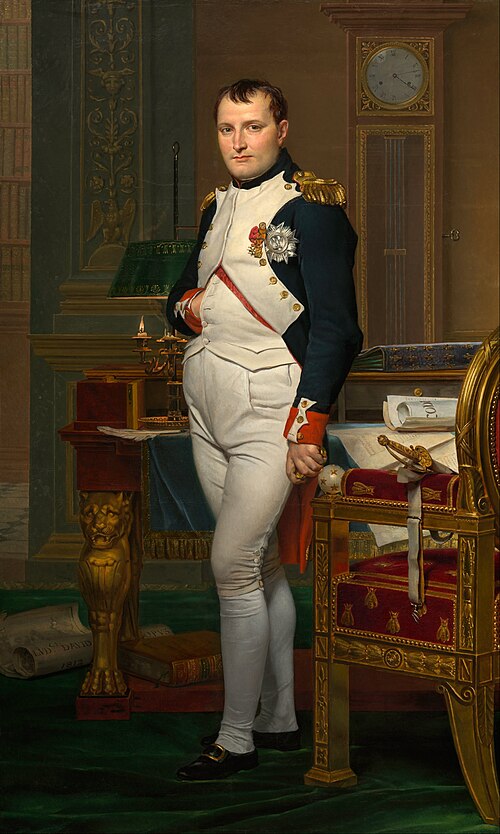
Napoleon Bonaparte
General · Modern
82.4Total
Basic Information
Born
-642
1769
Died
-617
1821
Era
Ancient
Modern
Nationality
Roman Kingdom
France
Occupation
Emperor
General
Civilization
Western
Western
Score Comparison
Military (10%)
39.7
94.0
Political (20%)
49.0
75.0
Influence (20%)
68.5
82.0
Legacy (20%)
61.9
78.0
Leadership (15%)
42.0
80.0
Strategy (15%)
58.8
93.0
TOTAL
55.0
82.4
Rankings
🥇
Napoleon BonaparteLeader
Mil: 94.0Pol: 75.0Inf: 82.0
82.4
🥈
Ancus Marcius
Mil: 39.7Pol: 49.0Inf: 68.5
55.0
+27.4 behind
How This Comparison Works
Algorithm
Each figure is scored on 6 dimensions (0—100 scale) based on structured historical data: Military (10%), Political (20%), Influence (20%), Legacy (20%), Leadership (15%), Strategy (15%). The weighted total produces the final ranking.
Data Sources
Scores are computed from structured sub-indicators in the database. Scale factors adjust for era (Ancient ×0.85, Modern ×1.0) and civilization size (Eastern ×1.05, Other ×0.80) to account for differences in population and military scale.
Maximum 3 Figures
Comparisons are limited to 2—3 figures to ensure readability and statistical meaningfulness.
Error Margins
±5 points per dimension — Sub-scores are derived from historical records with inherent uncertainty. Two figures within 5 points on a dimension should be considered roughly equivalent in that area.
Total Score Accuracy
±3 points overall — The weighted combination of 6 dimensions produces a total score with approximately ±3 points of uncertainty. Differences of less than 3 points are not statistically significant— the figures are effectively tied.
Known Limitations
- Historical records are incomplete and uneven across civilizations
- Figures from oral-tradition societies may be underrepresented
- Occupation labels can misclassify multi-role figures
- Scores measure capability and impact, not moral character
- Quantitative scoring is a comparison tool, not absolute truth
Capability Radar
Military (10%) — Battles & Warfare
Battles
20
95
Win Rate
25
90
Expansion
35
95
Political (20%) — Governance & Reform
Reform
45
95
Diplomacy
35
80
Economy
50
85
Influence (20%) — Cultural & Global Reach
Cultural
30
85
Global
20
90
Legacy (20%) — Historical Impact
Historical
40
95
Longevity
35
90
Leadership (15%) — Power & Stability
Tenure
40
85
Stability
45
70
Strategy (15%) — Tactics & Innovation
Strategy
30
95
Tactics
20
98
Reform
15
92
Analysis will be generated on first visit.
Scores and timeline are available below. The page will refresh automatically when ready.
Ancus Marcius — Complete Timeline
640 BC
Foundation of OstiaOther◆ Major
Ancus Marcius founded the port city of Ostia at the mouth of the Tiber River. This colony served as Rome's primary naval base and commercial port, facilitating trade and military control over the Tyrrhenian Sea and the salt flats.
ColonizationPort CityRoman Trade
Impact: regionalconstructive
Construction of the Pons SubliciusCultural
Ancus Marcius ordered the construction of the Pons Sublicius, the first bridge across the Tiber River in Rome. This wooden bridge improved transportation and communication between Rome and the Janiculum hill, and became a strategic military structure.
InfrastructureBridgeTiber River
constructive
Annexation of the Janiculum HillOther
Ancus Marcius incorporated the Janiculum hill into the city of Rome, fortifying it with walls. This strategic hill on the west bank of the Tiber provided a defensive position and was used as a citadel against Etruscan threats.
Urban ExpansionFortificationJaniculum
constructive
Establishment of the Salt WorksOther
Ancus Marcius established state-controlled salt works near Ostia, securing a vital resource for Rome. Salt was essential for food preservation and trade, and this monopoly generated revenue and ensured supply for the growing Roman population.
Economic PolicySalt ProductionState Monopoly
Impact: nationalconstructive
630 BC
War with the LatinsWar◆ Major
Ancus Marcius waged war against the Latin tribes, defeating them and expanding Roman territory. He annexed several Latin towns and forcibly relocated their populations to Rome, increasing the city's population and extending Roman hegemony over Latium.
Roman ExpansionLatin WarTerritorial Gain
Impact: regional
Similar Comparisons
Comments & Discussion
BRIDGE-BUILDER BASHER6/17/2026
"Comparing Ancus Marcius to Napoleon is like comparing a creek to a tidal wave. Marcius built a bridge—big deal, the Etruscans had roads centuries earlier. He was a placeholder king, not a conqueror. Napoleon rewired warfare with the corps system and mass conscription, fighting 60 battles in two decades. Ancus expanded Rome by 15 kilometers, maybe. One shaped modern history, the other built a plank over a river."
安库斯批评者6/17/2026
“拿安库斯·马基乌斯和拿破仑比,好比拿木筏比战舰。他建了座木桥——啧,伊特鲁里亚人早就有路了。拿破仑大革命后十四年横扫欧洲,用军团制和创新战术改写战争史,而罗马这块小破城还在数山头。别把修港口的经理当征服者,格局差了十万八千里。”