Loading...
Analysis will be generated on first visit.
Scores and timeline are available below. The page will refresh automatically when ready.
Kato Takaaki vs Napoleon Bonaparte
Napoleon Bonaparte leads by 14.1 pts · 2 figures compared
…
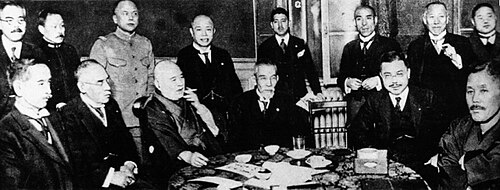
Kato Takaaki
Politician · Modern
68.3Total
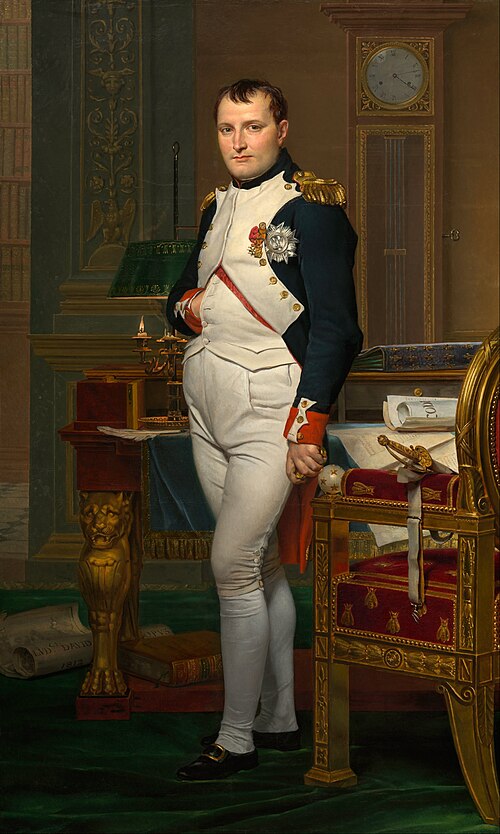
Napoleon Bonaparte
General · Modern
82.4Total
Basic Information
Born
1860
1769
Died
1926
1821
Era
Modern
Modern
Nationality
Japan
France
Occupation
Politician
General
Civilization
Eastern
Western
Score Comparison
Military (10%)
22.8
94.0
Political (20%)
82.6
75.0
Influence (20%)
73.9
82.0
Legacy (20%)
66.6
78.0
Leadership (15%)
83.3
80.0
Strategy (15%)
59.6
93.0
TOTAL
68.3
82.4
Rankings
🥇
Napoleon BonaparteLeader
Mil: 94.0Pol: 75.0Inf: 82.0
82.4
🥈
Kato Takaaki
Mil: 22.8Pol: 82.6Inf: 73.9
68.3
+14.1 behind
How This Comparison Works
Algorithm
Each figure is scored on 6 dimensions (0—100 scale) based on structured historical data: Military (10%), Political (20%), Influence (20%), Legacy (20%), Leadership (15%), Strategy (15%). The weighted total produces the final ranking.
Data Sources
Scores are computed from structured sub-indicators in the database. Scale factors adjust for era (Ancient ×0.85, Modern ×1.0) and civilization size (Eastern ×1.05, Other ×0.80) to account for differences in population and military scale.
Maximum 3 Figures
Comparisons are limited to 2—3 figures to ensure readability and statistical meaningfulness.
Error Margins
±5 points per dimension — Sub-scores are derived from historical records with inherent uncertainty. Two figures within 5 points on a dimension should be considered roughly equivalent in that area.
Total Score Accuracy
±3 points overall — The weighted combination of 6 dimensions produces a total score with approximately ±3 points of uncertainty. Differences of less than 3 points are not statistically significant— the figures are effectively tied.
Known Limitations
- Historical records are incomplete and uneven across civilizations
- Figures from oral-tradition societies may be underrepresented
- Occupation labels can misclassify multi-role figures
- Scores measure capability and impact, not moral character
- Quantitative scoring is a comparison tool, not absolute truth
Capability Radar
Military (10%) — Battles & Warfare
Battles
13
95
Win Rate
15
90
Expansion
23
95
Political (20%) — Governance & Reform
Reform
75
95
Diplomacy
70
80
Economy
55
85
Influence (20%) — Cultural & Global Reach
Cultural
40
85
Global
45
90
Legacy (20%) — Historical Impact
Historical
60
95
Longevity
50
90
Leadership (15%) — Power & Stability
Tenure
60
85
Stability
50
70
Strategy (15%) — Tactics & Innovation
Strategy
24
95
Tactics
26
98
Reform
29
92
Analysis will be generated on first visit.
Scores and timeline are available below. The page will refresh automatically when ready.
Kato Takaaki — Complete Timeline
1924 AD
Formation of the Kenseikai-CabinetPolitical Action
Kato became Prime Minister in June 1924, leading a coalition cabinet of the Kenseikai, Seiyukai, and Kakushin clubs. This government, known as the 'Mitsubishi Cabinet' due to Kato's ties to the Mitsubishi zaibatsu, pursued moderate foreign policy and domestic reforms.
Cabinet FormationCoalition Government
Impact: national
1925 AD
Enactment of Universal Male Suffrage LawReform◆ Major
As Prime Minister, Kato Takaaki pushed through the Universal Male Suffrage Law, which abolished tax-based voting qualifications and granted voting rights to all male citizens aged 25 and over. This expanded the electorate from about 3 million to over 12 million, marking a major step toward democracy in Japan.
DemocracyVoting RightsTaisho Democracy
Impact: nationalprogressive
Passage of the Peace Preservation LawPolitical Action◆ Major
Kato's government also enacted the Peace Preservation Law, which criminalized advocating for the abolition of private property or altering the national polity. This law was used to suppress leftist political movements and marked a turn toward authoritarianism.
RepressionAuthoritarianismPolitical Control
Impact: nationaldestructive
Normalization of Relations with the Soviet UnionPolitical Action◆ Major
Kato's government signed the Soviet-Japanese Basic Convention, establishing diplomatic relations with the Soviet Union. Japan recognized the Soviet government and withdrew troops from northern Sakhalin in exchange for oil and coal concessions.
DiplomacySoviet UnionForeign Policy
Impact: regionalconstructive
1926 AD
Death in OfficeOther◆ Major
Kato Takaaki died of pneumonia on January 28, 1926, while still serving as Prime Minister. His death ended the Kenseikai-led government and marked the end of the Taisho Democracy era's reformist momentum.
DeathEnd of Era
Impact: nationaltragic
Similar Comparisons
Comments & Discussion
No comments yet. Be the first to share your thoughts!