Loading...
Analysis will be generated on first visit.
Scores and timeline are available below. The page will refresh automatically when ready.
John II of Aragon vs Julius Caesar
Julius Caesar leads by 12.3 pts · 2 figures compared
…
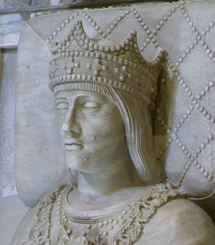
John II of Aragon
Emperor · Medieval
71.0Total
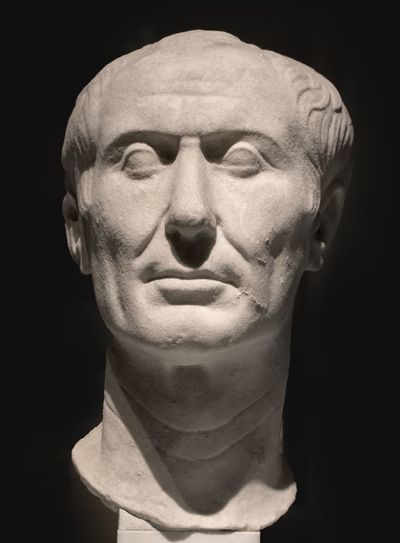
Julius Caesar
General · Ancient
83.3Total
Basic Information
Born
1398
-100
Died
1479
-44
Era
Medieval
Ancient
Nationality
Aragon
Roman Republic
Occupation
Emperor
General
Civilization
Western
Western
Score Comparison
Military (10%)
34.6
88.0
Political (20%)
85.9
78.0
Influence (20%)
74.4
85.0
Legacy (20%)
68.0
82.0
Leadership (15%)
85.0
82.0
Strategy (15%)
61.1
88.0
TOTAL
71.0
83.3
Rankings
🥇
Julius CaesarLeader
Mil: 88.0Pol: 78.0Inf: 85.0
83.3
🥈
John II of Aragon
Mil: 34.6Pol: 85.9Inf: 74.4
71.0
+12.3 behind
How This Comparison Works
Algorithm
Each figure is scored on 6 dimensions (0—100 scale) based on structured historical data: Military (10%), Political (20%), Influence (20%), Legacy (20%), Leadership (15%), Strategy (15%). The weighted total produces the final ranking.
Data Sources
Scores are computed from structured sub-indicators in the database. Scale factors adjust for era (Ancient ×0.85, Modern ×1.0) and civilization size (Eastern ×1.05, Other ×0.80) to account for differences in population and military scale.
Maximum 3 Figures
Comparisons are limited to 2—3 figures to ensure readability and statistical meaningfulness.
Error Margins
±5 points per dimension — Sub-scores are derived from historical records with inherent uncertainty. Two figures within 5 points on a dimension should be considered roughly equivalent in that area.
Total Score Accuracy
±3 points overall — The weighted combination of 6 dimensions produces a total score with approximately ±3 points of uncertainty. Differences of less than 3 points are not statistically significant— the figures are effectively tied.
Known Limitations
- Historical records are incomplete and uneven across civilizations
- Figures from oral-tradition societies may be underrepresented
- Occupation labels can misclassify multi-role figures
- Scores measure capability and impact, not moral character
- Quantitative scoring is a comparison tool, not absolute truth
Capability Radar
Military (10%) — Battles & Warfare
Battles
45
95
Win Rate
40
92
Expansion
50
97
Political (20%) — Governance & Reform
Reform
55
90
Diplomacy
70
85
Economy
50
82
Influence (20%) — Cultural & Global Reach
Cultural
55
88
Global
55
94
Legacy (20%) — Historical Impact
Historical
65
95
Longevity
60
96
Leadership (15%) — Power & Stability
Tenure
60
75
Stability
45
60
Strategy (15%) — Tactics & Innovation
Strategy
40
94
Tactics
35
96
Reform
30
88
Analysis will be generated on first visit.
Scores and timeline are available below. The page will refresh automatically when ready.
John II of Aragon — Complete Timeline
1447 AD
Marriage to Juana EnríquezPolitical Action◆ Major
John II of Aragon married Juana Enr
Dynastic marriageSpanish unification
Impact: nationalconstructive
1462 AD
Catalan Civil WarWar
John II faced a rebellion from the Catalan nobility and the city of Barcelona, who opposed his centralizing policies and his appointment of a Castilian viceroy. The civil war lasted a decade, devastating Catalonia and weakening the Crown of Aragon, though John II ultimately retained control.
Catalan rebellionCivil war
Impact: regionaldestructive
1469 AD
Marriage of Ferdinand and IsabellaPolitical Action
John II arranged the marriage of his son Ferdinand to Isabella I of Castile, a union that would eventually unite the crowns of Aragon and Castile. The marriage was conducted in secret due to opposition from Henry IV of Castile, but it laid the foundation for the creation of a unified Spanish kingdom.
Spanish unificationDynastic union
Impact: globalconstructive
Similar Comparisons
Comments & Discussion
RUBICON\_REBEL6/17/2026
Caesar crossing the Rubicon was a one-man show—dramatic, illegal, and frankly overrated. John II's marriage contract for Ferdinand and Isabella outlasted every legion Rome ever raised. Caesar built an empire that crumbled within generations; John built a Spanish dynasty that reshaped the globe for centuries. Give me the diplomat who pens a treaty over the general who throws a tantrum with swords any day.
CAESAR\_SKEPTIC6/17/2026
别被“跨过卢比孔河”的戏剧性骗了——凯撒根本就是个赌徒,运气好而已。约翰二世才是真战略家:他用一纸婚约合并了卡斯蒂利亚和阿拉贡,没流一滴血就奠定了西班牙帝国的基础。凯撒的征服靠的是剑和运气,约翰的布局靠的是脑子和忍耐。谁更配得上“伟大”这个词?答案显而易见。
DATA\_DETECTIVE6/17/2026
Everyone romanticizes Caesar's gamble, but let's look at the numbers: Caesar's civil war killed an estimated 100,000+ Romans and destabilized the Republic for a generation. John II's marriage pact? Zero casualties, zero civil war, and it directly led to the unification of Spain and the funding of Columbus. If we're comparing efficiency of power-building, the pen absolutely beat the sword here.
CLASSICS\_NERD6/17/2026
凯撒跨越卢比孔河是为了打破元老院的枷锁,维护自己作为平民领袖的地位,而约翰二世呢?他不过是个封建君主在玩王朝联姻的老把戏。凯撒面对的是罗马共和国的生死存亡,约翰二世想的只是如何让自己儿子多占几个王国。把这两个人放在一起比较,简直是对古典世界历史分量的侮辱。
REVISIONIST\_CRITIC6/17/2026
Stop romanticizing John II as a master strategist. He spent decades fighting pointless wars in Navarre and Catalonia, nearly bankrupting Aragon. His "brilliant" marriage contract was pure desperation—he needed Castilian support to survive. Caesar at least had the guts to stake everything on a single, decisive crossing. John stumbled into success through luck and his daughter-in-law Isabella's tenacity. Give me Caesar's audacity over John's mediocrity any day.