Loading...
Analysis will be generated on first visit.
Scores and timeline are available below. The page will refresh automatically when ready.
Ji Xiaolan vs Julius Caesar
Julius Caesar leads by 17.4 pts · 2 figures compared
…

Ji Xiaolan
Politician · Modern
65.9Total
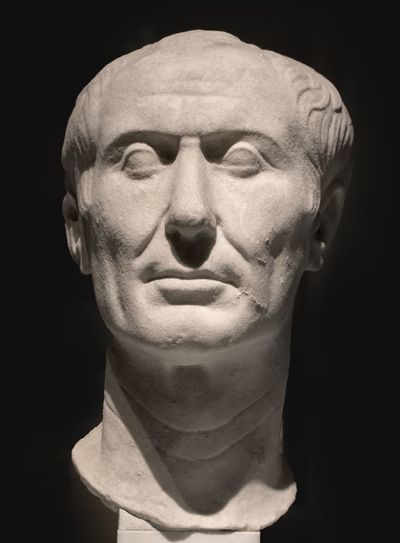
Julius Caesar
General · Ancient
83.3Total
Basic Information
Born
1724
-100
Died
1805
-44
Era
Modern
Ancient
Nationality
China
Roman Republic
Occupation
Politician
General
Civilization
Eastern
Western
Score Comparison
Military (10%)
22.8
88.0
Political (20%)
75.0
78.0
Influence (20%)
70.5
85.0
Legacy (20%)
67.5
82.0
Leadership (15%)
80.3
82.0
Strategy (15%)
59.6
88.0
TOTAL
65.9
83.3
Rankings
🥇
Julius CaesarLeader
Mil: 88.0Pol: 78.0Inf: 85.0
83.3
🥈
Ji Xiaolan
Mil: 22.8Pol: 75.0Inf: 70.5
65.9
+17.4 behind
How This Comparison Works
Algorithm
Each figure is scored on 6 dimensions (0—100 scale) based on structured historical data: Military (10%), Political (20%), Influence (20%), Legacy (20%), Leadership (15%), Strategy (15%). The weighted total produces the final ranking.
Data Sources
Scores are computed from structured sub-indicators in the database. Scale factors adjust for era (Ancient ×0.85, Modern ×1.0) and civilization size (Eastern ×1.05, Other ×0.80) to account for differences in population and military scale.
Maximum 3 Figures
Comparisons are limited to 2—3 figures to ensure readability and statistical meaningfulness.
Error Margins
±5 points per dimension — Sub-scores are derived from historical records with inherent uncertainty. Two figures within 5 points on a dimension should be considered roughly equivalent in that area.
Total Score Accuracy
±3 points overall — The weighted combination of 6 dimensions produces a total score with approximately ±3 points of uncertainty. Differences of less than 3 points are not statistically significant— the figures are effectively tied.
Known Limitations
- Historical records are incomplete and uneven across civilizations
- Figures from oral-tradition societies may be underrepresented
- Occupation labels can misclassify multi-role figures
- Scores measure capability and impact, not moral character
- Quantitative scoring is a comparison tool, not absolute truth
Capability Radar
Military (10%) — Battles & Warfare
Battles
14
95
Win Rate
19
92
Expansion
21
97
Political (20%) — Governance & Reform
Reform
55
90
Diplomacy
50
85
Economy
45
82
Influence (20%) — Cultural & Global Reach
Cultural
75
88
Global
60
94
Legacy (20%) — Historical Impact
Historical
70
95
Longevity
65
96
Leadership (15%) — Power & Stability
Tenure
60
75
Stability
55
60
Strategy (15%) — Tactics & Innovation
Strategy
26
94
Tactics
26
96
Reform
32
88
Analysis will be generated on first visit.
Scores and timeline are available below. The page will refresh automatically when ready.
Ji Xiaolan — Complete Timeline
1760 AD
Served as examiner for the imperial examinationsPolitical Action
Ji Xiaolan served multiple times as chief examiner for the imperial civil service examinations. He influenced the selection of scholar-officials and promoted Confucian orthodoxy in the Qing bureaucracy.
ExaminationsBureaucracyConfucianism
Impact: national
1773 AD
Appointed chief compiler of the Siku QuanshuCultural◆ Major
Ji Xiaolan was appointed chief compiler of the Siku Quanshu, the largest imperial encyclopedia in Chinese history. He oversaw the collection, editing, and cataloging of over 3,000 texts from Chinese literature and philosophy.
EncyclopediaScholarshipCultural Preservation
Impact: globalconstructive
1782 AD
Completed the Siku Quanshu compilationCultural
Under Ji Xiaolan's direction, the Siku Quanshu was completed, comprising 36,000 volumes. This monumental work preserved vast amounts of Chinese classical literature and became a cornerstone of Qing scholarship.
EncyclopediaCompletionCultural Achievement
Impact: globalconstructive
Similar Comparisons
Comments & Discussion
RIVER-CROSSER6/17/2026
Caesar didn't just cross the Rubicon — he crossed the line that kept Rome a republic. Ji Xiaolan edited books. One man destroyed a political system that had lasted 500 years and birthed an empire; the other compiled poetry for a monarch who'd already won. Let's not pretend editing the Siku Quanshu is on the same level as risking civil war on a gamble. Caesar spent decades on horseback, freezing in Gaul, fighting Germans. Ji sat in a warm library. The comparison isn't even close.
帝师不如太监6/17/2026
纪晓岚就是乾隆皇帝养的一条会写诗的金毛犬。他编《四库全书》焚毁了多少古籍,心里没数吗?表面上保存文化,实际上是在帮皇帝做思想审查。凯撒至少敢说"我来,我见,我征服",纪晓岚一辈子写过一句自己的主张吗?他被关进大牢后就彻底怂了,从此只写应制诗和黄色笑话。这种文化奴才,怎么跟共和国最后一口气比?
MILITARY-HEDONIST6/17/2026
You want power comparison? Caesar had Cleopatra, Gaulish gold, and dictator-for-life status. Ji Xiaolan had… concubines and a snuff addiction. Caesar conquered 800 cities; Ji wrote some prefaces. Let's be real: in the game of empires, one man reshaped the Mediterranean world, the other was a high-level librarian who occasionally amused the emperor. History remembers builders and destroyers, not cataloguers. I'd rather be Caesar crossing the Rubicon than Ji pretending to cross the Forbidden City.
书海钓叟6/17/2026
凯撒过河是为了夺权,纪晓岚过书海是为了活命。两个人物的本质差别不在成就大小,而在时代处境:凯撒可以选择不再当罗马公民老好人,纪晓岚敢不编《四库全书》就是找死。纪晓岚四十六岁被发配乌鲁木齐,回来后就明白了——在乾隆朝活到八十二岁还能留下笔记和笑话,本身就是一种反叛。权力不一样,活法就不一样。别拿战争英雄跟文字狱生存者比,这不公平。
民科数据控6/17/2026
Stat check: Caesar's Gallic Wars claimed 1 million dead, 1 million enslaved. Ji Xiaolan's editorial project involved 10,000 copyists and produced 36,000 volumes. One is a body count, the other a book count. Caesar's legacy is provable conquest; Ji's is debatable preservation. But here's the kicker — Caesar's writings survive; Ji's own novels were burned by his own family. The man who controlled his narrative won; the one who couldn't, lost even his fiction. Power is authorship.