Loading...
Analysis will be generated on first visit.
Scores and timeline are available below. The page will refresh automatically when ready.
Jayaprakash Narayan vs Qin Shi Huang
Qin Shi Huang leads by 11.5 pts · 2 figures compared
…
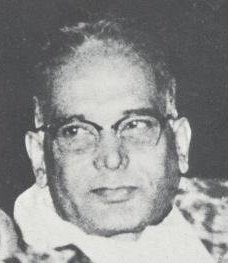
Jayaprakash Narayan
Politician · Modern
72.0Total
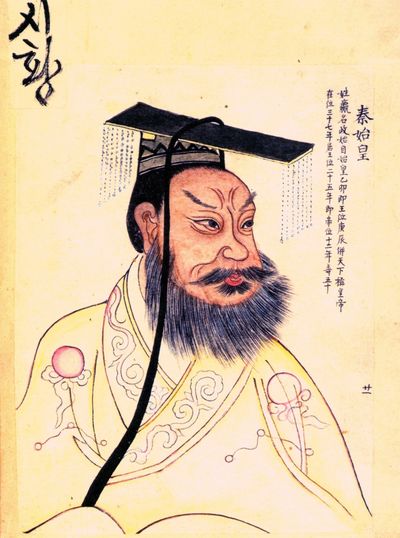
Qin Shi Huang
Emperor · Ancient
83.5Total
Basic Information
Born
1902
-259
Died
1979
-210
Era
Modern
Ancient
Nationality
India
China
Occupation
Politician
Emperor
Civilization
Indian
Eastern
Score Comparison
Military (10%)
52.2
80.0
Political (20%)
86.4
88.0
Influence (20%)
72.9
82.0
Legacy (20%)
69.3
85.0
Leadership (15%)
81.4
88.0
Strategy (15%)
58.7
75.0
TOTAL
72.0
83.5
Rankings
🥇
Qin Shi HuangLeader
Mil: 80.0Pol: 88.0Inf: 82.0
83.5
🥈
Jayaprakash Narayan
Mil: 52.2Pol: 86.4Inf: 72.9
72.0
+11.5 behind
How This Comparison Works
Algorithm
Each figure is scored on 6 dimensions (0—100 scale) based on structured historical data: Military (10%), Political (20%), Influence (20%), Legacy (20%), Leadership (15%), Strategy (15%). The weighted total produces the final ranking.
Data Sources
Scores are computed from structured sub-indicators in the database. Scale factors adjust for era (Ancient ×0.85, Modern ×1.0) and civilization size (Eastern ×1.05, Other ×0.80) to account for differences in population and military scale.
Maximum 3 Figures
Comparisons are limited to 2—3 figures to ensure readability and statistical meaningfulness.
Error Margins
±5 points per dimension — Sub-scores are derived from historical records with inherent uncertainty. Two figures within 5 points on a dimension should be considered roughly equivalent in that area.
Total Score Accuracy
±3 points overall — The weighted combination of 6 dimensions produces a total score with approximately ±3 points of uncertainty. Differences of less than 3 points are not statistically significant— the figures are effectively tied.
Known Limitations
- Historical records are incomplete and uneven across civilizations
- Figures from oral-tradition societies may be underrepresented
- Occupation labels can misclassify multi-role figures
- Scores measure capability and impact, not moral character
- Quantitative scoring is a comparison tool, not absolute truth
Capability Radar
Military (10%) — Battles & Warfare
Battles
46
85
Win Rate
47
90
Expansion
48
90
Political (20%) — Governance & Reform
Reform
75
95
Diplomacy
60
75
Economy
20
90
Influence (20%) — Cultural & Global Reach
Cultural
55
95
Global
55
85
Legacy (20%) — Historical Impact
Historical
65
95
Longevity
50
95
Leadership (15%) — Power & Stability
Tenure
30
70
Stability
25
65
Strategy (15%) — Tactics & Innovation
Strategy
53
85
Tactics
55
80
Reform
57
95
Analysis will be generated on first visit.
Scores and timeline are available below. The page will refresh automatically when ready.
Jayaprakash Narayan — Complete Timeline
1934 AD
Founded the Socialist PartyPolitical Action◆ Major
Narayan was a founding member of the Congress Socialist Party, a left-wing faction within the Indian National Congress. The party advocated for socialist policies and greater economic equality.
Socialist PartyLeft-WingEconomic Equality
Impact: nationalconstructive
1952 AD
Led the Bihar movement for land reformsPolitical Action◆ Major
Narayan led a movement in Bihar demanding land reforms and the abolition of the zamindari system. He organized peasants and pressured the government to implement land redistribution, though with limited success.
Land ReformsBiharPeasant Movement
Impact: regionalconstructive
1974 AD
Led the Total Revolution movementPolitical Action◆ Major
Narayan launched the 'Total Revolution' (Sampoorna Kranti) movement against the government of Prime Minister Indira Gandhi. He called for a complete overhaul of the political system, leading to widespread protests and the eventual imposition of the Emergency in 1975.
Total RevolutionEmergencyProtest
Impact: nationalconstructive
1975 AD
Imprisoned during the EmergencyPolitical Action◆ Major
Narayan was arrested and imprisoned during the Emergency imposed by Indira Gandhi. His imprisonment made him a symbol of resistance against authoritarian rule.
EmergencyImprisonmentResistance
Impact: nationaltragic
1977 AD
Mediated the formation of the Janata PartyPolitical Action◆ Major
Narayan played a key role in uniting opposition parties to form the Janata Party, which defeated Indira Gandhi's Congress in the 1977 general election. He declined to become Prime Minister, instead supporting Morarji Desai.
Janata Party1977 ElectionCoalition
Impact: nationalconstructive
Qin Shi Huang — Complete Timeline
246 BC
Construction of the Mausoleum and Terracotta ArmyOther◆ Major
Qin Shi Huang commissioned a vast mausoleum complex near Xi'an, guarded by thousands of life-sized terracotta soldiers, horses, and chariots. The project employed hundreds of thousands of workers and reflected his obsession with immortality and imperial power.
Impact: global
230 BC
Conquest of the Six Warring StatesWar
From 230 to 221 BCE, Ying Zheng led the Qin state in a series of campaigns that conquered the Han, Zhao, Wei, Chu, Yan, and Qi states. This unified China under a single ruler for the first time, ending the Warring States period.
Impact: global
221 BC
Standardization of Writing, Currency, and MeasurementsReform◆ Major
Qin Shi Huang ordered the standardization of Chinese script, currency, and weights and measures across the unified empire. This facilitated administration, trade, and cultural integration, laying a foundation for future dynasties.
Impact: globalconstructive
Proclamation of the Qin DynastyPolitical Action
After conquering the last independent state, Ying Zheng declared himself Shi Huangdi (First Emperor), founding the Qin Dynasty. He adopted a new title to signify his supreme authority and initiated centralized imperial rule.
Impact: global
214 BC
Initiation of the Great Wall ConstructionOther◆ Major
Qin Shi Huang ordered the connection and extension of existing northern fortifications to create a unified defensive wall against nomadic Xiongnu raids. This project involved massive conscripted labor and became the precursor to the later Great Wall.
Impact: regional
213 BC
Burning of Books and Burying of ScholarsPolitical Action◆ Major
On the advice of Li Si, Qin Shi Huang ordered the burning of historical records and philosophical texts not aligned with Legalist doctrine. He also had 460 Confucian scholars buried alive to suppress dissent and consolidate ideological control.
Impact: nationaldestructive
Similar Comparisons
Comments & Discussion
Emperor's Nemesis6/17/2026
Classics scholar here: Qin Shi Huang’s bronze chariots buried at Xi’an prove he fetishized control, while JP’s 1974 Bihar movement was pure chaos. Ying Zheng wanted to freeze time—standardize carts and scripts so history stops. JP wanted to melt it, unleashing people’s power to break cycles. Qin won with terra-cotta armies; JP won with a walking stick and a hunger strike. World of difference: one unified by fear, the other by hope. Give me JP any day.
史河锤手6/17/2026
数据党注意:秦始皇修长城用了三十万民工,死了十多万,而JP搞“整体革命”创下印度史上最大规模政治动员之一——七七年一亿多人上街。成本上,JP赢了:塔不流血就倒了。秦皇连自家儿子都杀,JP连英迪拉·甘地都没碰一根指头。暴力派 vs 谈判派,数据不会撒谎。
First Whacker6/17/2026
Military historian here: Qin’s conquest of the six states in ten years (230-221 BC) was a blitzkrieg before the term existed—mounted archers and iron swords decimated old chariot armies. JP’s Total Revolution? Peaceful boycotts and sit-ins. Qin’s unity was forged by massacre; JP’s by morality. Qin’s empire crumbled after his death; JP’s legacy fueled India’s anti-corruption movements decades later. Long game? JP’s wins, but the Qin blueprint still haunts modern authoritarian playbooks. Tough cal
古史掘墓人6/17/2026
我作为一个历史颠覆派:教科书都在吹秦始皇统一文字,可他用焚书坑儒把百家思想全灭了,简直文化大屠杀。JP恰恰相反——他批判资本主义也批判斯大林式专政,坚持多元对话。什么“统一”?JP的统一是让人们各自说话还能一起走,秦皇的统一是让所有人闭嘴。两种野心,一个从沉默里生,一个从声音里长。
Radical Citizen6/17/2026
History buff here: JP’s “Sampoorna Kranti” wasn’t just anti-corruption—it called for electoral reform, land redistribution, and worker control. Qin’s centralization? Standardized weights, yes, plus forced labor on roads and canals both brilliant and brutal. But JP’s network of volunteer students and farmers in the 1970s echoes Qin’s conscription of millions—just with ballots instead of blades. The difference is the weapon. Qin built a machine; JP sparked a forest fire.