Loading...
Analysis will be generated on first visit.
Scores and timeline are available below. The page will refresh automatically when ready.
James Monroe vs Julius Caesar
Julius Caesar leads by 16.5 pts · 2 figures compared
…

James Monroe
Politician · Modern
66.8Total
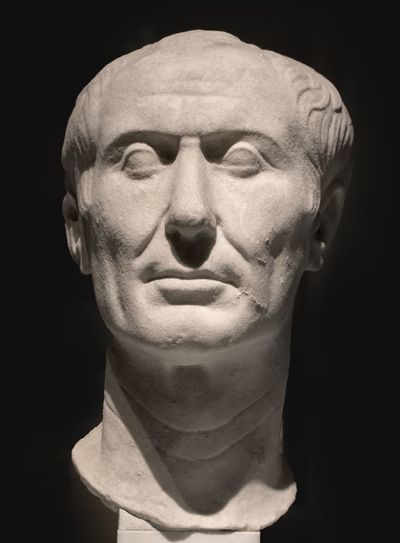
Julius Caesar
General · Ancient
83.3Total
Basic Information
Born
1758
-100
Died
1831
-44
Era
Modern
Ancient
Nationality
United States
Roman Republic
Occupation
Politician
General
Civilization
Western
Western
Score Comparison
Military (10%)
60.0
88.0
Political (20%)
71.5
78.0
Influence (20%)
72.0
85.0
Legacy (20%)
55.0
82.0
Leadership (15%)
83.2
82.0
Strategy (15%)
57.4
88.0
TOTAL
66.8
83.3
Rankings
🥇
Julius CaesarLeader
Mil: 88.0Pol: 78.0Inf: 85.0
83.3
🥈
James Monroe
Mil: 60.0Pol: 71.5Inf: 72.0
66.8
+16.5 behind
How This Comparison Works
Algorithm
Each figure is scored on 6 dimensions (0—100 scale) based on structured historical data: Military (10%), Political (20%), Influence (20%), Legacy (20%), Leadership (15%), Strategy (15%). The weighted total produces the final ranking.
Data Sources
Scores are computed from structured sub-indicators in the database. Scale factors adjust for era (Ancient ×0.85, Modern ×1.0) and civilization size (Eastern ×1.05, Other ×0.80) to account for differences in population and military scale.
Maximum 3 Figures
Comparisons are limited to 2—3 figures to ensure readability and statistical meaningfulness.
Error Margins
±5 points per dimension — Sub-scores are derived from historical records with inherent uncertainty. Two figures within 5 points on a dimension should be considered roughly equivalent in that area.
Total Score Accuracy
±3 points overall — The weighted combination of 6 dimensions produces a total score with approximately ±3 points of uncertainty. Differences of less than 3 points are not statistically significant— the figures are effectively tied.
Known Limitations
- Historical records are incomplete and uneven across civilizations
- Figures from oral-tradition societies may be underrepresented
- Occupation labels can misclassify multi-role figures
- Scores measure capability and impact, not moral character
- Quantitative scoring is a comparison tool, not absolute truth
Capability Radar
Military (10%) — Battles & Warfare
Battles
10
95
Win Rate
10
92
Expansion
20
97
Political (20%) — Governance & Reform
Reform
55
90
Diplomacy
80
85
Economy
60
82
Influence (20%) — Cultural & Global Reach
Cultural
55
88
Global
70
94
Legacy (20%) — Historical Impact
Historical
75
95
Longevity
70
96
Leadership (15%) — Power & Stability
Tenure
70
75
Stability
70
60
Strategy (15%) — Tactics & Innovation
Strategy
15
94
Tactics
10
96
Reform
5
88
Analysis will be generated on first visit.
Scores and timeline are available below. The page will refresh automatically when ready.
James Monroe — Complete Timeline
1817 AD
Presided over the Era of Good FeelingsPolitical Action◆ Major
Monroe's presidency, beginning in 1817, was marked by the Era of Good Feelings, a period of relative political harmony and national unity following the War of 1812. He toured the country to promote unity and faced little opposition. The era saw the decline of the Federalist Party and the rise of one-party rule.
Era of Good FeelingsNational UnityPresidency
Impact: nationalconstructive
1819 AD
Acquired Florida from SpainPolitical Action◆ Major
Monroe oversaw the ratification of the Adams-On
Florida AcquisitionAdams-Onís TreatyTerritorial Expansion
Impact: regionalconstructive
1820 AD
Signed the Missouri CompromisePolitical Action◆ Major
Monroe signed the Missouri Compromise on March 6, 1820, which admitted Missouri as a slave state and Maine as a free state, maintaining the balance of power in the Senate. The compromise also prohibited slavery north of the 36
Missouri CompromiseSlaverySectionalism
Impact: national
1823 AD
Issued the Monroe DoctrinePolitical Action
President James Monroe declared the Monroe Doctrine in his annual message to Congress on December 2, 1823. The doctrine stated that the Western Hemisphere was closed to future European colonization and that the United States would not interfere in European affairs. It became a cornerstone of U.S. foreign policy.
Monroe DoctrineForeign PolicyWestern Hemisphere
Impact: global
Similar Comparisons
Comments & Discussion
RomeWasntBuiltInADay6/17/2026
Anyone comparing Monroe to Caesar clearly hasn't spent time on a battlefield. Caesar conquered 800 cities in Gaul alone, crossed the ocean to Britain, and built a bridge across the Rhine in ten days for pure flex. Monroe's biggest military achievement was getting shot at as a teenager in a losing battle. You don't compare a master general to a plantation lawyer who drafted some words. Legacy isn't measured in paragraphs; it's measured in provinces, battles, and the fear you instill in your enemi
EmpireVsEconomy6/17/2026
说白了,凯撒和门罗根本不是一个赛道。凯撒是铁与血的帝国缔造者,征服了高卢全境,把军团纪律变成西方军事范本;门罗呢,他最大的贡献就是一篇宣言,但这篇宣言的军事价值是零。你让门罗去打高卢战争,不出一个月罗马就亡了。两个人都伟大,但伟大形式不同,别硬比。门罗是外交家,凯撒是战神,拿战场逻辑衡量外交成就就是耍流氓。
DataSkeptic6/17/2026
This comparison is fundamentally flawed because it ignores scope. Caesar permanently altered the political structure of Europe for over 500 years, creating the template for imperial autocracy. Monroe's Doctrine? It was ignored by European powers for decades, only gaining teeth when the U.S. Navy existed to enforce it in the late 19th century. You're comparing the man who literally invented the concept of dictatorship to a man whose biggest diplomatic win was saying "stay out" and hoping someone
YuanShiDi模式6/17/2026
从历史工具理性来看,凯撒和门罗差着维度。凯撒生前就让自己变成神,门罗去世时纽约报纸只发了三段讣告。凯撒改革了历法、重构了元老院、发动了罗马内战,门罗干的事美国历史上至少有五个人能复制。你说他推动了门罗主义?那不过是杰斐逊买路易斯安那之后的自然延伸。别拔高外交官僚,真正的变革者拿剑写历史,拿笔写的只能叫备忘录。
ClassicsInContext6/17/2026
You're both overstating and understating Caesar. Yes, he conquered Gaul and crossed the Rubicon, but his true genius was institutional. He reformed the calendar (the Julian calendar used for 1,600 years), instituted land reforms for veterans, and centralized Rome's chaotic tax system. Monroe's greatest achievement was presiding over the Era of Good Feelings, a time of one-party rule by default, not brilliance. Caesar died because his ambition exposed a broken system; Monroe retired because he na