Loading...
Analysis will be generated on first visit.
Scores and timeline are available below. The page will refresh automatically when ready.
Frederick of Hesse-Kassel vs Julius Caesar
Julius Caesar leads by 22.3 pts · 2 figures compared
…

Frederick of Hesse-Kassel
General · Modern
61.0Total
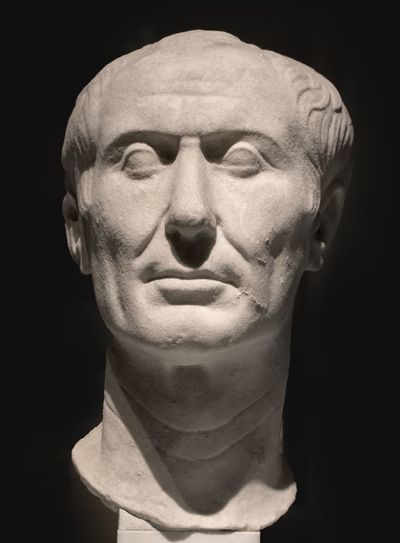
Julius Caesar
General · Ancient
83.3Total
Basic Information
Born
1747
-100
Died
1837
-44
Era
Modern
Ancient
Nationality
Hesse-Kassel
Roman Republic
Occupation
General
General
Civilization
Western
Western
Score Comparison
Military (10%)
41.3
88.0
Political (20%)
67.1
78.0
Influence (20%)
67.1
85.0
Legacy (20%)
51.2
82.0
Leadership (15%)
72.8
82.0
Strategy (15%)
59.4
88.0
TOTAL
61.0
83.3
Rankings
🥇
Julius CaesarLeader
Mil: 88.0Pol: 78.0Inf: 85.0
83.3
🥈
Frederick of Hesse-Kassel
Mil: 41.3Pol: 67.1Inf: 67.1
61.0
+22.3 behind
How This Comparison Works
Algorithm
Each figure is scored on 6 dimensions (0—100 scale) based on structured historical data: Military (10%), Political (20%), Influence (20%), Legacy (20%), Leadership (15%), Strategy (15%). The weighted total produces the final ranking.
Data Sources
Scores are computed from structured sub-indicators in the database. Scale factors adjust for era (Ancient ×0.85, Modern ×1.0) and civilization size (Eastern ×1.05, Other ×0.80) to account for differences in population and military scale.
Maximum 3 Figures
Comparisons are limited to 2—3 figures to ensure readability and statistical meaningfulness.
Error Margins
±5 points per dimension — Sub-scores are derived from historical records with inherent uncertainty. Two figures within 5 points on a dimension should be considered roughly equivalent in that area.
Total Score Accuracy
±3 points overall — The weighted combination of 6 dimensions produces a total score with approximately ±3 points of uncertainty. Differences of less than 3 points are not statistically significant— the figures are effectively tied.
Known Limitations
- Historical records are incomplete and uneven across civilizations
- Figures from oral-tradition societies may be underrepresented
- Occupation labels can misclassify multi-role figures
- Scores measure capability and impact, not moral character
- Quantitative scoring is a comparison tool, not absolute truth
Capability Radar
Military (10%) — Battles & Warfare
Battles
15
95
Win Rate
20
92
Expansion
10
97
Political (20%) — Governance & Reform
Reform
15
90
Diplomacy
25
85
Economy
15
82
Influence (20%) — Cultural & Global Reach
Cultural
10
88
Global
10
94
Legacy (20%) — Historical Impact
Historical
15
95
Longevity
10
96
Leadership (15%) — Power & Stability
Tenure
30
75
Stability
20
60
Strategy (15%) — Tactics & Innovation
Strategy
25
94
Tactics
20
96
Reform
10
88
Analysis will be generated on first visit.
Scores and timeline are available below. The page will refresh automatically when ready.
Frederick of Hesse-Kassel — Complete Timeline
1770 AD
Appointed Danish GeneralPolitical Action
Frederick of Hesse-Kassel was appointed as a general in the Danish army. He served in this capacity for decades, commanding Danish forces in various campaigns, though his military career was not marked by major victories.
Danish ArmyMilitary Appointment
Impact: national
1785 AD
Became Landgrave of Hesse-KasselPolitical Action◆ Major
Upon the death of his brother, Frederick inherited the title of Landgrave of Hesse-Kassel. However, he remained primarily in Denmark, leaving the administration of the landgraviate to regents, which led to neglect of local governance.
SuccessionHesse-Kassel
Impact: regional
1795 AD
Negotiated Treaty of BaselPolitical Action◆ Major
As Landgrave, Frederick was involved in the negotiations leading to the Treaty of Basel, which ended the War of the First Coalition between France and Prussia. Hesse-Kassel remained neutral, avoiding French occupation.
DiplomacyFrench Revolutionary Wars
Impact: regional
Similar Comparisons
Comments & Discussion
HessianHawk6/17/2026
Caesar crossed the Rubicon with 5,000 legionaries; Frederick signed Basel with an empty treasury. That's the difference—one man staked his life on a single throw of the dice, the other folded his hand before the game even got interesting. Don't romanticize Frederick as "pragmatic." He was a rentier prince scared of risk. Caesar understood that history doesn't remember careful calculators. It remembers men who gamble—and win.
卢比孔守夜人6/17/2026
数据会说话:凯撒在高卢八年打了40多场硬仗,杀敌百万,征服了相当于意大利面积两倍的土地。而腓特烈?1793年率军2万去"解放"法兰克福,被法军一个反击就逃回威悉河畔。历史不是"交易"和"冒险"的抽象比较——是战功的数字碾压。他连当将军的资格都没有,还敢和凯撒并列?欺世盗名。