Loading...
Analysis will be generated on first visit.
Scores and timeline are available below. The page will refresh automatically when ready.
Fateh Singh of Udaipur vs Napoleon Bonaparte
Napoleon Bonaparte leads by 12.3 pts · 2 figures compared
…

Fateh Singh of Udaipur
Emperor · Modern
70.1Total
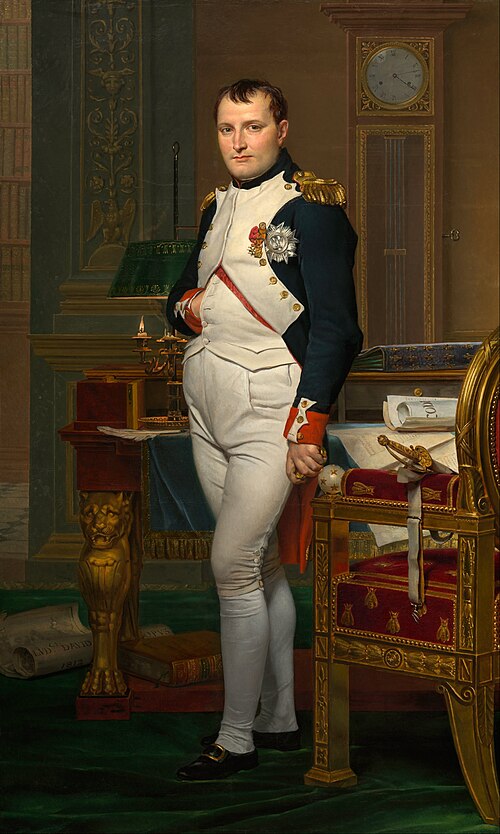
Napoleon Bonaparte
General · Modern
82.4Total
Basic Information
Born
1849
1769
Died
1930
1821
Era
Modern
Modern
Nationality
India
France
Occupation
Emperor
General
Civilization
Indian
Western
Score Comparison
Military (10%)
59.4
94.0
Political (20%)
84.7
75.0
Influence (20%)
72.0
82.0
Legacy (20%)
58.1
78.0
Leadership (15%)
81.2
80.0
Strategy (15%)
60.0
93.0
TOTAL
70.1
82.4
Rankings
🥇
Napoleon BonaparteLeader
Mil: 94.0Pol: 75.0Inf: 82.0
82.4
🥈
Fateh Singh of Udaipur
Mil: 59.4Pol: 84.7Inf: 72.0
70.1
+12.3 behind
How This Comparison Works
Algorithm
Each figure is scored on 6 dimensions (0—100 scale) based on structured historical data: Military (10%), Political (20%), Influence (20%), Legacy (20%), Leadership (15%), Strategy (15%). The weighted total produces the final ranking.
Data Sources
Scores are computed from structured sub-indicators in the database. Scale factors adjust for era (Ancient ×0.85, Modern ×1.0) and civilization size (Eastern ×1.05, Other ×0.80) to account for differences in population and military scale.
Maximum 3 Figures
Comparisons are limited to 2—3 figures to ensure readability and statistical meaningfulness.
Error Margins
±5 points per dimension — Sub-scores are derived from historical records with inherent uncertainty. Two figures within 5 points on a dimension should be considered roughly equivalent in that area.
Total Score Accuracy
±3 points overall — The weighted combination of 6 dimensions produces a total score with approximately ±3 points of uncertainty. Differences of less than 3 points are not statistically significant— the figures are effectively tied.
Known Limitations
- Historical records are incomplete and uneven across civilizations
- Figures from oral-tradition societies may be underrepresented
- Occupation labels can misclassify multi-role figures
- Scores measure capability and impact, not moral character
- Quantitative scoring is a comparison tool, not absolute truth
Capability Radar
Military (10%) — Battles & Warfare
Battles
5
95
Win Rate
5
90
Expansion
5
95
Political (20%) — Governance & Reform
Reform
30
95
Diplomacy
40
80
Economy
30
85
Influence (20%) — Cultural & Global Reach
Cultural
40
85
Global
20
90
Legacy (20%) — Historical Impact
Historical
40
95
Longevity
30
90
Leadership (15%) — Power & Stability
Tenure
55
85
Stability
35
70
Strategy (15%) — Tactics & Innovation
Strategy
5
95
Tactics
5
98
Reform
5
92
Analysis will be generated on first visit.
Scores and timeline are available below. The page will refresh automatically when ready.
Fateh Singh of Udaipur — Complete Timeline
1884 AD
Accession as Maharana of MewarPolitical Action◆ Major
Fateh Singh became Maharana of Mewar at age 35 after the death of his brother Sajjan Singh. His reign was marked by efforts to preserve Mewar's autonomy while cooperating with the British, and he became a prominent figure in the early Indian independence movement.
AccessionMewarMaharana
Impact: regional
1885 AD
Support for Indian National CongressPolitical Action◆ Major
Fateh Singh extended moral and financial support to the Indian National Congress in its early years. He allowed Congress sessions to be held in Udaipur and advocated for Indian representation in British governance, though he remained a loyal prince.
Indian National CongressSupportNationalism
Impact: nationalconstructive
1900 AD
Construction of Fateh Prakash PalaceCultural
Fateh Singh commissioned the Fateh Prakash Palace in Udaipur, a blend of Rajput and European styles. The palace served as a royal residence and later became a heritage hotel, reflecting his patronage of architecture.
ArchitectureUdaipurPalace
constructive
1905 AD
Role in the 1905 Partition of BengalPolitical Action
Fateh Singh publicly opposed the British partition of Bengal, aligning with the Swadeshi movement. He encouraged the use of Indian-made goods and supported the boycott of British products, though he did not engage in open rebellion.
Partition of BengalSwadeshiOpposition
Impact: nationalconstructive
1930 AD
Death and successionOther
Fateh Singh died in 1930 after a 46-year reign. He was succeeded by his son Bhupal Singh. His reign saw Mewar maintain its cultural identity while engaging with the nationalist movement.
DeathSuccessionMewar
Impact: regional
Similar Comparisons
Comments & Discussion
No comments yet. Be the first to share your thoughts!