Loading...
Analysis will be generated on first visit.
Scores and timeline are available below. The page will refresh automatically when ready.
Ernst Busch vs Julius Caesar
Julius Caesar leads by 24.3 pts · 2 figures compared
…

Ernst Busch
General · Modern
59.0Total
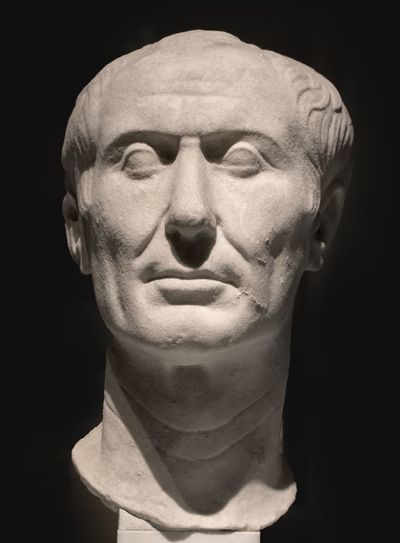
Julius Caesar
General · Ancient
83.3Total
Basic Information
Born
1885
-100
Died
1945
-44
Era
Modern
Ancient
Nationality
Germany
Roman Republic
Occupation
General
General
Civilization
Western
Western
Score Comparison
Military (10%)
37.0
88.0
Political (20%)
62.2
78.0
Influence (20%)
67.1
85.0
Legacy (20%)
53.6
82.0
Leadership (15%)
73.7
82.0
Strategy (15%)
50.9
88.0
TOTAL
59.0
83.3
Rankings
🥇
Julius CaesarLeader
Mil: 88.0Pol: 78.0Inf: 85.0
83.3
🥈
Ernst Busch
Mil: 37.0Pol: 62.2Inf: 67.1
59.0
+24.3 behind
How This Comparison Works
Algorithm
Each figure is scored on 6 dimensions (0—100 scale) based on structured historical data: Military (10%), Political (20%), Influence (20%), Legacy (20%), Leadership (15%), Strategy (15%). The weighted total produces the final ranking.
Data Sources
Scores are computed from structured sub-indicators in the database. Scale factors adjust for era (Ancient ×0.85, Modern ×1.0) and civilization size (Eastern ×1.05, Other ×0.80) to account for differences in population and military scale.
Maximum 3 Figures
Comparisons are limited to 2—3 figures to ensure readability and statistical meaningfulness.
Error Margins
±5 points per dimension — Sub-scores are derived from historical records with inherent uncertainty. Two figures within 5 points on a dimension should be considered roughly equivalent in that area.
Total Score Accuracy
±3 points overall — The weighted combination of 6 dimensions produces a total score with approximately ±3 points of uncertainty. Differences of less than 3 points are not statistically significant— the figures are effectively tied.
Known Limitations
- Historical records are incomplete and uneven across civilizations
- Figures from oral-tradition societies may be underrepresented
- Occupation labels can misclassify multi-role figures
- Scores measure capability and impact, not moral character
- Quantitative scoring is a comparison tool, not absolute truth
Capability Radar
Military (10%) — Battles & Warfare
Battles
40
95
Win Rate
30
92
Expansion
25
97
Political (20%) — Governance & Reform
Reform
10
90
Diplomacy
15
85
Economy
10
82
Influence (20%) — Cultural & Global Reach
Cultural
10
88
Global
10
94
Legacy (20%) — Historical Impact
Historical
15
95
Longevity
10
96
Leadership (15%) — Power & Stability
Tenure
20
75
Stability
15
60
Strategy (15%) — Tactics & Innovation
Strategy
30
94
Tactics
35
96
Reform
20
88
Analysis will be generated on first visit.
Scores and timeline are available below. The page will refresh automatically when ready.
Ernst Busch — Complete Timeline
1941 AD
Command of the 16th Army at LeningradWar◆ Major
Busch commanded the 16th Army during the siege of Leningrad. His forces participated in the encirclement and blockade of the city, leading to immense suffering and casualties among the civilian population.
Siege of LeningradEastern FrontWar Crimes
Impact: regionaldestructive
1945 AD
Surrender in the Courland PocketWar◆ Major
As commander of Army Group North, Busch was trapped in the Courland Pocket in Latvia. He surrendered his forces to the Soviet Red Army on May 9, 1945, after the German capitulation, becoming a prisoner of war.
Courland PocketSurrenderPrisoner of War
Impact: regionaltragic
Similar Comparisons
Comments & Discussion
THE_GALLIC_REAPER6/17/2026
Caesar wasn't just a general—he was a political earthquake who redesigned reality itself. His Gallic Wars produced a literary masterpiece that still teaches Latin students strategy through prose. Busch commanded the 16th Army in the Soviet meatgrinder, but his "leadership" was little more than obeying Hitler's suicidal orders until he got trapped in Courland like a rat. One man wrote history; the other was a footnote in someone else's disaster. You can't compare an architect to a brick.
数据拆解师6/17/2026
别被“罗马传奇”唬住了,历史胜利者书写,样本严重幸存者偏差。凯撒存世文献至少十种以上同时代或近后记载,布施呢?德军档案被轰炸、销毁、分散,库尔兰口袋战报至今不完整。比较两人知名度?罗马帝国养了两千年宣传机器,第三帝国才十二年。布施要是活在公元前,手头上也有几部青铜板铭文,谁输谁赢可不好说。
TEMPESTAS_CORAX6/17/2026
The real distinction isn't talent—it's timing. Caesar operated when the Republic was ripe for a dictator with a pen and a legion. Busch faced the Wehrmacht's terminal decline in 1945, leading a starving, demoralized pocket force while Berlin burned. Put Caesar in Courland with no supply lines and Allied air supremacy, he'd be a desiccated skull in a peat bog. Put Busch in Gaul with a loyal army—he'd crucify a few tribes, write dull memoirs, and vanish. Circumstance is the only difference.
战场考古迷6/17/2026
布施在20世纪的技术战争里连个像样的野战工事都没留下,库尔兰防御体系现在全是苏联坦克登陆点和没拆光的铁丝网。凯撒在阿莱西亚修的双层围城工事至今还能在地形上识别出痕迹,那才是真正的军事工程师思维。布施只是个合格的官僚型指挥官,按手册填格子,离“名将”隔着一条卢比孔河呢。