Loading...
Analysis will be generated on first visit.
Scores and timeline are available below. The page will refresh automatically when ready.
Dmitry Donskoy vs Julius Caesar
Julius Caesar leads by 16.7 pts · 2 figures compared
…
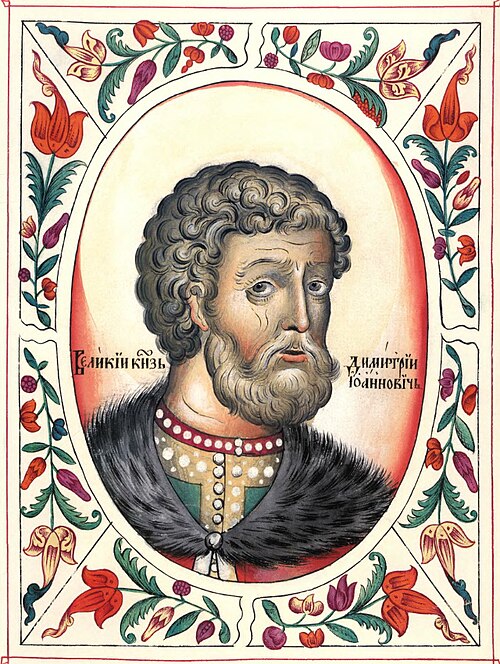
Dmitry Donskoy
Emperor · Medieval
66.6Total
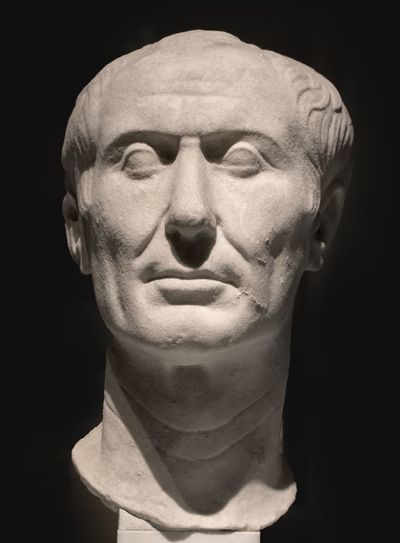
Julius Caesar
General · Ancient
83.3Total
Basic Information
Born
1350
-100
Died
1389
-44
Era
Medieval
Ancient
Nationality
Muscovy
Roman Republic
Occupation
Emperor
General
Civilization
Western
Western
Score Comparison
Military (10%)
55.2
88.0
Political (20%)
58.5
78.0
Influence (20%)
72.7
85.0
Legacy (20%)
65.7
82.0
Leadership (15%)
72.6
82.0
Strategy (15%)
72.0
88.0
TOTAL
66.6
83.3
Rankings
🥇
Julius CaesarLeader
Mil: 88.0Pol: 78.0Inf: 85.0
83.3
🥈
Dmitry Donskoy
Mil: 55.2Pol: 58.5Inf: 72.7
66.6
+16.7 behind
How This Comparison Works
Algorithm
Each figure is scored on 6 dimensions (0—100 scale) based on structured historical data: Military (10%), Political (20%), Influence (20%), Legacy (20%), Leadership (15%), Strategy (15%). The weighted total produces the final ranking.
Data Sources
Scores are computed from structured sub-indicators in the database. Scale factors adjust for era (Ancient ×0.85, Modern ×1.0) and civilization size (Eastern ×1.05, Other ×0.80) to account for differences in population and military scale.
Maximum 3 Figures
Comparisons are limited to 2—3 figures to ensure readability and statistical meaningfulness.
Error Margins
±5 points per dimension — Sub-scores are derived from historical records with inherent uncertainty. Two figures within 5 points on a dimension should be considered roughly equivalent in that area.
Total Score Accuracy
±3 points overall — The weighted combination of 6 dimensions produces a total score with approximately ±3 points of uncertainty. Differences of less than 3 points are not statistically significant— the figures are effectively tied.
Known Limitations
- Historical records are incomplete and uneven across civilizations
- Figures from oral-tradition societies may be underrepresented
- Occupation labels can misclassify multi-role figures
- Scores measure capability and impact, not moral character
- Quantitative scoring is a comparison tool, not absolute truth
Capability Radar
Military (10%) — Battles & Warfare
Battles
65
95
Win Rate
60
92
Expansion
60
97
Political (20%) — Governance & Reform
Reform
55
90
Diplomacy
65
85
Economy
50
82
Influence (20%) — Cultural & Global Reach
Cultural
60
88
Global
55
94
Legacy (20%) — Historical Impact
Historical
70
95
Longevity
65
96
Leadership (15%) — Power & Stability
Tenure
60
75
Stability
55
60
Strategy (15%) — Tactics & Innovation
Strategy
65
94
Tactics
70
96
Reform
55
88
Analysis will be generated on first visit.
Scores and timeline are available below. The page will refresh automatically when ready.
Dmitry Donskoy — Complete Timeline
1359 AD
Became Grand Prince of MoscowPolitical Action◆ Major
Dmitry inherited the throne at age nine after his father Ivan II died. His regency was managed by Metropolitan Alexius, who secured the Mongol yarlyk for Moscow against claims from Suzdal and other rivals.
MoscowSuccessionRegency
Impact: regional
1378 AD
Battle of the Vozha RiverWar
Dmitry defeated a Mongol army led by Murza Begich on the Vozha River in Ryazan. This was the first Russian victory over a major Mongol force and a prelude to the Battle of Kulikovo.
Golden HordeRyazanPrelude
Impact: regional
1380 AD
Battle of KulikovoWar
Dmitry Donskoy led a coalition of Russian principalities to defeat the Mongol army of Mamai at Kulikovo Field near the Don River. This was the first major Russian victory over the Golden Horde, though Mongol rule continued for another century.
Golden HordeMamaiRussian Victory
Impact: regional
1382 AD
Burned Moscow to Prevent Mongol CaptureWar◆ Major
After Khan Tokhtamysh besieged Moscow, Dmitry fled to Kostroma. The Mongols sacked the city, killing thousands. Dmitry returned to rebuild but was forced to resume tribute payments to the Horde.
MoscowTokhtamyshSiege
Impact: regionaltragic
Similar Comparisons
Comments & Discussion
HISTORICAL-NOSE-DIVER6/17/2026
Apples to oranges with a black eye. Caesar crossing the Rubicon was a constitutional coup, pure and simple; he had a loyal, experienced army behind him and a Senate that had already blinked. Dmitry Donskoy’s stand at Kulikovo was a defensive battle against a Mongol force that had been fragmenting for decades due to internal succession crises. Caesar’s victory created a dictator; Donskoy’s victory created a legend. Different contexts, different plays. Don’t confuse a political chess move with a s
东正教的铁锤6/17/2026
凯撒是制度的背叛者,德米特里是民族的救星。凯撒打破了共和国的脊梁,让自己成为了罗马的上帝;德米特里在库利科沃战场上用八万人的鲜血敲碎了蒙古铁蹄的神话。凯撒的胜利催生了一个帝国,却扼杀了民主;德米特里的胜利催生了俄罗斯,却保留了东正教的信仰。我选德米特里,他不仅是个将军,还是个民族之父。凯撒?不过是个自我膨胀的叛国贼罢了。
BATTLEFIELD-PERSISTENT6/17/2026
Let's get specific: Caesar had about 20,000–30,000 legionaries crossing the Rubicon, while Donskoy fielded maybe 50,000–60,000 Russians against Mamai's allied forces. Caesar's outcome—a five-year civil war and dictatorship for life. Donskoy's outcome—immediate Mongol retaliation (Tokhtamysh burned Moscow in 1382) but a shattered aura of Mongol invincibility. Different scales, different results. Donskoy's legacy was symbolic resilience; Caesar's was constitutional destruction. Both bold, but only
凯撒的门徒6/17/2026
凯撒在面对卢比孔河时,已经是一个征服了整个高卢、拥有十多支军团的军阀。他选择内战纯粹是为了个人权力;德米特里面对的是蒙古压迫,他是为了民族的生存权而战。凯撒的"骰子已经抛下"这句话充满了狂妄和自私,而德米特里的领导则植根于东正教的责任感。前者破坏了共和法制,后者强化了集权统治。从道德角度讲,德米特里赢得了我的尊重;凯撒只是个摧毁了自己文明的野心家。