Loading...
Analysis will be generated on first visit.
Scores and timeline are available below. The page will refresh automatically when ready.
Afonso Dhlakama vs Napoleon Bonaparte
Napoleon Bonaparte leads by 30.1 pts · 2 figures compared
…

Afonso Dhlakama
Revolutionary · Modern
52.3Total
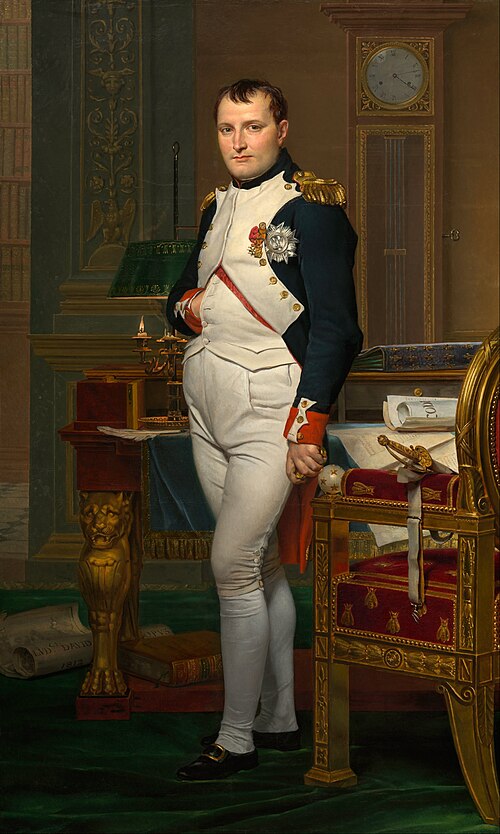
Napoleon Bonaparte
General · Modern
82.4Total
Basic Information
Born
1953
1769
Died
—
1821
Era
Modern
Modern
Nationality
Mozambique
France
Occupation
Revolutionary
General
Civilization
Other
Western
Score Comparison
Military (10%)
43.2
94.0
Political (20%)
48.3
75.0
Influence (20%)
61.9
82.0
Legacy (20%)
50.0
78.0
Leadership (15%)
42.3
80.0
Strategy (15%)
63.7
93.0
TOTAL
52.3
82.4
Rankings
🥇
Napoleon BonaparteLeader
Mil: 94.0Pol: 75.0Inf: 82.0
82.4
🥈
Afonso Dhlakama
Mil: 43.2Pol: 48.3Inf: 61.9
52.3
+30.1 behind
How This Comparison Works
Algorithm
Each figure is scored on 6 dimensions (0—100 scale) based on structured historical data: Military (10%), Political (20%), Influence (20%), Legacy (20%), Leadership (15%), Strategy (15%). The weighted total produces the final ranking.
Data Sources
Scores are computed from structured sub-indicators in the database. Scale factors adjust for era (Ancient ×0.85, Modern ×1.0) and civilization size (Eastern ×1.05, Other ×0.80) to account for differences in population and military scale.
Maximum 3 Figures
Comparisons are limited to 2—3 figures to ensure readability and statistical meaningfulness.
Error Margins
±5 points per dimension — Sub-scores are derived from historical records with inherent uncertainty. Two figures within 5 points on a dimension should be considered roughly equivalent in that area.
Total Score Accuracy
±3 points overall — The weighted combination of 6 dimensions produces a total score with approximately ±3 points of uncertainty. Differences of less than 3 points are not statistically significant— the figures are effectively tied.
Known Limitations
- Historical records are incomplete and uneven across civilizations
- Figures from oral-tradition societies may be underrepresented
- Occupation labels can misclassify multi-role figures
- Scores measure capability and impact, not moral character
- Quantitative scoring is a comparison tool, not absolute truth
Capability Radar
Military (10%) — Battles & Warfare
Battles
35
95
Win Rate
30
90
Expansion
25
95
Political (20%) — Governance & Reform
Reform
30
95
Diplomacy
40
80
Economy
20
85
Influence (20%) — Cultural & Global Reach
Cultural
30
85
Global
20
90
Legacy (20%) — Historical Impact
Historical
35
95
Longevity
25
90
Leadership (15%) — Power & Stability
Tenure
45
85
Stability
15
70
Strategy (15%) — Tactics & Innovation
Strategy
35
95
Tactics
40
98
Reform
20
92
Analysis will be generated on first visit.
Scores and timeline are available below. The page will refresh automatically when ready.
Afonso Dhlakama — Complete Timeline
1975 AD
Founded RENAMO (Mozambican National Resistance)Political Action◆ Major
Dhlakama was a founding member of RENAMO, an anti-communist rebel group opposed to the FRELIMO government. The group was initially backed by Rhodesia and South Africa, and it launched a brutal civil war against the government.
RENAMOCivil War
Impact: nationaldestructive
1979 AD
Became leader of RENAMO after the death of André MatsangaissaPolitical Action◆ Major
After Matsangaissa's death, Dhlakama assumed leadership of RENAMO. He transformed the group into a formidable guerrilla force, expanding its operations across Mozambique and prolonging the civil war.
RENAMOLeadership
Impact: national
1992 AD
Signed the Rome General Peace Accords with the Mozambican governmentPolitical Action◆ Major
Dhlakama signed a peace agreement with President Joaquim Chissano, ending the 16-year civil war. The accords transformed RENAMO into a political party and allowed Dhlakama to contest elections.
Peace AccordsCivil War
Impact: nationalconstructive
1994 AD
Contested and lost multiple presidential electionsPolitical Action◆ Major
Dhlakama ran for president in Mozambique's first multiparty elections in 1994, losing to Joaquim Chissano. He continued to contest elections in 1999, 2004, 2009, and 2014, always losing, which led to periodic accusations of fraud.
ElectionsRENAMO
Impact: national
2013 AD
Returned to armed conflict after disputed election resultsWar◆ Major
After alleging fraud in the 2013 local elections, Dhlakama ordered RENAMO fighters to resume attacks on government targets. The renewed conflict lasted several years, causing casualties and displacement before a new peace deal was signed.
Renewed ConflictRENAMO
Impact: nationaldestructive
Similar Comparisons
Comments & Discussion
No comments yet. Be the first to share your thoughts!