Loading...
Analysis will be generated on first visit.
Scores and timeline are available below. The page will refresh automatically when ready.
Parakramabahu I vs Yuwen Yong
Yuwen Yong leads by 5.0 pts · 2 figures compared
…
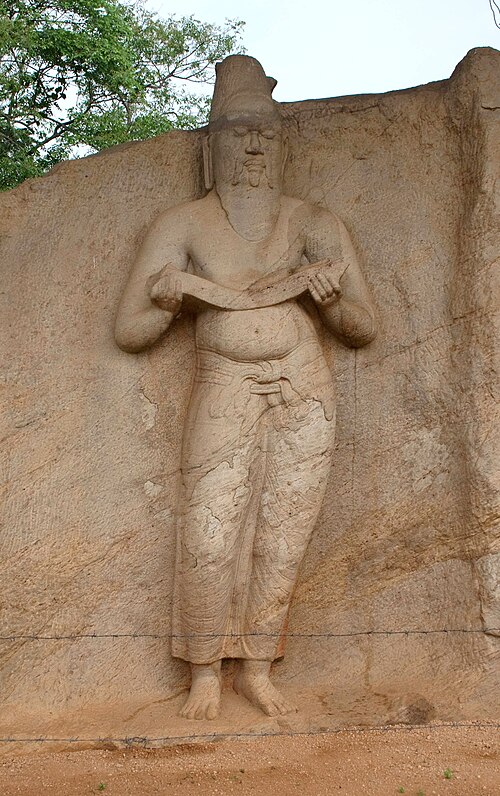
Parakramabahu I
Emperor · Medieval
69.0Total
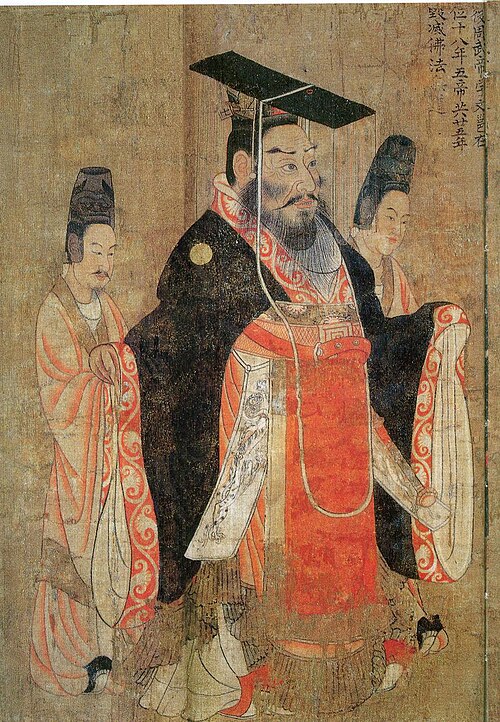
Yuwen Yong
Emperor · Medieval
74.0Total
Basic Information
Born
1123
543
Died
1186
578
Era
Medieval
Medieval
Nationality
Sri Lanka
China
Occupation
Emperor
Emperor
Civilization
Indian
Eastern
Score Comparison
Military (10%)
64.2
74.6
Political (20%)
67.1
72.0
Influence (20%)
73.5
73.2
Legacy (20%)
68.6
68.6
Leadership (15%)
66.5
76.9
Strategy (15%)
72.0
81.8
TOTAL
69.0
74.0
Rankings
🥇
Yuwen YongLeader
Mil: 74.6Pol: 72.0Inf: 73.2
74.0
🥈
Parakramabahu I
Mil: 64.2Pol: 67.1Inf: 73.5
69.0
+5.0 behind
How This Comparison Works
Algorithm
Each figure is scored on 6 dimensions (0—100 scale) based on structured historical data: Military (10%), Political (20%), Influence (20%), Legacy (20%), Leadership (15%), Strategy (15%). The weighted total produces the final ranking.
Data Sources
Scores are computed from structured sub-indicators in the database. Scale factors adjust for era (Ancient ×0.85, Modern ×1.0) and civilization size (Eastern ×1.05, Other ×0.80) to account for differences in population and military scale.
Maximum 3 Figures
Comparisons are limited to 2—3 figures to ensure readability and statistical meaningfulness.
Error Margins
±5 points per dimension — Sub-scores are derived from historical records with inherent uncertainty. Two figures within 5 points on a dimension should be considered roughly equivalent in that area.
Total Score Accuracy
±3 points overall — The weighted combination of 6 dimensions produces a total score with approximately ±3 points of uncertainty. Differences of less than 3 points are not statistically significant— the figures are effectively tied.
Known Limitations
- Historical records are incomplete and uneven across civilizations
- Figures from oral-tradition societies may be underrepresented
- Occupation labels can misclassify multi-role figures
- Scores measure capability and impact, not moral character
- Quantitative scoring is a comparison tool, not absolute truth
Capability Radar
Military (10%) — Battles & Warfare
Battles
75
75
Win Rate
80
80
Expansion
70
80
Political (20%) — Governance & Reform
Reform
80
85
Diplomacy
70
70
Economy
75
75
Influence (20%) — Cultural & Global Reach
Cultural
65
40
Global
40
40
Legacy (20%) — Historical Impact
Historical
70
65
Longevity
60
50
Leadership (15%) — Power & Stability
Tenure
85
60
Stability
80
70
Strategy (15%) — Tactics & Innovation
Strategy
75
75
Tactics
70
70
Reform
65
85
Analysis will be generated on first visit.
Scores and timeline are available below. The page will refresh automatically when ready.
Parakramabahu I — Complete Timeline
1153 AD
Unification of Sri LankaWar
Parakramabahu I unified the entire island of Sri Lanka under his rule after a series of military campaigns. He defeated the rulers of Ruhuna and other regional kingdoms, ending a period of fragmentation.
Impact: national
1160 AD
Construction of Parakrama SamudraOther◆ Major
Parakramabahu I constructed the Parakrama Samudra, a massive man-made sea of interconnected tanks and canals near Polonnaruwa. This irrigation system, covering over 5,000 acres, was a major engineering achievement.
Impact: regionalconstructive
1165 AD
Invasion of BurmaWar◆ Major
Parakramabahu I launched a naval invasion of Burma (Pagan Kingdom) in retaliation for a trade dispute. The Sinhalese fleet captured the port of Kusumiya and sacked the city, demonstrating Sri Lanka's naval power.
Impact: regional
Reform of the Buddhist SanghaReform◆ Major
Parakramabahu I convened a council to purify the Buddhist Sangha. He expelled corrupt monks and re-established discipline, strengthening Theravada Buddhism in Sri Lanka.
Impact: nationalconstructive
1170 AD
Construction of Polonnaruwa VatadageCultural◆ Major
Parakramabahu I built the Polonnaruwa Vatadage, a circular relic house for the Tooth Relic of the Buddha. This structure is considered a masterpiece of Sinhalese architecture.
Impact: nationalconstructive
Yuwen Yong — Complete Timeline
574 AD
Suppression of Buddhism in Northern ZhouReform◆ Major
Emperor Wu of Northern Zhou (Yuwen Yong) ordered the suppression of Buddhism, confiscating monastic lands, forcing monks and nuns to return to lay life, and destroying temples. He aimed to increase state revenue and military manpower, strengthening the state.
Northern ZhouBuddhist PersecutionReform
Impact: nationaldestructive
577 AD
Conquest of Northern QiWar
Emperor Wu led a successful campaign against the rival Northern Qi dynasty, conquering its territory and unifying northern China under Northern Zhou. This victory ended the division of the north and set the stage for the Sui dynasty's unification of all China.
Northern ZhouUnificationNorthern Qi
Impact: regionalconstructive
578 AD
Death during campaign against the TurksWar◆ Major
Emperor Wu died of illness while leading a campaign against the G
Northern ZhouMilitary CampaignDeath
Impact: regionaltragic
Similar Comparisons
Comments & Discussion
IronMaceScholar6/16/2026
The monastery crackdown wasn't about faith—it was about cold hard cash and conscripts. Yuwen Yong's edict freed 100,000+ monks and nuns, returning them to tax rolls and military service. That's the difference between a warlord fighting for survival and a king like Parakramabahu who inherited a stable island. When you're sandwiched between Northern Qi and Göktürks, piety is a luxury you can't afford. Sometimes the best religious policy is "prove you can swing a sword."
石窟破坏者6/16/2026
拿北周武帝和波洛罗摩婆诃一世比?这压根儿是关公战秦琼。宇文邕要的是统一天下,所以他把寺庙当钱袋子砸了,还俗十万僧人充军。锡兰国王呢?他只需要管理一个岛,当然能摆出“纯洁佛法”的谱。要是他面对北齐和突厥的夹击,我看他也会抄经书当手纸用。讲实话,出家人不种地不打仗,在乱世就是寄生虫。
PolonnaruwaPurist6/16/2026
Everyone romanticizes Parakramabahu's council, but let's look at what he actually did: he excommunicated monks who disagreed with his doctrinal reforms, centralized all Buddhist authority under his crown, and confiscated local temple lands for his massive irrigation projects. He didn't "purify" the Sangha—he hijacked it. Meanwhile, Yuwen Yong just secularized temples without pretending to restore some golden age. At least the Chinese emperor was honest about his state-building priorities. Hypocr
佛国拆庙人6/16/2026
说得好!波洛罗摩婆诃那套“纯洁佛法”听着漂亮,实际就是借佛敛权。他定的《大史》把反对派写成了邪魔外道,谁敢不听?宇文邕反而简单粗暴:寺庙拆了,铜像熔了铸钱,和尚还俗种地。论对文明的伤害,后者更直接——但至少没装圣人。锡兰佛教经此一劫,从自由百家争鸣变成了国王的传声筒,这才是真正的堕落。
SanghaSkeptic6/16/2026
The real loser here is Buddhism itself. Yuwen Yong's persecution and Parakramabahu's "purification" both served the same goal: erasing alternative power centers. In China, the resulting power vacuum let Tibetans and Daoists fill Buddhist roles. In Sri Lanka, the reformed Sangha became so dependent on royal patronage that it collapsed when the Kingdom of Polonnaruwa fell. Two kings, one unintended consequence: they both made Buddhism weaker in the long run, just in different flavors of authoritar
重组历史家6/16/2026
别被大史书的漂亮话骗了。波洛罗摩婆