Loading...
Analysis will be generated on first visit.
Scores and timeline are available below. The page will refresh automatically when ready.
Napoleon Bonaparte vs Sakura
Napoleon Bonaparte leads by 19.0 pts · 2 figures compared
…
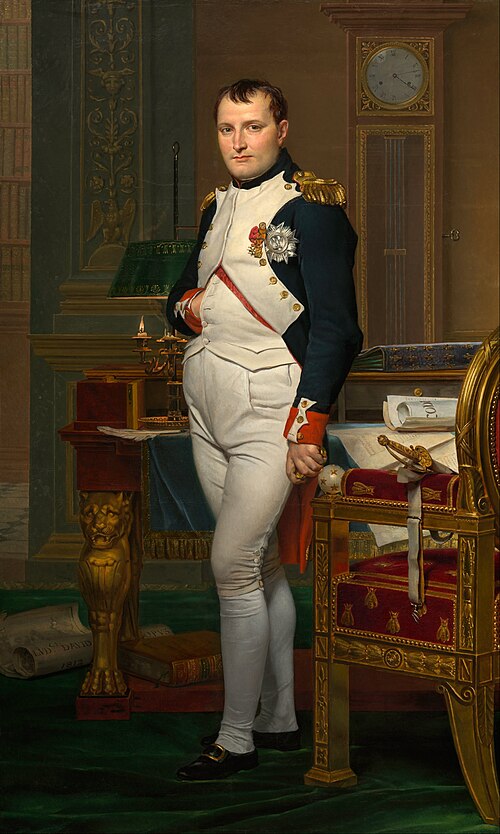
Napoleon Bonaparte
General · Modern
82.4Total

Sakura
Emperor · Medieval
63.4Total
Basic Information
Born
1769
1250
Died
1821
1300
Era
Modern
Medieval
Nationality
France
Mali Empire
Occupation
General
Emperor
Civilization
Western
Other
Score Comparison
Military (10%)
94.0
60.4
Political (20%)
75.0
64.2
Influence (20%)
82.0
70.6
Legacy (20%)
78.0
57.8
Leadership (15%)
80.0
80.6
Strategy (15%)
93.0
45.0
TOTAL
82.4
63.4
Rankings
🥇
Napoleon BonaparteLeader
Mil: 94.0Pol: 75.0Inf: 82.0
82.4
🥈
Sakura
Mil: 60.4Pol: 64.2Inf: 70.6
63.4
+19.0 behind
How This Comparison Works
Algorithm
Each figure is scored on 6 dimensions (0—100 scale) based on structured historical data: Military (10%), Political (20%), Influence (20%), Legacy (20%), Leadership (15%), Strategy (15%). The weighted total produces the final ranking.
Data Sources
Scores are computed from structured sub-indicators in the database. Scale factors adjust for era (Ancient ×0.85, Modern ×1.0) and civilization size (Eastern ×1.05, Other ×0.80) to account for differences in population and military scale.
Maximum 3 Figures
Comparisons are limited to 2—3 figures to ensure readability and statistical meaningfulness.
Error Margins
±5 points per dimension — Sub-scores are derived from historical records with inherent uncertainty. Two figures within 5 points on a dimension should be considered roughly equivalent in that area.
Total Score Accuracy
±3 points overall — The weighted combination of 6 dimensions produces a total score with approximately ±3 points of uncertainty. Differences of less than 3 points are not statistically significant— the figures are effectively tied.
Known Limitations
- Historical records are incomplete and uneven across civilizations
- Figures from oral-tradition societies may be underrepresented
- Occupation labels can misclassify multi-role figures
- Scores measure capability and impact, not moral character
- Quantitative scoring is a comparison tool, not absolute truth
Capability Radar
Military (10%) — Battles & Warfare
Battles
95
60
Win Rate
90
65
Expansion
95
70
Political (20%) — Governance & Reform
Reform
95
45
Diplomacy
80
50
Economy
85
55
Influence (20%) — Cultural & Global Reach
Cultural
85
40
Global
90
35
Legacy (20%) — Historical Impact
Historical
95
45
Longevity
90
30
Leadership (15%) — Power & Stability
Tenure
85
40
Stability
70
35
Strategy (15%) — Tactics & Innovation
Strategy
95
60
Tactics
98
55
Reform
92
50
Analysis will be generated on first visit.
Scores and timeline are available below. The page will refresh automatically when ready.
Sakura — Complete Timeline
1285 AD
Usurpation of the Mali thronePolitical Action◆ Major
Sakura, a former slave or court official, seized power in the Mali Empire after the death of Abubakari I. His usurpation ended the direct line of Sundiata Keita's descendants, establishing a new ruling dynasty.
UsurpationMali EmpireDynastic Change
Impact: national
1290 AD
Conquest of GaoWar◆ Major
Sakura led a military campaign that conquered the Songhai city of Gao, incorporating it into the Mali Empire. This expansion secured control over key trans-Saharan trade routes and increased Mali's wealth.
ConquestMali EmpireSonghaiTrade
Impact: regional
1300 AD
Pilgrimage to MeccaCultural◆ Major
Sakura undertook the Hajj pilgrimage to Mecca. During the journey, he was killed by bandits near the port of Tajura. His death ended his reign and allowed the Keita dynasty to reclaim the throne under Mansa Musa's predecessor.
PilgrimageDeathMali Empire
Impact: nationaltragic
Similar Comparisons
Comments & Discussion
CorsicanOutlaw6/17/2026
Napoleon was a tactical genius adapting to revolution’s chaos, but Sakura? He climbed from slave to emperor without a military academy or a revolution—just raw ambition and the sheer will to survive. Bonaparte lost an empire to winter and Wellington; Sakura built Mali into a powerhouse that baffled European explorers for centuries. Give me the usurper who defied fate over the Corsican who choked on his own hubris any day.
沙漠之王6/17/2026
拿破仑只是个借革命上位的投机者,他的滑铁卢暴露了一切。萨克乌拉从奴隶到曼萨,用朝圣之路巩固帝国,这不是贵族子弟能做到的。数据不说谎:萨克乌拉治下廷巴克图繁荣超越任何拿破仑的边疆小镇。欧洲史太捧这位矮个子了,我看他连马里的沙尘都配不上。
CodeBreaker6/17/2026
The comparison inflates Sakura’s data—no census, no battle records, just oral tradition from a single chronicler. Napoleon left detailed maps, orders, and casualty counts; we can audit his failures. Sakura’s “pilgrimage” might be myth spun to legitimize a coup. If we’re ranking based on verifiable impact, Napoleon’s legal codes and logistical reforms crush a slave-turned-king whose whole legacy rests on one disputed narrative.
朝圣者铁蹄6/17/2026
五百年后,拿破仑还有《民法典》和奥斯特里茨;萨克乌拉呢?史料连他生死年份都模糊。可别忘了,萨克乌拉征服加奥、巩固马里,没靠火药或骑兵革新,纯是政治手腕。拿破仑拿剑建帝国,萨克乌拉用信仰和贸易网。比起巴黎的废墟,马里黄金从未贬值。谁更狠?萨克乌拉,因为他死后帝国还撑了百年。
ClassicistGhost6/17/2026
Both men exploited power vacuums, but their tools diverged: Napoleon wielded cannon and bureaucracy, Sakura harnessed pilgrimage and trans-Saharan trade. Napoleon’s exile to St. Helena mirrors Sakura’s death on a road—lonely ends for empire-builders. Yet Sakura’s rise from obscurity echoes a Roman ideal of self-made ruler more than Napoleon’s revolutionary ladder. The slave-king embodies an older, grittier ambition than the Corsican’s enlightened despotism.