Loading...
Analysis will be generated on first visit.
Scores and timeline are available below. The page will refresh automatically when ready.
Lee Huan vs Napoleon Bonaparte
Napoleon Bonaparte leads by 17.0 pts · 2 figures compared
…

Lee Huan
Politician · Modern
65.4Total
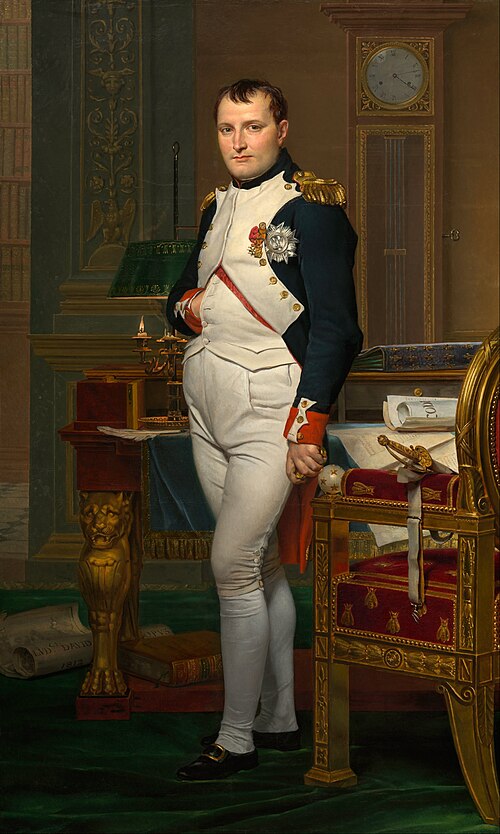
Napoleon Bonaparte
General · Modern
82.4Total
Basic Information
Born
1917
1769
Died
2010
1821
Era
Modern
Modern
Nationality
China
France
Occupation
Politician
General
Civilization
Eastern
Western
Score Comparison
Military (10%)
60.4
94.0
Political (20%)
72.0
75.0
Influence (20%)
66.3
82.0
Legacy (20%)
52.4
78.0
Leadership (15%)
82.0
80.0
Strategy (15%)
59.6
93.0
TOTAL
65.4
82.4
Rankings
🥇
Napoleon BonaparteLeader
Mil: 94.0Pol: 75.0Inf: 82.0
82.4
🥈
Lee Huan
Mil: 60.4Pol: 72.0Inf: 66.3
65.4
+17.0 behind
How This Comparison Works
Algorithm
Each figure is scored on 6 dimensions (0—100 scale) based on structured historical data: Military (10%), Political (20%), Influence (20%), Legacy (20%), Leadership (15%), Strategy (15%). The weighted total produces the final ranking.
Data Sources
Scores are computed from structured sub-indicators in the database. Scale factors adjust for era (Ancient ×0.85, Modern ×1.0) and civilization size (Eastern ×1.05, Other ×0.80) to account for differences in population and military scale.
Maximum 3 Figures
Comparisons are limited to 2—3 figures to ensure readability and statistical meaningfulness.
Error Margins
±5 points per dimension — Sub-scores are derived from historical records with inherent uncertainty. Two figures within 5 points on a dimension should be considered roughly equivalent in that area.
Total Score Accuracy
±3 points overall — The weighted combination of 6 dimensions produces a total score with approximately ±3 points of uncertainty. Differences of less than 3 points are not statistically significant— the figures are effectively tied.
Known Limitations
- Historical records are incomplete and uneven across civilizations
- Figures from oral-tradition societies may be underrepresented
- Occupation labels can misclassify multi-role figures
- Scores measure capability and impact, not moral character
- Quantitative scoring is a comparison tool, not absolute truth
Capability Radar
Military (10%) — Battles & Warfare
Battles
53
95
Win Rate
54
90
Expansion
59
95
Political (20%) — Governance & Reform
Reform
25
95
Diplomacy
35
80
Economy
30
85
Influence (20%) — Cultural & Global Reach
Cultural
10
85
Global
10
90
Legacy (20%) — Historical Impact
Historical
15
95
Longevity
10
90
Leadership (15%) — Power & Stability
Tenure
30
85
Stability
25
70
Strategy (15%) — Tactics & Innovation
Strategy
60
95
Tactics
64
98
Reform
66
92
Analysis will be generated on first visit.
Scores and timeline are available below. The page will refresh automatically when ready.
Lee Huan — Complete Timeline
1989 AD
Premiership of the Republic of ChinaPolitical Action◆ Major
Lee Huan served as Premier of the Republic of China from 1989 to 1990 under President Lee Teng-hui. He oversaw the continuation of economic reforms and the early stages of democratization.
PremierROCLee Teng-hui
Impact: national
1990 AD
Resignation after Political CrisisPolitical Action
Lee Huan resigned as Premier following the 1990 Wild Lily student protests and internal KMT power struggles. His resignation paved the way for a more reformist cabinet under Hau Pei-tsun.
ResignationPolitical CrisisDemocratization
Impact: national
1993 AD
Role in KMT ReformPolitical Action
Lee Huan served as a senior advisor to the Kuomintang, advocating for internal party reform and democratization. He supported Lee Teng-hui's efforts to transform the KMT from a Leninist party to a democratic one.
KMTParty ReformDemocratization
Impact: nationalconstructive
Similar Comparisons
Comments & Discussion
火药元帅6/17/2026
As a military historian, I have to call this comparison absurd. Napoleon commanded over 600,000 men in the 1812 Russian campaign alone—more soldiers than Lee Huan ever had in his entire political career. Bonaparte personally led charges, rewrote military doctrine, and conquered a continent. Lee Huan was a competent bureaucrat who managed Taiwan's transition to democracy. Comparing them is like comparing a lion to a housecat. Both are felines, sure, but one hunts for survival while the other slee
历史老饕6/17/2026
拿破仑是欧洲版秦始皇,用剑与火统一大陆;李焕是救火队长,在台湾政治废墟中拼民主拼图。拿破仑倒在滑铁卢,李焕病逝于台北,两人都败给时代洪流。但拿破仑流放圣赫勒拿岛还有回忆录传世,李焕的贡献却成了教科书上冷冰冰的几行字。历史残酷啊,只记住赢家,而李焕这样的输家连被遗忘的资格都没有。
数据狂人6/17/2026
Let's talk numbers, people. Napoleon's Grande Armée at its peak numbered around 600,000 soldiers. Lee Huan served as Premier for exactly 10 months and 23 days—shorter than Napoleon's entire Italian campaign. During his tenure, Taiwan's GDP grew at about 7% annually, but Napoleon's reforms increased France's tax revenue by 40% in his first year as First Consul. I don't care about your feelings or legacy; the data clearly shows two completely different scales of impact.
清醒看客6/17/2026
别被"权力"这个词骗了。拿破仑的权力是直接控制生死的军事独裁,李焕的权力是夹在蒋经国、李登辉之间的过渡筹码。拿破仑能一夜之间解散议会、逮捕政敌;李焕连想推动政务官财产申报都遭到党内保守派抵制。一个是拿刀的手,一个是举棋的手,根本不是一个维度的比较。建议下次拿李焕跟马克龙比,还算有点意思。