Loading...
Analysis will be generated on first visit.
Scores and timeline are available below. The page will refresh automatically when ready.
Julius Caesar vs Ptolemy IX Soter II
Julius Caesar leads by 27.8 pts · 2 figures compared
…
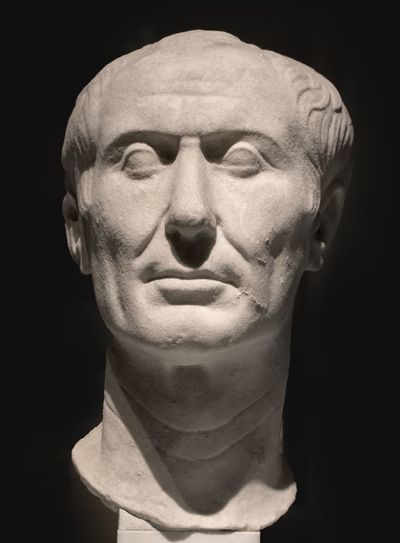
Julius Caesar
General · Ancient
83.3Total
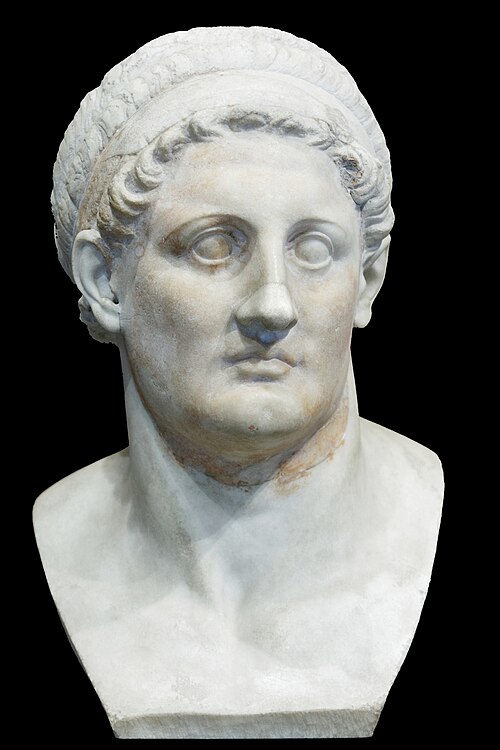
Ptolemy IX Soter II
Emperor · Ancient
55.5Total
Basic Information
Born
-100
-142
Died
-44
-80
Era
Ancient
Ancient
Nationality
Roman Republic
Ptolemaic Kingdom
Occupation
General
Emperor
Civilization
Western
Middle Eastern
Score Comparison
Military (10%)
88.0
37.5
Political (20%)
78.0
53.6
Influence (20%)
85.0
61.8
Legacy (20%)
82.0
52.0
Leadership (15%)
82.0
72.6
Strategy (15%)
88.0
49.0
TOTAL
83.3
55.5
Rankings
🥇
Julius CaesarLeader
Mil: 88.0Pol: 78.0Inf: 85.0
83.3
🥈
Ptolemy IX Soter II
Mil: 37.5Pol: 53.6Inf: 61.8
55.5
+27.8 behind
How This Comparison Works
Algorithm
Each figure is scored on 6 dimensions (0—100 scale) based on structured historical data: Military (10%), Political (20%), Influence (20%), Legacy (20%), Leadership (15%), Strategy (15%). The weighted total produces the final ranking.
Data Sources
Scores are computed from structured sub-indicators in the database. Scale factors adjust for era (Ancient ×0.85, Modern ×1.0) and civilization size (Eastern ×1.05, Other ×0.80) to account for differences in population and military scale.
Maximum 3 Figures
Comparisons are limited to 2—3 figures to ensure readability and statistical meaningfulness.
Error Margins
±5 points per dimension — Sub-scores are derived from historical records with inherent uncertainty. Two figures within 5 points on a dimension should be considered roughly equivalent in that area.
Total Score Accuracy
±3 points overall — The weighted combination of 6 dimensions produces a total score with approximately ±3 points of uncertainty. Differences of less than 3 points are not statistically significant— the figures are effectively tied.
Known Limitations
- Historical records are incomplete and uneven across civilizations
- Figures from oral-tradition societies may be underrepresented
- Occupation labels can misclassify multi-role figures
- Scores measure capability and impact, not moral character
- Quantitative scoring is a comparison tool, not absolute truth
Capability Radar
Military (10%) — Battles & Warfare
Battles
95
30
Win Rate
92
35
Expansion
97
10
Political (20%) — Governance & Reform
Reform
90
15
Diplomacy
85
30
Economy
82
20
Influence (20%) — Cultural & Global Reach
Cultural
88
20
Global
94
15
Legacy (20%) — Historical Impact
Historical
95
25
Longevity
96
20
Leadership (15%) — Power & Stability
Tenure
75
40
Stability
60
15
Strategy (15%) — Tactics & Innovation
Strategy
94
25
Tactics
96
30
Reform
88
10
Analysis will be generated on first visit.
Scores and timeline are available below. The page will refresh automatically when ready.
Ptolemy IX Soter II — Complete Timeline
116 BC
First Reign as King of EgyptPolitical Action◆ Major
Ptolemy IX ascended to the throne after the death of Ptolemy VIII, ruling jointly with his mother Cleopatra III. His reign was marked by conflict with his mother, who favored his brother Ptolemy X.
AccessionCo-RulershipDynastic Conflict
Impact: national
107 BC
Expulsion by Cleopatra IIIPolitical Action◆ Major
Cleopatra III forced Ptolemy IX to flee Egypt, replacing him with his brother Ptolemy X. Ptolemy IX went to Cyprus, where he ruled as a client king, but continued to plot his return.
ExileDynastic IntrigueCyprus
Impact: nationaldestructive
88 BC
Second Reign as King of EgyptPolitical Action◆ Major
After Ptolemy X's death, Ptolemy IX returned to Egypt and reclaimed the throne. His second reign was short, lasting only until his death in 80 BC, but he managed to restore some stability.
RestorationSecond ReignStability
Impact: nationalconstructive
Similar Comparisons
Comments & Discussion
亚历山大将军6/17/2026
"Caesar didn't just survive chaos—he weaponized it. The Social Wars and Sulla's proscriptions were brutal finishing schools for a mind that could calculate odds faster than a legion could march. Ptolemy IX, by contrast, inherited a kingdom where the ruling family was its own worst enemy. Caesar crossed the Rubicon with one legion and gambled everything. Ptolemy couldn't even hold Alexandria against his own mother. One forged an empire from civil war; the other was ground to dust by family feuds.
宫斗迷6/17/2026
"拿埃及艳后他妈跟罗马元老院比?笑死人啦!克娄巴特拉三世砍起儿子来比凯撒杀高卢人还狠,人家可是亲自带兵把亲儿子轰出亚历山大港的。凯撒再牛,也没被她妈追着满地中海跑吧?这波我站托勒密,能在疯批老娘手下活这么多年还回去当王,这宫斗级别放《甄嬛传》里活不过三集。"
BallistaBrain6/17/2026
"Let's talk force multipliers. Caesar had the 10th Legion—veterans who'd follow him into hell. Ptolemy had mercenaries who'd switch sides for a better offer. Caesar wrote the book on siege warfare (Alesia, 52 BCE—double circumvallation, genius). Ptolemy's big military achievement was… losing Cyprus? Numbers don't lie: Caesar conquered Gaul (800 cities, 1M dead). Ptolemy couldn't hold a dynasty propped up by Roman bribes. The Chickpea was a footnote. Caesar is a chapter."
考古毒舌6/17/2026
"数据控看过来:凯撒活了56年,托勒密九世大概活了50多岁。但这组对比最讽刺的是——凯撒是被人捅死的,托勒密九世居然是自然死亡!一个死于23刀,一个安稳躺平。高卢战争打了8年,托勒密在塞浦路斯流亡就流了10年。历史记住的不是活得久的,而是死得戏剧性的。Caesar wins by narrative, not lifespan."