Loading...
Analysis will be generated on first visit.
Scores and timeline are available below. The page will refresh automatically when ready.
Gulbuddin Hekmatyar vs Zhang Xianzhong
Gulbuddin Hekmatyar leads by 2.5 pts · 2 figures compared
…
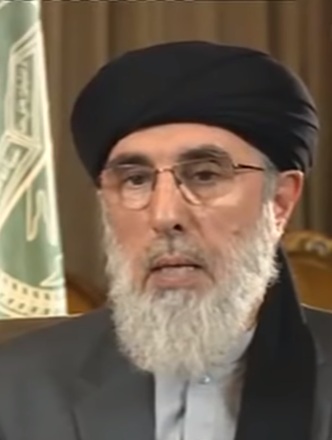
Gulbuddin Hekmatyar
Revolutionary · Modern
51.6Total

Zhang Xianzhong
Revolutionary · Modern
49.1Total
Basic Information
Born
1947
1606
Died
—
1647
Era
Modern
Modern
Nationality
Afghanistan
China
Occupation
Revolutionary
Revolutionary
Civilization
Middle Eastern
Eastern
Score Comparison
Military (10%)
46.8
63.4
Political (20%)
45.9
34.4
Influence (20%)
61.9
62.9
Legacy (20%)
47.8
56.0
Leadership (15%)
41.3
34.5
Strategy (15%)
63.7
45.9
TOTAL
51.6
49.1
Rankings
🥇
Gulbuddin HekmatyarLeader
Mil: 46.8Pol: 45.9Inf: 61.9
51.6
🥈
Zhang Xianzhong
Mil: 63.4Pol: 34.4Inf: 62.9
49.1
+2.5 behind
How This Comparison Works
Algorithm
Each figure is scored on 6 dimensions (0—100 scale) based on structured historical data: Military (10%), Political (20%), Influence (20%), Legacy (20%), Leadership (15%), Strategy (15%). The weighted total produces the final ranking.
Data Sources
Scores are computed from structured sub-indicators in the database. Scale factors adjust for era (Ancient ×0.85, Modern ×1.0) and civilization size (Eastern ×1.05, Other ×0.80) to account for differences in population and military scale.
Maximum 3 Figures
Comparisons are limited to 2—3 figures to ensure readability and statistical meaningfulness.
Error Margins
±5 points per dimension — Sub-scores are derived from historical records with inherent uncertainty. Two figures within 5 points on a dimension should be considered roughly equivalent in that area.
Total Score Accuracy
±3 points overall — The weighted combination of 6 dimensions produces a total score with approximately ±3 points of uncertainty. Differences of less than 3 points are not statistically significant— the figures are effectively tied.
Known Limitations
- Historical records are incomplete and uneven across civilizations
- Figures from oral-tradition societies may be underrepresented
- Occupation labels can misclassify multi-role figures
- Scores measure capability and impact, not moral character
- Quantitative scoring is a comparison tool, not absolute truth
Capability Radar
Military (10%) — Battles & Warfare
Battles
45
55
Win Rate
30
50
Expansion
25
60
Political (20%) — Governance & Reform
Reform
15
5
Diplomacy
20
10
Economy
10
5
Influence (20%) — Cultural & Global Reach
Cultural
25
20
Global
25
15
Legacy (20%) — Historical Impact
Historical
30
35
Longevity
20
25
Leadership (15%) — Power & Stability
Tenure
30
30
Stability
5
5
Strategy (15%) — Tactics & Innovation
Strategy
35
40
Tactics
40
45
Reform
20
10
Analysis will be generated on first visit.
Scores and timeline are available below. The page will refresh automatically when ready.
Gulbuddin Hekmatyar — Complete Timeline
1975 AD
Founding of Hezb-e Islami (1975)Political Action◆ Major
Gulbuddin Hekmatyar founded the Hezb-e Islami political party, an Islamist faction that became one of the most powerful mujahideen groups during the Soviet-Afghan War. The party received significant support from Pakistan's ISI and foreign Islamist donors.
MujahideenIslamist PartyCold War
Impact: national
1993 AD
Prime Minister during Civil War (1993-1994)Political Action◆ Major
Hekmatyar served as Prime Minister of Afghanistan from 1993 to 1994 under President Burhanuddin Rabbani. His tenure was marked by intense factional fighting, including rocket attacks on Kabul that caused thousands of civilian casualties, contributing to the devastation of the city.
Civil WarKabulRocket Attacks
Impact: nationaldestructive
1996 AD
Alliance with Taliban (1996-2001)Political Action
After the Taliban captured Kabul in 1996, Hekmatyar initially fled to Iran. He later aligned with the Taliban regime, though his influence waned. He remained in Afghanistan until the US-led invasion in 2001, after which he fled to Pakistan.
TalibanExileAlliance
Impact: national
2016 AD
Peace Agreement with Afghan Government (2016)Political Action◆ Major
Hekmatyar signed a peace agreement with the Afghan government of President Ashraf Ghani in 2016. The deal allowed him to return to Afghanistan from exile, with his party recognized as a political entity and his fighters integrated into state security forces.
Peace DealReconciliationGhani
Impact: nationalconstructive
Zhang Xianzhong — Complete Timeline
1630 AD
Launched Rebellion in ShaanxiWar◆ Major
Zhang Xianzhong joined a peasant rebellion in Shaanxi province during the late Ming dynasty. He quickly rose to become a major rebel leader, gathering a large army and establishing a base of operations in the region.
Ming DynastyRebellionShaanxi
Impact: regionaldestructive
1644 AD
Captured and Sacked ChengduWar◆ Major
Zhang Xianzhong captured the city of Chengdu, the capital of Sichuan province. He then proclaimed the Daxi dynasty and made Chengdu his capital. The capture was accompanied by widespread destruction and massacres of the local population.
Ming-Qing TransitionSichuanMassacre
Impact: regionaldestructive
Proclaimed the Daxi DynastyPolitical Action◆ Major
Zhang Xianzhong proclaimed the Daxi (Great Western) dynasty in Sichuan. He established a government and minted his own coinage. His rule was characterized by extreme violence, including the systematic killing of scholars, officials, and civilians.
Daxi DynastyProclamationSichuan
Impact: regionaldestructive
1647 AD
Killed in Battle Against Qing ForcesWar◆ Major
Zhang Xianzhong was killed in battle against Qing forces in Xichong, Sichuan. His death led to the collapse of the Daxi dynasty. The Qing conquest of Sichuan was completed shortly after, but the province had been devastated by years of warfare.
Qing DynastyBattleDeath
Impact: regionaltragic
Similar Comparisons
Comments & Discussion
KABUL_KILLER6/16/2026
Comparing a 17th-century Chinese warlord to a Cold War proxy fighter is like comparing a wolf to a coyote—same genus, different game. Hekmatyar wasn't just brutal; he was a failed state-maker who signed a power-sharing deal while his rockets were still falling on Kabul. Zhang at least had the decency to die fighting. Hekmatyar died in bed, a testament to how modern warlords prefer peace treaties over principles.|
紫虎屠城6/16/2026
张献忠再狠,至少敢把成都烧成白地,杀人盈野,最后战死沙场。赫克马蒂亚尔呢?拿了CIA和巴基斯坦的钱,火箭炸喀布尔,转身就和北方联盟签和平协议。一个真造反,一个玩投机。古今对比?张是末世屠夫,赫是冷战耗子。|
SIFTING_ASHES6/16/2026
The real difference here isn't cruelty—it's context. Zhang Xianzhong operated in a collapsing Ming dynasty where violence was the only currency. Hekmatyar, by contrast, had the benefit of modern weaponry and foreign sponsors. He chose to be a mullah with a rocket launcher, not a king with a sword. Zhang's genocide was medieval chaos; Hekmatyar's was calculated destruction.|
反叛者之秤6/16/2026
张献忠的残忍有根源:饥荒、腐败、明末崩溃,他没读过书,只有刀。赫克马蒂亚尔呢?工程师出身,有苏联入侵的借口,有巴基斯坦支持。一个是被逼成的暴君,一个是主动选的恐怖政客。张战死是烈士,赫签和约是懦夫。历史不会记住投机者。|
THE_SURVIVALIST6/16/2026
Everyone focuses on the body counts, but I'm more interested in their exits. Zhang died on a battlefield—a rebel's end. Hekmatyar died of old age after signing a peace deal. That tells you everything. One was fighting for a world to burn; the other was fighting for a seat at the table. Modern warlords don't want revolution—they want a piece of the pie. Zhang wanted the whole bakery.