Loading...
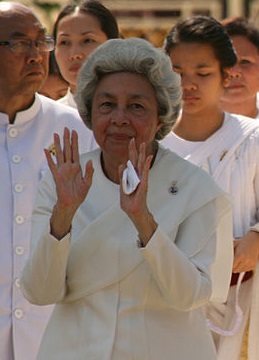
Sihanouk Norodom
ModernPoliticianCambodia1922 — ?
King-Father who navigated Cold War Cambodia.
Compare Sihanouk Norodom with another historical figure:
Quick Facts
Born
1922
Country
Cambodia
Era
Modern
Occupation
Politician
Score Overview
Military (10%)15
Political (20%)68
Influence (20%)62
Legacy (20%)52
Leadership (15%)74
Strategy (15%)43
Total Score55.5
Sihanouk Norodom — Complete Timeline
1955 AD
Abdicated the throne in favor of his fatherPolitical Action◆ Major
Sihanouk abdicated as King of Cambodia to pursue a political career. He formed the Sangkum Reastr Niyum political movement, winning the 1955 election and becoming Prime Minister, a position he held while remaining the dominant political figure.
AbdicationPolitical CareerSangkum
Impact: national
Declared neutrality during the Vietnam WarPolitical Action◆ Major
Sihanouk adopted a policy of neutrality and non-alignment for Cambodia during the escalating Vietnam War. He sought to avoid entanglement in the conflict between the US and communist forces, balancing relations with China, the US, and North Vietnam.
NeutralityVietnam WarForeign Policy
Impact: regional
1970 AD
Overthrown in a US-backed coupPolitical Action
While abroad, Sihanouk was deposed by a coup led by General Lon Nol, supported by the United States. This ended his 15-year rule and forced him into exile in China, where he formed a government-in-exile and allied with the Khmer Rouge.
CoupExileLon NolUS Involvement
Impact: nationaldestructive
1993 AD
Returned as King under the Paris Peace AccordsPolitical Action◆ Major
Following the UN-sponsored elections and the Paris Peace Accords, Sihanouk was reinstated as King of Cambodia. He returned from exile to a constitutional monarchy, serving as a unifying figurehead after decades of civil war and the Khmer Rouge regime.
RestorationPeace AccordsConstitutional Monarchy
Impact: nationalconstructive
2004 AD
Abdicated for the second timePolitical Action
Sihanouk abdicated the throne for health reasons, citing his age and desire for a peaceful retirement. His son, Norodom Sihamoni, succeeded him as King, marking the end of Sihanouk's direct political role in Cambodia.
AbdicationSuccessionRetirement
Impact: national
Detailed Scores
▶View all detailed scores
Military
Strategy
6
Tactics
6
Battles
6
Army Scale
5
War Impact
6
Political
Governance
7
Reform
7
Stability
7
Policy
7
Power
8
Influence
History
9
Global
8
Culture
8
Ideology
9
Legacy
8
People often compare with
See how Sihanouk Norodom stacks up against other historical figures
Popular Comparisons
Sihanouk Norodom vs Li Hongzhang
vs Li Hongzhang61
Sihanouk Norodom vs Julius Nyerere
vs Julius Nyerere58
Sihanouk Norodom vs Ahmed Dini Ahmed
vs Ahmed Dini Ahmed48
Sihanouk Norodom vs Hasan Polatkan
vs Hasan Polatkan47
Sihanouk Norodom vs Mark Carney
vs Mark Carney46
Sihanouk Norodom vs Antti Rinne
vs Antti Rinne40