Loading...
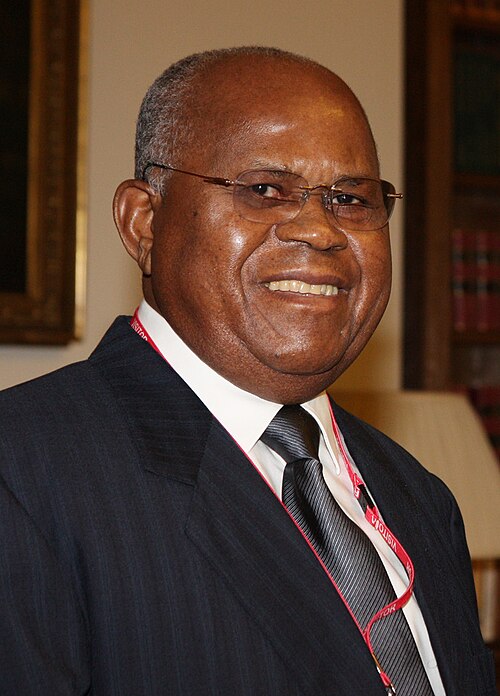
Felix Tshisekedi
ModernPoliticianDR Congo1963 — ?
Current Congolese president, son of Etienne.
Compare Felix Tshisekedi with another historical figure:
Quick Facts
Born
1963
Country
DR Congo
Era
Modern
Occupation
Politician
Score Overview
Military (10%)29
Political (20%)35
Influence (20%)49
Legacy (20%)38
Leadership (15%)55
Strategy (15%)41
Total Score42.1
Felix Tshisekedi — Complete Timeline
2019 AD
Launched Free Primary Education PolicyReform◆ Major
Tshisekedi's government implemented a policy of free primary education, abolishing school fees for public primary schools. The policy led to a surge in enrollment but faced challenges including overcrowding, teacher shortages, and delayed salary payments.
Education reformSocial policyImplementation challenges
Impact: nationalprogressive
Elected President of the Democratic Republic of the CongoPolitical Action
Felix Tshisekedi was declared winner of the 2018 presidential election, succeeding Joseph Kabila. The election was widely disputed, with allegations of a backroom deal with Kabila, but Tshisekedi became the first peaceful transfer of power in the DRC's history.
ElectionPresidencyDemocratic transition
Impact: national
Formed Coalition Government with Joseph KabilaPolitical Action◆ Major
Tshisekedi formed a coalition government with Joseph Kabila's Common Front for Congo (FCC) party, giving Kabila's allies control over key ministries and parliament. This power-sharing arrangement limited Tshisekedi's ability to govern independently.
CoalitionPower-sharingKabila
Impact: national
2020 AD
Broke Coalition and Formed New MajorityPolitical Action◆ Major
Tshisekedi ended the coalition with Kabila's FCC, forming a new parliamentary majority called the Union for the Nation. This move consolidated his power, allowing him to appoint his own prime minister and cabinet, and reduce Kabila's influence.
Political realignmentConsolidation of powerKabila
Impact: nationalconstructive
2021 AD
Declared State of Siege in Eastern ProvincesPolitical Action◆ Major
Tshisekedi declared a state of siege in North Kivu and Ituri provinces, replacing civilian authorities with military and police officers to combat armed groups. The measure was controversial, with critics arguing it failed to improve security and led to human rights abuses.
State of siegeSecurityEastern DRC
Impact: regional
2023 AD
Re-elected PresidentPolitical Action◆ Major
Tshisekedi won re-election in the 2023 presidential election with over 73% of the vote, according to official results. The election was marred by logistical problems, opposition allegations of fraud, and violent protests, but Tshisekedi secured a second term.
ElectionRe-electionControversy
Impact: national
Detailed Scores
▶View all detailed scores
Military
Strategy
6
Tactics
5
Battles
6
Army Scale
5
War Impact
6
Political
Governance
7
Reform
7
Stability
7
Policy
7
Power
8
Influence
History
9
Global
8
Culture
8
Ideology
9
Legacy
8
People often compare with
See how Felix Tshisekedi stacks up against other historical figures
Popular Comparisons
Felix Tshisekedi vs Joschka Fischer
vs Joschka Fischer58
Felix Tshisekedi vs Lord Ripon
vs Lord Ripon55
Felix Tshisekedi vs Imran Khan
vs Imran Khan55
Felix Tshisekedi vs Lionel Jospin
vs Lionel Jospin54
Felix Tshisekedi vs Paul Martin Jr
vs Paul Martin Jr53
Felix Tshisekedi vs Rabri Devi
vs Rabri Devi49