Loading...
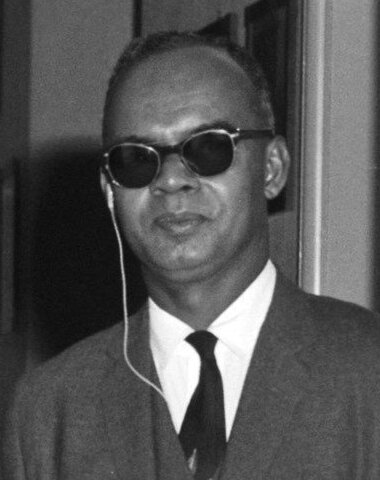
Eric Williams
ModernPoliticianTrinidad1911 — 1981
Father of Trinidad and Tobago, PM for 25 years.
Compare Eric Williams with another historical figure:
Quick Facts
Born
1911
Died
1981
Country
Trinidad
Era
Modern
Occupation
Politician
Score Overview
Military (10%)50
Political (20%)72
Influence (20%)57
Legacy (20%)52
Leadership (15%)72
Strategy (15%)40
Total Score57.8
Eric Williams — Complete Timeline
1944 AD
Published 'Capitalism and Slavery'Cultural◆ Major
Williams published his seminal historical work 'Capitalism and Slavery', arguing that the abolition of the slave trade was driven by economic factors rather than humanitarian motives. The book became a foundational text in Caribbean historiography and Atlantic studies.
HistoriographyScholarshipSlaveryEconomics
Impact: global
1956 AD
Founded the People's National MovementPolitical Action◆ Major
Williams founded the People's National Movement (PNM), a political party that would dominate Trinidad and Tobago's politics for decades. The PNM won the 1956 general election, making Williams Chief Minister.
Political PartyFoundingElection Victory
Impact: nationalconstructive
1961 AD
Declared 'Massa Day Done'Political Action◆ Major
In a famous speech at Woodford Square, Williams declared 'Massa Day Done', signaling the end of colonial-era elite dominance and the rise of a new nationalist, working-class political order. The phrase became a rallying cry for decolonization.
SpeechNationalismDecolonization
Impact: nationalprogressive
1962 AD
Led Trinidad and Tobago to IndependencePolitical Action
As Premier and leader of the People's National Movement, Williams successfully negotiated Trinidad and Tobago's independence from the United Kingdom on August 31, 1962. He became the first Prime Minister of the newly sovereign nation.
IndependenceNation-buildingDecolonization
Impact: nationalconstructive
1974 AD
Nationalized Oil and Sugar IndustriesReform◆ Major
Williams' government nationalized the oil and sugar industries, taking control of key economic sectors from foreign companies. This policy aimed to increase national ownership and revenue, but also led to inefficiencies and economic challenges.
NationalizationEconomic PolicyOilSugar
Impact: nationalconstructive
1981 AD
Resigned as Prime MinisterPolitical Action◆ Major
After 25 years as Prime Minister, Williams resigned on March 30, 1981, citing health reasons. He died later that year. His resignation marked the end of an era in Trinidad and Tobago's political history.
ResignationEnd of Era
Impact: national
Detailed Scores
▶View all detailed scores
Military
Strategy
6
Tactics
5
Battles
6
Army Scale
5
War Impact
6
Political
Governance
7
Reform
7
Stability
7
Policy
7
Power
8
Influence
History
9
Global
8
Culture
9
Ideology
9
Legacy
9
People often compare with
See how Eric Williams stacks up against other historical figures
Popular Comparisons
Eric Williams vs Funmilayo Ransome-Kuti
vs Funmilayo Ransome-Kuti55
Eric Williams vs Hussein Onn
vs Hussein Onn54
Eric Williams vs Moon Jae-in
vs Moon Jae-in54
Eric Williams vs Sucheta Kripalani
vs Sucheta Kripalani52
Eric Williams vs Mette Frederiksen
vs Mette Frederiksen49
Eric Williams vs Johann Schneider-Ammann
vs Johann Schneider-Ammann47