Loading...
Wang Jun vs Zhu Ran
Wang Jun leads by 7.0 pts · 2 figures compared
…

Wang Jun
General · Ancient
51.1Total
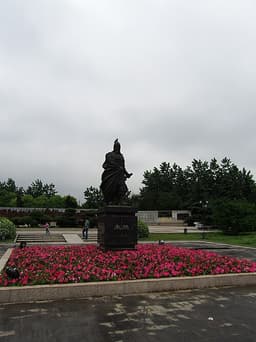
Zhu Ran
General · Ancient
44.1Total
Basic Information
Born
206
182
Died
286
249
Era
Ancient
Ancient
Nationality
China
China
Occupation
General
General
Civilization
Eastern
Eastern
Score Comparison
Military (10%)
77.5
52.5
Political (20%)
27.9
35.0
Influence (20%)
54.1
47.1
Legacy (20%)
47.5
39.2
Leadership (15%)
43.8
40.4
Strategy (15%)
72.0
60.0
TOTAL
51.1
44.1
Wang Jun — Complete Timeline
280 AD
Naval conquest of Eastern WuWar◆ Major
Wang Jun commanded the Jin fleet down the Yangtze River, capturing the Eastern Wu capital at Jianye. Sun Hao surrendered, ending the Three Kingdoms period and reunifying China under the Jin dynasty.
Three KingdomsJin conquestNaval warfare
Impact: national
Zhu Ran — Complete Timeline
190 AD
Childhood Friendship with Sun QuanOther
Zhu Ran grew up alongside Sun Quan as a childhood friend. This close relationship led to Sun Quan entrusting him with important military commands and positions of authority throughout his career.
FriendshipSun QuanTrust
Impact: regionalconstructive
200 AD
Service under Sun QuanWar◆ Major
Zhu Ran served Sun Quan as a general, participating in campaigns against Cao Cao and Liu Bei. He was known for his strategic acumen and was given command of key defensive positions.
ServiceSun QuanStrategy
Impact: regionalconstructive
223 AD
Defense of JianglingWar◆ Major
Zhu Ran led the successful defense of Jiangling against a Wei siege. He held the city for months despite being outnumbered, using clever tactics to repel attacks until reinforcements arrived.
DefenseJianglingSiege
Impact: regionalconstructive
249 AD
Death of Zhu RanOther
Zhu Ran died of natural causes after a long and distinguished career. Sun Quan mourned his death deeply, honoring his childhood friend and loyal general with posthumous titles.
DeathLoyaltyFriendship
Impact: regional
Expert Analysis
Origins
Wang Jun was born in 206 AD during the late Han dynasty, into a family of modest officials. He entered military service under the Jin dynasty, rising through ranks based on his naval engineering skills. His early career included constructing a massive fleet on the upper Yangtze River, preparing for the eventual campaign against Eastern Wu.
Zhu Ran, born in 182 AD, grew up alongside Sun Quan in the Sun family compound. Their childhood friendship gave him unique access to power. Unlike Wang Jun, Zhu Ran's early life was shaped by the chaos of the Three Kingdoms period, where he learned military tactics under the tutelage of Sun Ce and Zhou Yu.
Rise to Power
Wang Jun's rise came through his technical expertise. In 279 AD, he proposed a naval invasion of Eastern Wu to Emperor Wu of Jin. He built a fleet of large warships equipped with rams and siege weapons at Chengdu. His key turning point was the imperial decree appointing him admiral of the Jin southern fleet in 280 AD.
Zhu Ran's rise was more gradual. He fought in the Battle of Red Cliffs (208 AD) as a junior officer, then gained recognition during the campaign against Liu Bei in 215 AD. His childhood friendship with Sun Quan led to his appointment as commander of Jiangling in 219 AD, a strategic city on the Yangtze.
Leadership & Governance
Wang Jun led through meticulous planning. He standardized ship designs and trained crews for two years before the invasion. His leadership style was methodical, focusing on logistics and engineering. He scored 72.0 in strategy, reflecting his careful approach.
Zhu Ran's leadership was adaptive and resilient. During the Wei siege of Jiangling (222-223 AD), he maintained morale by sharing hardships with his troops. He used deceptive tactics, such as feigning weakness to lure enemies into traps. His strategy score of 60.0 indicates competence but not genius.
Triumph & Tragedy
Wang Jun's greatest triumph was the naval conquest of Eastern Wu in 280 AD. His fleet of 5,000 ships sailed down the Yangtze, breaking through Wu's iron chain defenses with giant torches and rams. He captured the capital Jianye, accepting Sun Hao's surrender. His tragedy came afterward: political rivals accused him of looting, and his achievements were downplayed by jealous officials.
Zhu Ran's greatest success was the defense of Jiangling. Outnumbered by Wei forces under Cao Zhen, he held the city for over six months, using sorties and burning siege equipment. His failure was his inability to expand Wu's territory significantly; his campaigns against Wei were largely defensive. He died of natural causes in 249 AD, mourned by Sun Quan.
Character & Destiny
Wang Jun was ambitious and technically brilliant but politically naive. His focus on naval warfare made him indispensable for the conquest, yet his lack of courtly connections led to post-war obscurity. Historical records show he died in 285 AD, his legacy overshadowed by his rivals.
Zhu Ran was loyal and reliable, a product of Sun Quan's patronage. His character as a childhood friend gave him stability but limited his independence. He never commanded armies as large as Wang Jun's, and his defensive mindset restricted his impact.
Legacy
Wang Jun's legacy is the unification of China under the Jin dynasty. His naval tactics influenced later Chinese maritime warfare, including the Song dynasty's riverine fleets. However, his name is less known than other Jin generals like Du Yu.
Zhu Ran's legacy is more localized. His defense of Jiangling became a textbook example of siege warfare in Chinese military history. He is remembered in Wu-centric histories as a steadfast general, but his impact beyond the Three Kingdoms period is minimal.
Conclusion
Wang Jun had a greater impact than Zhu Ran. His military score of 77.5 versus Zhu Ran's 52.5 reflects his decisive role in ending the Three Kingdoms era. While Zhu Ran was a capable defender, Wang Jun's conquest changed the political landscape of China. The unification he achieved was a pivotal event, whereas Zhu Ran's actions, though competent, only prolonged Wu's existence. Wang Jun's strategic vision and technical innovation set him apart. Despite his political failings, his historical significance outweighs Zhu Ran's.
Rankings
🥇
Wang JunLeader
Mil: 77.5Pol: 27.9Inf: 54.1
51.1
🥈
Zhu Ran
Mil: 52.5Pol: 35.0Inf: 47.1
44.1
+7.0 behind
How This Comparison Works
Algorithm
Each figure is scored on 6 dimensions (0—100 scale) based on structured historical data: Military (10%), Political (20%), Influence (20%), Legacy (20%), Leadership (15%), Strategy (15%). The weighted total produces the final ranking.
Data Sources
Scores are computed from structured sub-indicators in the database. Scale factors adjust for era (Ancient ×0.85, Modern ×1.0) and civilization size (Eastern ×1.05, Other ×0.80) to account for differences in population and military scale.
Maximum 3 Figures
Comparisons are limited to 2—3 figures to ensure readability and statistical meaningfulness.
Error Margins
±5 points per dimension — Sub-scores are derived from historical records with inherent uncertainty. Two figures within 5 points on a dimension should be considered roughly equivalent in that area.
Total Score Accuracy
±3 points overall — The weighted combination of 6 dimensions produces a total score with approximately ±3 points of uncertainty. Differences of less than 3 points are not statistically significant— the figures are effectively tied.
Known Limitations
- Historical records are incomplete and uneven across civilizations
- Figures from oral-tradition societies may be underrepresented
- Occupation labels can misclassify multi-role figures
- Scores measure capability and impact, not moral character
- Quantitative scoring is a comparison tool, not absolute truth
Capability Radar
Military (10%) — Battles & Warfare
Battles
75
45
Win Rate
80
40
Expansion
75
30
Political (20%) — Governance & Reform
Reform
30
10
Diplomacy
45
30
Economy
35
20
Influence (20%) — Cultural & Global Reach
Cultural
40
20
Global
35
10
Legacy (20%) — Historical Impact
Historical
55
25
Longevity
40
20
Leadership (15%) — Power & Stability
Tenure
40
40
Stability
40
35
Strategy (15%) — Tactics & Innovation
Strategy
80
45
Tactics
85
50
Reform
60
10
Similar Comparisons
Comments & Discussion
No comments yet. Be the first to share your thoughts!