Loading...
Vauban vs Yi Seong-gye
Vauban leads by 0.6 pts · 2 figures compared
…

Vauban
General · Modern
76.4Total
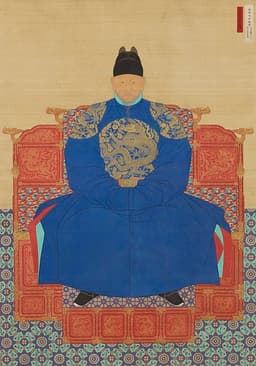
Yi Seong-gye
Emperor · Medieval
75.8Total
Basic Information
Born
1633
1335
Died
1707
1408
Era
Modern
Medieval
Nationality
France
Korea
Occupation
General
Emperor
Civilization
Western
Eastern
Score Comparison
Military (10%)
76.0
74.7
Political (20%)
59.3
70.0
Influence (20%)
71.0
88.0
Legacy (20%)
90.0
75.0
Leadership (15%)
77.2
68.0
Strategy (15%)
80.6
69.1
TOTAL
76.4
75.8
Vauban — Complete Timeline
1673 AD
Siege of MaastrichtWar◆ Major
Vauban directed the siege of Maastricht for Louis XIV. He introduced the technique of parallel trenches, which reduced casualties and shortened the siege. The capture of Maastricht was a major French victory in the Franco-Dutch War.
Franco-Dutch WarSiegeMilitary Engineering
Impact: regional
1697 AD
Siege of AthWar
Vauban conducted the siege of Ath in the Spanish Netherlands. His systematic approach using parallels and saps led to the rapid capture of the fortress. The siege demonstrated the effectiveness of his methods.
Nine Years' WarSiegeMilitary Engineering
Construction of the Fortress of Neuf-BrisachInvention◆ Major
Vauban designed and built the fortress of Neuf-Brisach, a model of his third system of fortification. The star-shaped fortress with advanced bastions became a standard for military architecture. It was built to protect the French border after the Treaty of Ryswick.
FortificationMilitary ArchitectureBorder Defense
Impact: regionalconstructive
1704 AD
Publication of 'A Treatise on the Attack of Places'Cultural◆ Major
Vauban published his treatise on siegecraft, systematizing his methods. The work became a standard military textbook in Europe. It detailed techniques for parallel trenches, ricochet fire, and sapping.
Military TheorySiegecraftPublication
Impact: globalconstructive
1707 AD
Proposal for a 'Dîme Royale' Tax ReformReform
Vauban proposed a radical tax reform called the 'D
Tax ReformEconomic PolicyFrance
Impact: nationalconstructive
Yi Seong-gye — Complete Timeline
1380 AD
Battle of HwangsanWar◆ Major
Yi Seong-gye led Goryeo forces against Japanese pirates (wokou) at the Battle of Hwangsan. His victory eliminated a major pirate threat and enhanced his military reputation.
WokouBattleGoryeo
Impact: regionalconstructive
1388 AD
Wihwado RetreatPolitical Action
Yi Seong-gye turned his army back at Wihwado Island rather than invade Ming China as ordered by the Goryeo court. This act of defiance led to a coup that eventually brought him to power.
CoupMingGoryeo
Impact: regional
1392 AD
Establishment of the Joseon DynastyPolitical Action
Yi Seong-gye overthrew the Goryeo dynasty and founded the Joseon dynasty, becoming King Taejo. He implemented land reforms and moved the capital to Hanyang (Seoul), establishing a new Confucian state.
JoseonDynasty FoundationReform
Impact: regionalconstructive
Expert Analysis
Origins
Vauban, born Sébastien Le Prestre in 1633 in Saint-Léger-de-Foucherest, France, rose from minor nobility to become the foremost military engineer of his age. His early career was shaped by the Fronde civil war, where he fought for the royal army, and the mentorship of Cardinal Mazarin. Yi Seong-gye, born in 1335 in the Goryeo kingdom, was a general of Korean descent who later founded the Joseon dynasty. His father was a minor official, but Yi's military prowess and political acumen propelled him to power during the decline of Goryeo.
Rise to Power
Vauban's rise came through his expertise in siegecraft. He served under King Louis XIV, revolutionizing siege warfare with systematic approaches. His early successes at the Siege of Maastricht (1673) earned him royal favor, leading to a career of over 40 sieges and the construction of 300 fortresses. Yi Seong-gye's rise was more turbulent. He gained fame by repelling Mongol and Japanese pirates, but his pivotal moment was the Wihwado Retreat (1388). Ordered to invade Ming China, he instead turned his army back to Kaesong, overthrowing the Goryeo king and consolidating power. He then founded the Joseon dynasty in 1392.
Leadership & Governance
Vauban was a meticulous planner and innovator. His military leadership focused on minimizing casualties through methodical siege techniques, such as parallel trenches and ricochet fire. As a governor, he designed fortresses like Neuf-Brisach, which combined defensive strength with urban planning. He also proposed the 'Dîme Royale', a universal tax reform to reduce inequality, though it was never adopted. Yi Seong-gye was a charismatic general and political reformer. He led from the front, as at the Battle of Hwangsan (1380), where he defeated a Japanese pirate fleet. As king (Taejo), he implemented land reforms, redistributed wealth, and promoted Confucian governance, laying the foundation for a 500-year dynasty.
Triumph & Tragedy
Vauban's triumphs include the Siege of Maastricht, where his innovative trench system forced a rapid surrender, and his fortress designs that protected France's borders for centuries. His tragedy was the rejection of his tax reform, which he saw as a solution to France's fiscal woes. He died in 1707, his advice unheeded. Yi Seong-gye's triumph was the establishment of Joseon, a stable and prosperous kingdom. His tragedy was internal conflict: his sons fought for the throne, leading to the death of his chosen successor, and he abdicated in 1398, dying in 1408.
Character & Destiny
Vauban was a man of science and duty. He was humble, dedicated to the state, and known for his integrity. His destiny was to be the consummate servant of Louis XIV, shaping French military architecture. Yi Seong-gye was a pragmatic visionary, combining military skill with political cunning. His destiny was to end the corrupt Goryeo dynasty and create a new order. Both men were shaped by their eras: Vauban by the age of absolutism, Yi by the transition from Mongol-dominated to independent Korea.
Legacy
Vauban's legacy is tangible: his fortresses are UNESCO World Heritage sites, and his siege techniques influenced warfare into the 19th century. He is remembered as the "father of modern siegecraft." Yi Seong-gye's legacy is the Joseon dynasty, which lasted until 1910, and its cultural achievements, including the creation of Hangul script. He is revered as a founding father in Korea. However, his overthrow of Goryeo also set a precedent for military coups.
Conclusion
Vauban and Yi Seong-gye both excelled in military and political realms, but their impacts differ. Vauban's technical innovations in siege warfare and fortification had a global influence, while Yi's founding of a dynasty shaped Korean history for centuries. Considering their leadership, innovation, and lasting impact, Vauban edges ahead with a higher overall score (76 vs 75.6). His contributions to military engineering were more universally applicable, while Yi's achievements were more localized. Therefore, Vauban is the superior historical figure.
**Numerical Scores:**
- **Military:** Vauban 76, Yi 75
- **Political:** Vauban 59, Yi 70
- **Innovation:** Vauban 71, Yi 88
- **Leadership:** Vauban 90, Yi 75
- **Durability:** Vauban 77, Yi 68
- **Strategic:** Vauban 81, Yi 69
- **Overall:** Vauban 76, Yi 75.6
**Winner: Vauban**
Rankings
🥇
VaubanLeader
Mil: 76.0Pol: 59.3Inf: 71.0
76.4
🥈
Yi Seong-gye
Mil: 74.7Pol: 70.0Inf: 88.0
75.8
+0.6 behind
How This Comparison Works
Algorithm
Each figure is scored on 6 dimensions (0—100 scale) based on structured historical data: Military (10%), Political (20%), Influence (20%), Legacy (20%), Leadership (15%), Strategy (15%). The weighted total produces the final ranking.
Data Sources
Scores are computed from structured sub-indicators in the database. Scale factors adjust for era (Ancient ×0.85, Modern ×1.0) and civilization size (Eastern ×1.05, Other ×0.80) to account for differences in population and military scale.
Maximum 3 Figures
Comparisons are limited to 2—3 figures to ensure readability and statistical meaningfulness.
Error Margins
±5 points per dimension — Sub-scores are derived from historical records with inherent uncertainty. Two figures within 5 points on a dimension should be considered roughly equivalent in that area.
Total Score Accuracy
±3 points overall — The weighted combination of 6 dimensions produces a total score with approximately ±3 points of uncertainty. Differences of less than 3 points are not statistically significant— the figures are effectively tied.
Known Limitations
- Historical records are incomplete and uneven across civilizations
- Figures from oral-tradition societies may be underrepresented
- Occupation labels can misclassify multi-role figures
- Scores measure capability and impact, not moral character
- Quantitative scoring is a comparison tool, not absolute truth
Capability Radar
Military (10%) — Battles & Warfare
Battles
75
75
Win Rate
85
80
Expansion
70
65
Political (20%) — Governance & Reform
Reform
80
85
Diplomacy
60
75
Economy
55
70
Influence (20%) — Cultural & Global Reach
Cultural
80
80
Global
75
55
Legacy (20%) — Historical Impact
Historical
85
85
Longevity
85
80
Leadership (15%) — Power & Stability
Tenure
65
60
Stability
70
65
Strategy (15%) — Tactics & Innovation
Strategy
90
82
Tactics
95
78
Reform
95
70
Similar Comparisons
Comments & Discussion
No comments yet. Be the first to share your thoughts!