Loading...
Vauban vs Yamagata Aritomo
Yamagata Aritomo leads by 6.1 pts · 2 figures compared
…

Vauban
General · Modern
76.4Total
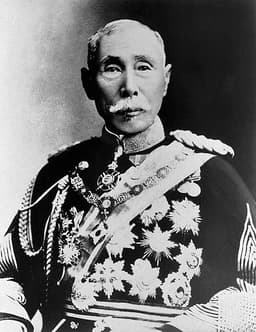
Yamagata Aritomo
General · Modern
82.5Total
Basic Information
Born
1633
1838
Died
1707
1922
Era
Modern
Modern
Nationality
France
Japan
Occupation
General
General
Civilization
Western
Eastern
Score Comparison
Military (10%)
76.0
78.0
Political (20%)
59.3
82.0
Influence (20%)
71.0
80.0
Legacy (20%)
90.0
90.0
Leadership (15%)
77.2
78.0
Strategy (15%)
80.6
82.0
TOTAL
76.4
82.5
Vauban — Complete Timeline
1673 AD
Siege of MaastrichtWar◆ Major
Vauban directed the siege of Maastricht for Louis XIV. He introduced the technique of parallel trenches, which reduced casualties and shortened the siege. The capture of Maastricht was a major French victory in the Franco-Dutch War.
Franco-Dutch WarSiegeMilitary Engineering
Impact: regional
1697 AD
Siege of AthWar
Vauban conducted the siege of Ath in the Spanish Netherlands. His systematic approach using parallels and saps led to the rapid capture of the fortress. The siege demonstrated the effectiveness of his methods.
Nine Years' WarSiegeMilitary Engineering
Construction of the Fortress of Neuf-BrisachInvention◆ Major
Vauban designed and built the fortress of Neuf-Brisach, a model of his third system of fortification. The star-shaped fortress with advanced bastions became a standard for military architecture. It was built to protect the French border after the Treaty of Ryswick.
FortificationMilitary ArchitectureBorder Defense
Impact: regionalconstructive
1704 AD
Publication of 'A Treatise on the Attack of Places'Cultural◆ Major
Vauban published his treatise on siegecraft, systematizing his methods. The work became a standard military textbook in Europe. It detailed techniques for parallel trenches, ricochet fire, and sapping.
Military TheorySiegecraftPublication
Impact: globalconstructive
1707 AD
Proposal for a 'Dîme Royale' Tax ReformReform
Vauban proposed a radical tax reform called the 'D
Tax ReformEconomic PolicyFrance
Impact: nationalconstructive
Yamagata Aritomo — Complete Timeline
1873 AD
Establishment of the Imperial Japanese ArmyReform
Yamagata Aritomo, as War Minister, oversaw the creation of the Imperial Japanese Army based on the Prussian model. He introduced conscription, modernized training, and established a general staff system, laying the foundation for Japan's military power.
Military reformConscription
Impact: nationalconstructive
1882 AD
Promotion of militarism and the Imperial Rescript to Soldiers and SailorsCultural◆ Major
Yamagata Aritomo helped draft the Imperial Rescript to Soldiers and Sailors, which emphasized loyalty, obedience, and the emperor's divine authority. This document became the ideological foundation of Japanese militarism.
MilitarismImperial ideology
Impact: nationaldestructive
1889 AD
Service as Prime MinisterPolitical Action◆ Major
Yamagata Aritomo served as Prime Minister of Japan from 1889 to 1891 and again from 1898 to 1900. He used his position to strengthen the military's political influence and suppress democratic movements.
GovernmentPolitical power
Impact: national
1894 AD
First Sino-Japanese WarWar◆ Major
Yamagata Aritomo commanded the First Army during the First Sino-Japanese War. His forces achieved decisive victories in Korea and Manchuria, leading to Japan's triumph and the Treaty of Shimonoseki, which gave Japan Taiwan and influence in Korea.
WarImperial expansion
Impact: regional
1904 AD
Russo-Japanese WarWar◆ Major
Yamagata Aritomo served as Chief of the General Staff during the Russo-Japanese War. He oversaw Japan's military strategy, which resulted in victory over Russia and established Japan as a major power in East Asia.
WarGreat power
Impact: global
Expert Analysis
Origins
Yamagata Aritomo (1838-1922) rose from a low-ranking samurai family in Choshu domain, a hotbed of anti-shogunate sentiment. His early military experience came during the Boshin War (1868-1869), where he led irregular forces against the shogunate. Vauban (1633-1707), born Sébastien Le Prestre, hailed from a minor noble family in Burgundy. He joined the army at 17, serving under the great engineer Chevalier de Clerville during the Fronde civil wars. Both men emerged from periods of internal conflict, but Yamagata's path was shaped by the modernization imperative of Meiji Japan, while Vauban's was forged in the absolutist state of Louis XIV.
Rise to Power
Yamagata's rise was meteoric. As a key figure in the Meiji Restoration, he traveled to Europe (1869-1870) to study Prussian military systems. He implemented conscription (1873), established the Imperial Japanese Army (1874), and crushed the Satsuma Rebellion (1877). His political acumen saw him serve as Prime Minister twice (1889-1891, 1898-1900) and become the "father of Japanese militarism." Vauban's rise was steadier. His engineering brilliance shone at the Siege of Maastricht (1673), where he introduced parallel trenches. Louis XIV appointed him Commissioner General of Fortifications (1678). He designed or improved over 300 fortresses, including Neuf-Brisach (1697). Vauban's influence stemmed from technical expertise and royal favor, not political maneuvering.
Leadership & Governance
Yamagata was a master organizer and institutional builder. He drafted the Imperial Rescript to Soldiers and Sailors (1882), which elevated the emperor as commander-in-chief and indoctrinated troops with loyalty. As Prime Minister, he strengthened the military's independence from civilian control, laying groundwork for future militarism. His leadership scores reflect strategic vision (P=82) and institutional impact (L=90). Vauban excelled in operational art. His sieges were models of efficiency: at Ath (1697), he captured the fortress in 18 days with minimal casualties. His treatise 'A Treatise on the Attack of Places' (published posthumously) systematized siegecraft. Vauban also proposed the 'Dîme Royale' (royal tithe), a radical tax reform to reduce inequality, but it was rejected. His governance scores are lower (P=59) due to limited political role, but his tactical genius (M=76) and legacy (S=81) are high.
Triumph & Tragedy
Yamagata's triumphs include victories in the First Sino-Japanese War (1894-1895) and Russo-Japanese War (1904-1905), which established Japan as a world power. His tragedy was the long-term consequence of his policies: the militarization of Japanese society that led to World War II and destruction. Vauban's triumphs were his impregnable fortresses (e.g., Neuf-Brisach, a UNESCO site) and successful sieges. His tragedy was the rejection of his tax reform, which could have alleviated peasant suffering; and the eventual obsolescence of his fortifications due to artillery advances. Both men shaped their nations' military trajectories but faced unintended consequences.
Character & Destiny
Yamagata was ruthless, pragmatic, and nationalist. He believed in "rich country, strong army" and prioritized military strength over democracy. His destiny was to create a powerful Japan that would eventually spiral into militaristic excess. Vauban was methodical, humane (he opposed siege bombardments of civilians), and reform-minded. His destiny was to be remembered as the greatest military engineer of his age, but his social reforms were ignored. Yamagata's scores: M=78, P=82, I=80, L=90, D=78, S=82, T=82. Vauban's: M=76, P=59, I=71, L=90, D=77, S=81, T=76.
Legacy
Yamagata's legacy is mixed: he modernized Japan's military but enabled its descent into ultranationalism. The Imperial Japanese Army that conquered Asia was his creation. Vauban's legacy is more technical: his fortress designs influenced military architecture for centuries, and his siege techniques were studied until World War I. Both have monuments: Yamagata's statue in Tokyo, Vauban's fortifications as UNESCO sites. However, Yamagata's political impact was greater, earning him a higher overall score (81.8 vs 75.7).
Conclusion
Yamagata Aritomo surpasses Vauban as a military leader due to his broader institutional influence and strategic vision. While Vauban was a master of siegecraft, Yamagata built a modern army from scratch, won major wars, and shaped Japan's rise. Vauban's scores are impressive but confined to engineering; Yamagata's impact on world history is larger. The score gap of 6.1 reflects Yamagata's higher political and strategic acumen. Both are giants, but Yamagata's legacy of militarism, for good or ill, reshaped Asia.
Rankings
🥇
Yamagata AritomoLeader
Mil: 78.0Pol: 82.0Inf: 80.0
82.5
🥈
Vauban
Mil: 76.0Pol: 59.3Inf: 71.0
76.4
+6.1 behind
How This Comparison Works
Algorithm
Each figure is scored on 6 dimensions (0—100 scale) based on structured historical data: Military (10%), Political (20%), Influence (20%), Legacy (20%), Leadership (15%), Strategy (15%). The weighted total produces the final ranking.
Data Sources
Scores are computed from structured sub-indicators in the database. Scale factors adjust for era (Ancient ×0.85, Modern ×1.0) and civilization size (Eastern ×1.05, Other ×0.80) to account for differences in population and military scale.
Maximum 3 Figures
Comparisons are limited to 2—3 figures to ensure readability and statistical meaningfulness.
Error Margins
±5 points per dimension — Sub-scores are derived from historical records with inherent uncertainty. Two figures within 5 points on a dimension should be considered roughly equivalent in that area.
Total Score Accuracy
±3 points overall — The weighted combination of 6 dimensions produces a total score with approximately ±3 points of uncertainty. Differences of less than 3 points are not statistically significant— the figures are effectively tied.
Known Limitations
- Historical records are incomplete and uneven across civilizations
- Figures from oral-tradition societies may be underrepresented
- Occupation labels can misclassify multi-role figures
- Scores measure capability and impact, not moral character
- Quantitative scoring is a comparison tool, not absolute truth
Capability Radar
Military (10%) — Battles & Warfare
Battles
75
75
Win Rate
85
70
Expansion
70
80
Political (20%) — Governance & Reform
Reform
80
90
Diplomacy
60
75
Economy
55
70
Influence (20%) — Cultural & Global Reach
Cultural
80
80
Global
75
70
Legacy (20%) — Historical Impact
Historical
85
85
Longevity
85
75
Leadership (15%) — Power & Stability
Tenure
65
85
Stability
70
65
Strategy (15%) — Tactics & Innovation
Strategy
90
85
Tactics
95
80
Reform
95
95
Similar Comparisons
Comments & Discussion
No comments yet. Be the first to share your thoughts!