Loading...
Ursula von der Leyen vs Vicente Fox
Ursula von der Leyen leads by 5.1 pts · 2 figures compared
…

Ursula von der Leyen
Politician · Modern
55.5Total
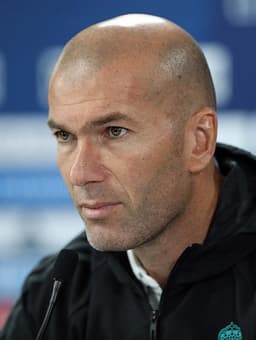
Vicente Fox
Politician · Modern
50.4Total
Basic Information
Born
1958
1942
Died
—
—
Era
Modern
Modern
Nationality
Germany
Mexico
Occupation
Politician
Politician
Civilization
Western
Western
Score Comparison
Military (10%)
50.0
50.0
Political (20%)
65.0
68.0
Influence (20%)
55.0
54.9
Legacy (20%)
47.5
45.0
Leadership (15%)
72.0
40.0
Strategy (15%)
43.0
42.4
TOTAL
55.5
50.4
Ursula von der Leyen — Complete Timeline
2013 AD
Appointed German Minister of DefencePolitical Action◆ Major
Ursula von der Leyen was appointed German Minister of Defence under Chancellor Angela Merkel. She oversaw the Bundeswehr during a period of modernization and increased defense spending, though the ministry faced criticism over equipment shortages and consulting contracts.
German PoliticsDefenceMerkel Cabinet
Impact: national
2019 AD
Launched the European Green DealReform◆ Major
Von der Leyen presented the European Green Deal, a set of policy initiatives aiming to make the EU climate-neutral by 2050. The plan included emissions reduction targets, investment in renewable energy, and a just transition mechanism for affected regions.
Climate PolicyGreen DealEU Environment
Impact: globalprogressive
Elected President of the European CommissionPolitical Action
Von der Leyen was elected President of the European Commission by the European Parliament, becoming the first woman to hold the office. Her election followed a contentious process involving the Spitzenkandidat system and a narrow parliamentary majority.
EU LeadershipFirst WomanEuropean Commission
Impact: globalconstructive
2020 AD
Proposed the NextGenerationEU Recovery FundReform
Von der Leyen proposed a
EU BudgetRecovery FundFiscal Integration
Impact: regionalconstructive
Oversaw EU COVID-19 Vaccine ProcurementPolitical Action◆ Major
Von der Leyen led the EU's joint procurement of COVID-19 vaccines, negotiating contracts with pharmaceutical companies. The program faced early delays and criticism over slow rollout compared to the UK and US, but eventually vaccinated a majority of EU adults.
COVID-19VaccineEU Health
Impact: regional
2022 AD
Imposed Sanctions on Russia over Ukraine InvasionPolitical Action◆ Major
Following Russia's full-scale invasion of Ukraine, von der Leyen led the EU in imposing multiple rounds of sanctions targeting Russian finance, energy, and individuals. The sanctions aimed to weaken Russia's war capacity, with effects on global energy markets.
Russia-Ukraine WarSanctionsEU Foreign Policy
Impact: global
Vicente Fox — Complete Timeline
2000 AD
Election as first opposition president in 71 yearsPolitical Action
Vicente Fox of the National Action Party (PAN) won the presidential election, defeating the long-ruling PRI. This marked Mexico's first peaceful transfer of power to an opposition party since 1929, ending one-party rule.
DemocratizationElectionPolitical Change
Impact: nationalconstructive
2001 AD
Creation of the Federal Police forceReform◆ Major
Fox created the Federal Police (Polic
Police ReformSecurityDrug War
Impact: national
Failed attempt to pass indigenous rights legislationPolitical Action◆ Major
Fox sent a constitutional reform on indigenous rights to Congress, but the final version was watered down. The Zapatistas rejected it, and the initiative failed to address key demands for autonomy, leading to continued conflict in Chiapas.
Indigenous RightsLegislationFailure
Impact: national
Expert Analysis
Origins
Ursula von der Leyen was born in 1958 in Ixelles, Belgium, to a politically active family; her father was a senior European Commission official. She studied economics at the University of Göttingen and later earned a medical degree from Hannover Medical School. She worked as a physician and raised seven children before entering politics in 2003. Vicente Fox was born in 1942 in Mexico City, the son of a rancher and a mother of Spanish descent. He earned a business degree from the Universidad Iberoamericana and worked at Coca-Cola, rising to regional manager. He entered politics in the 1980s, joining the National Action Party (PAN).
Rise to Power
Von der Leyen's rise began in 2005 when she became German Minister for Family Affairs, then Minister of Labour and Social Affairs. In 2013, she became Germany's first female Minister of Defence, overseeing the Bundeswehr. In 2019, she was elected President of the European Commission, the first woman to hold the post, with a narrow majority of 383 votes in the European Parliament. Fox rose from a local PAN member to Governor of Guanajuato in 1995. His 2000 presidential campaign capitalized on dissatisfaction with the Institutional Revolutionary Party (PRI) after 71 years. He won with 42.5% of the vote, defeating PRI candidate Francisco Labastida.
Leadership & Governance
Von der Leyen's leadership at the European Commission is characterized by ambitious policy initiatives: she launched the European Green Deal aiming for climate neutrality by 2050, and proposed NextGenerationEU, a €750 billion recovery fund financed by common EU debt. She oversaw the EU's joint COVID-19 vaccine procurement, which initially faced delays but eventually secured doses for the bloc. Her governance is technocratic and consensus-oriented, but critics point to opaque decision-making. Fox's presidency focused on fiscal discipline and anti-corruption, but his legislative agenda was hampered by a divided Congress. He created the Federal Police to combat organized crime, but security issues persisted. His attempt to pass indigenous rights legislation failed after Congress diluted it, leading to rejection by Zapatista rebels.
Triumph & Tragedy
Von der Leyen's greatest success is the NextGenerationEU fund, a historic step toward fiscal integration. The European Green Deal also set ambitious climate targets. However, her leadership during the vaccine rollout faced criticism for slow procurement and export controls. Fox's triumph was ending PRI dominance and establishing democratic alternation in Mexico. His tragedy was the failed indigenous rights reform and inability to curb cartel violence; his political score of 68.0 is higher than von der Leyen's 65.0, but her leadership score of 72.0 outpaces his 40.0.
Character & Destiny
Von der Leyen is methodical and resilient, but her technocratic style can seem detached. She faced a scandal over consulting contracts awarded to McKinsey, but survived. Fox, a charismatic populist, often spoke bluntly, which resonated with voters but alienated political allies. His decision to prioritize business ties with the US over domestic reform limited his legacy. Both leaders' fates were shaped by their ability to navigate institutional constraints: von der Leyen within the EU bureaucracy, Fox within Mexico's nascent democracy.
Legacy
Von der Leyen's legacy is tied to the EU's response to crises: the pandemic and climate change. The NextGenerationEU fund created a precedent for joint debt issuance, potentially reshaping EU fiscal policy. Fox's legacy is the consolidation of Mexican democracy; he proved that opposition parties could govern. However, his failure to address inequality and security left a mixed record. In terms of scores, von der Leyen leads with a total of 55.5 vs Fox's 50.4, with the largest gap in leadership (72.0 vs 40.0).
Conclusion
Ursula von der Leyen had greater impact due to her role in shaping EU policy during multiple crises. While Fox's election was historic, his domestic reforms were limited. Von der Leyen's influence on climate policy and EU fiscal integration has lasting effects on 450 million citizens. Her leadership score of 72.0 underscores her ability to drive change within a complex multinational institution. Fox's political legacy is significant but less transformative on a global scale.
Rankings
🥇
Ursula von der LeyenLeader
Mil: 50.0Pol: 65.0Inf: 55.0
55.5
🥈
Vicente Fox
Mil: 50.0Pol: 68.0Inf: 54.9
50.4
+5.1 behind
How This Comparison Works
Algorithm
Each figure is scored on 6 dimensions (0—100 scale) based on structured historical data: Military (10%), Political (20%), Influence (20%), Legacy (20%), Leadership (15%), Strategy (15%). The weighted total produces the final ranking.
Data Sources
Scores are computed from structured sub-indicators in the database. Scale factors adjust for era (Ancient ×0.85, Modern ×1.0) and civilization size (Eastern ×1.05, Other ×0.80) to account for differences in population and military scale.
Maximum 3 Figures
Comparisons are limited to 2—3 figures to ensure readability and statistical meaningfulness.
Error Margins
±5 points per dimension — Sub-scores are derived from historical records with inherent uncertainty. Two figures within 5 points on a dimension should be considered roughly equivalent in that area.
Total Score Accuracy
±3 points overall — The weighted combination of 6 dimensions produces a total score with approximately ±3 points of uncertainty. Differences of less than 3 points are not statistically significant— the figures are effectively tied.
Known Limitations
- Historical records are incomplete and uneven across civilizations
- Figures from oral-tradition societies may be underrepresented
- Occupation labels can misclassify multi-role figures
- Scores measure capability and impact, not moral character
- Quantitative scoring is a comparison tool, not absolute truth
Capability Radar
Military (10%) — Battles & Warfare
Battles
26
27
Win Rate
32
31
Expansion
33
34
Political (20%) — Governance & Reform
Reform
70
45
Diplomacy
75
55
Economy
60
40
Influence (20%) — Cultural & Global Reach
Cultural
40
30
Global
65
40
Legacy (20%) — Historical Impact
Historical
45
50
Longevity
30
20
Leadership (15%) — Power & Stability
Tenure
65
60
Stability
55
35
Strategy (15%) — Tactics & Innovation
Strategy
38
38
Tactics
43
39
Reform
43
46
Similar Comparisons
Comments & Discussion
No comments yet. Be the first to share your thoughts!