Loading...
This comparison has not been analyzed yet.
One-time AI generation (~1 minute). Scores and timeline are already available below.
Tuilaepa Sailele Malielegaoi vs Xi Jinping
Xi Jinping leads by 7.6 pts · 2 figures compared
…

Tuilaepa Sailele Malielegaoi
Politician · Modern
50.4Total
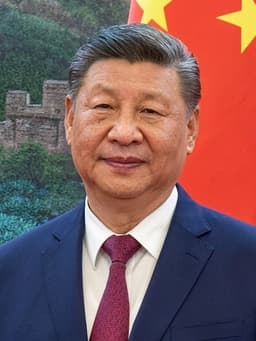
Xi Jinping
Politician · Modern
58.0Total
Basic Information
Born
1945
1953
Died
—
—
Era
Modern
Modern
Nationality
Samoa
China
Occupation
Politician
Politician
Civilization
Other
Eastern
Score Comparison
Military (10%)
16.3
10.0
Political (20%)
45.0
70.3
Influence (20%)
55.7
65.0
Legacy (20%)
49.2
52.0
Leadership (15%)
80.0
75.0
Strategy (15%)
38.1
60.0
TOTAL
50.4
58.0
Tuilaepa Sailele Malielegaoi — Complete Timeline
1998 AD
Became Prime Minister of SamoaPolitical Action◆ Major
Malielegaoi succeeded Tofilau Eti Alesana as Prime Minister, becoming the leader of the HRPP. He would go on to serve for 22 years, the longest continuous tenure of any Pacific leader.
Prime MinisterHRPPGovernment Formation
Impact: nationalconstructive
2008 AD
Introduced the Land Titles Registration ActReform◆ Major
Malielegaoi's government passed legislation to register customary land titles, aiming to formalize land ownership and facilitate economic development. The act faced opposition from traditional leaders who saw it as undermining customary systems.
Land ReformCustomary LandLegislation
Impact: national
2009 AD
Switched Samoa from right-hand to left-hand drivingReform◆ Major
Malielegaoi's government implemented a change from driving on the right to driving on the left, aligning Samoa with Australia and New Zealand. The switch aimed to reduce import costs for vehicles and improve road safety.
Traffic ReformInfrastructurePolicy Change
Impact: national
2021 AD
Lost re-election after 22 yearsPolitical Action◆ Major
Malielegaoi's HRPP lost the general election to the FAST party led by Naomi Mataafa. He initially refused to concede, leading to a constitutional crisis that was resolved by the Court of Appeal, ending his long tenure.
Election DefeatConstitutional CrisisPolitical Transition
Impact: national
Xi Jinping — Complete Timeline
2012 AD
Launched the Anti-Corruption CampaignReform◆ Major
Xi initiated a sweeping anti-corruption campaign targeting officials at all levels. The campaign led to the investigation and punishment of millions of party members, including high-ranking figures like Zhou Yongkang and Bo Xilai. It consolidated Xi's authority and reshaped the party's internal discipline.
Anti-CorruptionPolitical Purge
Impact: nationalconstructive
Elected General Secretary of the Communist Party of ChinaPolitical Action
Xi Jinping was elected General Secretary of the CPC Central Committee at the 18th National Congress. This positioned him as the paramount leader of China, succeeding Hu Jintao. The event marked the beginning of his consolidation of power and the launch of major policy initiatives.
Leadership TransitionCPC Congress
Impact: global
2013 AD
Announced the Belt and Road InitiativePolitical Action◆ Major
Xi unveiled the Belt and Road Initiative (BRI) during visits to Kazakhstan and Indonesia. The BRI is a massive infrastructure and economic development project spanning Asia, Europe, and Africa. It aims to enhance connectivity and trade, but has also drawn criticism for debt-trap diplomacy and geopolitical expansion.
InfrastructureForeign PolicyEconomic Strategy
Impact: global
2018 AD
Abolished Presidential Term LimitsPolitical Action
The National People's Congress approved a constitutional amendment removing the two-term limit for the presidency. This allowed Xi to remain in office indefinitely. Critics viewed it as a consolidation of authoritarian rule, while supporters argued it ensured stability and continuity.
Constitutional AmendmentPower Consolidation
Impact: nationaldestructive
2020 AD
Implemented the Hong Kong National Security LawPolitical Action◆ Major
In response to the 2019 Hong Kong protests, Beijing imposed a national security law on Hong Kong. The law criminalized secession, subversion, terrorism, and collusion with foreign forces. It led to the arrest of pro-democracy activists and the dissolution of opposition groups, significantly curtailing Hong Kong's autonomy.
Hong KongNational SecurityAutonomy
Impact: regionaldestructive
Launched the COVID-19 Zero-COVID PolicyPolitical Action◆ Major
Xi's government implemented a strict zero-COVID strategy involving mass testing, lockdowns, and quarantine. The policy initially controlled the virus but later caused economic disruption and public discontent. It was abruptly abandoned in late 2022 after widespread protests.
Public HealthPandemic Response
Impact: national
2022 AD
Met with President Joe Biden at the G20 SummitPolitical Action
Xi held his first in-person meeting with U.S. President Joe Biden on the sidelines of the G20 summit in Bali. The meeting aimed to manage tensions over Taiwan, trade, and human rights. Both sides agreed to resume cooperation on climate change and other issues.
DiplomacyUS-China Relations
Impact: global
This comparison has not been analyzed yet.
One-time AI generation (~1 minute). Scores and timeline are already available below.
Rankings
🥇
Xi JinpingLeader
Mil: 10.0Pol: 70.3Inf: 65.0
58.0
🥈
Tuilaepa Sailele Malielegaoi
Mil: 16.3Pol: 45.0Inf: 55.7
50.4
+7.6 behind
How This Comparison Works
Algorithm
Each figure is scored on 6 dimensions (0—100 scale) based on structured historical data: Military (10%), Political (20%), Influence (20%), Legacy (20%), Leadership (15%), Strategy (15%). The weighted total produces the final ranking.
Data Sources
Scores are computed from structured sub-indicators in the database. Scale factors adjust for era (Ancient ×0.85, Modern ×1.0) and civilization size (Eastern ×1.05, Other ×0.80) to account for differences in population and military scale.
Maximum 3 Figures
Comparisons are limited to 2—3 figures to ensure readability and statistical meaningfulness.
Error Margins
±5 points per dimension — Sub-scores are derived from historical records with inherent uncertainty. Two figures within 5 points on a dimension should be considered roughly equivalent in that area.
Total Score Accuracy
±3 points overall — The weighted combination of 6 dimensions produces a total score with approximately ±3 points of uncertainty. Differences of less than 3 points are not statistically significant— the figures are effectively tied.
Known Limitations
- Historical records are incomplete and uneven across civilizations
- Figures from oral-tradition societies may be underrepresented
- Occupation labels can misclassify multi-role figures
- Scores measure capability and impact, not moral character
- Quantitative scoring is a comparison tool, not absolute truth
Capability Radar
Military (10%) — Battles & Warfare
Battles
19
0
Win Rate
24
0
Expansion
25
60
Political (20%) — Governance & Reform
Reform
60
80
Diplomacy
65
75
Economy
55
85
Influence (20%) — Cultural & Global Reach
Cultural
40
65
Global
35
75
Legacy (20%) — Historical Impact
Historical
50
70
Longevity
45
60
Leadership (15%) — Power & Stability
Tenure
85
85
Stability
70
80
Strategy (15%) — Tactics & Innovation
Strategy
32
0
Tactics
35
0
Reform
38
75
Similar Comparisons
Comments & Discussion
No comments yet. Be the first to share your thoughts!