Loading...
Tony Blair vs William Lai
Tony Blair leads by 6.5 pts · 2 figures compared
…

Tony Blair
Politician · Modern
53.5Total
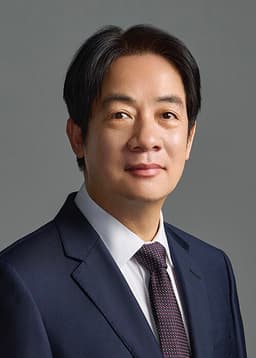
William Lai
Politician · Modern
47.0Total
Basic Information
Born
1953
1959
Died
—
—
Era
Modern
Modern
Nationality
United Kingdom
China
Occupation
Politician
Politician
Civilization
Western
Eastern
Score Comparison
Military (10%)
27.7
36.4
Political (20%)
55.0
43.7
Influence (20%)
65.0
50.2
Legacy (20%)
54.0
38.3
Leadership (15%)
66.0
58.8
Strategy (15%)
28.0
58.5
TOTAL
53.5
47.0
Tony Blair — Complete Timeline
1997 AD
Election as Prime MinisterPolitical Action◆ Major
Blair led the Labour Party to a landslide victory in the general election, ending 18 years of Conservative rule. He became the youngest prime minister since 1812, promising modernization and a 'Third Way' in politics.
ElectionLabour PartyThird Way
Impact: nationalconstructive
1998 AD
Good Friday AgreementPolitical Action
Blair played a key role in negotiating the Good Friday Agreement, which brought an end to the Troubles in Northern Ireland. The agreement established a power-sharing government and was approved by referendums in both Northern Ireland and the Republic of Ireland.
Northern IrelandPeace ProcessGood Friday Agreement
Impact: regionalconstructive
2003 AD
Decision to Join the Iraq WarPolitical Action◆ Major
Blair committed British forces to the US-led invasion of Iraq, based on intelligence about weapons of mass destruction. The war was controversial, and the failure to find WMDs damaged Blair's credibility, leading to accusations of misleading Parliament.
Iraq WarWMDForeign Policy
Impact: globaldestructive
William Lai — Complete Timeline
2010 AD
Elected Mayor of TainanPolitical Action◆ Major
William Lai was elected as the first mayor of the newly formed Tainan City, a DPP stronghold. He served two terms from 2010 to 2017, focusing on urban renewal and cultural development. His tenure was marked by efforts to transform Tainan into a cultural and tourism hub.
Tainan MayorUrban DevelopmentDPP
Impact: regionalconstructive
2017 AD
Appointed Premier of TaiwanPolitical Action◆ Major
William Lai was appointed Premier of the Republic of China (Taiwan) by President Tsai Ing-wen. He served from 2017 to 2019, overseeing economic policies and social welfare programs. His premiership was noted for his pragmatic approach and efforts to boost the economy.
PremierTaiwan GovernmentEconomic Policy
Impact: nationalconstructive
2020 AD
Elected Vice President of TaiwanPolitical Action◆ Major
William Lai was elected Vice President of Taiwan as the running mate of President Tsai Ing-wen. They won a landslide victory, with Lai receiving over 57% of the vote. His role focused on domestic affairs and supporting the president's agenda.
Vice PresidentElectionDPP
Impact: nationalconstructive
2024 AD
Elected President of TaiwanPolitical Action
William Lai was elected President of the Republic of China (Taiwan) as the DPP candidate, succeeding Tsai Ing-wen. He won with 40% of the vote in a three-way race, defeating the KMT and TPP candidates. His presidency began with a focus on national security and economic resilience.
Presidential ElectionDPPTaiwan Leadership
Impact: nationalconstructive
Expert Analysis
Origins
Tony Blair was born in 1953 in Edinburgh, Scotland, the son of a lawyer and a homemaker. He studied law at Oxford and became a barrister, entering Parliament in 1983 as a Labour MP. His early political development was shaped by the party's shift from traditional socialism to a more centrist 'New Labour' ideology.
William Lai was born in 1959 in Taipei County, Taiwan, to a farming family. He studied medicine at National Taiwan University and became a physician. He entered politics in the 1990s, joining the Democratic Progressive Party (DPP) and winning a seat in the National Assembly in 1996. His medical background influenced his focus on public health policy.
Rise to Power
Blair rose rapidly after becoming Labour leader in 1994 following the sudden death of John Smith. He rebranded the party as 'New Labour,' jettisoning Clause IV and embracing market-friendly policies. In 1997, he led Labour to a landslide victory, winning 418 seats and ending 18 years of Conservative rule. At 43, he became the youngest prime minister since 1812.
Lai's rise was more gradual. He was elected mayor of Tainan City in 2010, serving two terms. In 2017, President Tsai Ing-wen appointed him Premier of Taiwan, where he gained national visibility. In 2020, he was elected Vice President on Tsai's ticket, and in 2024 he was elected President with 40% of the vote in a four-candidate race, succeeding Tsai.
Leadership & Governance
Blair's leadership was characterized by a strong centralizing style and a focus on 'third way' politics. Domestically, he introduced constitutional reforms (devolution for Scotland and Wales), the Human Rights Act, and significant investment in public services. However, his government also oversaw the Iraq War, a decision that defined his legacy. Blair scored 66.0 in leadership and 28.0 in strategy, reflecting his charisma but questionable decision-making.
Lai's governance is more technocratic. As mayor, he focused on urban development and flood control. As premier, he pushed economic reforms and maintained a pro-independence stance. As president, he has emphasized Taiwan's sovereignty and democratic resilience. His leadership score is 58.8, lower than Blair's, but his strategy score of 58.5 is higher, indicating a more cautious approach.
Triumph & Tragedy
Blair's greatest triumph was the Good Friday Agreement in 1998, which ended decades of conflict in Northern Ireland. He also oversaw a period of strong economic growth and improved public services. However, his decision to join the US-led invasion of Iraq in 2003, based on flawed intelligence about weapons of mass destruction, was a major tragedy. The war led to thousands of deaths, destabilized the Middle East, and severely damaged Blair's reputation. His political score of 55.0 and legacy of 54.0 reflect this mixed record.
Lai's triumphs include his election as president and his role in maintaining Taiwan's democratic institutions amid Chinese pressure. He also handled the COVID-19 pandemic effectively as premier. However, his presidency has been marked by increasing tensions with China, and his pro-independence rhetoric has been criticized as provocative. His military score of 36.4 and influence of 50.2 are lower than Blair's, indicating less global impact.
Character & Destiny
Blair was charismatic, persuasive, and confident, but also seen as overly reliant on personal relationships and prone to hubris. His belief in his own judgment led him to commit to Iraq despite widespread opposition. This character trait shaped his destiny: he is remembered as a transformative domestic leader but a flawed international one.
Lai is more reserved and analytical, a product of his medical training. He is cautious but firm on Taiwan's sovereignty. His character has allowed him to navigate complex cross-strait relations, but his destiny may be shaped by the rising threat from China. His overall score of 47.0 reflects a competent but less impactful career.
Legacy
Blair's legacy is deeply contested. Domestically, New Labour's centrist policies influenced subsequent governments, and the Good Friday Agreement remains a landmark. Internationally, the Iraq War has tarnished his reputation, and his legacy score of 54.0 reflects this ambivalence. He is often ranked in the middle of British prime ministers.
Lai's legacy is still unfolding. He is likely to be remembered as a defender of Taiwan's democracy amid Chinese pressure. His legacy score of 38.3 is lower, reflecting his shorter time in office and smaller global footprint.
Conclusion
While both leaders have had significant impact, Tony Blair had greater influence on the world stage. His domestic reforms and role in Northern Ireland peace were monumental, and his Iraq decision had global repercussions. Blair's total score of 53.5 vs. Lai's 47.0 underscores this. However, Lai's leadership in a critical geopolitical region may yet prove consequential. For now, Blair's impact is more extensive and contested, making him the more historically significant figure.
Rankings
🥇
Tony BlairLeader
Mil: 27.7Pol: 55.0Inf: 65.0
53.5
🥈
William Lai
Mil: 36.4Pol: 43.7Inf: 50.2
47.0
+6.5 behind
How This Comparison Works
Algorithm
Each figure is scored on 6 dimensions (0—100 scale) based on structured historical data: Military (10%), Political (20%), Influence (20%), Legacy (20%), Leadership (15%), Strategy (15%). The weighted total produces the final ranking.
Data Sources
Scores are computed from structured sub-indicators in the database. Scale factors adjust for era (Ancient ×0.85, Modern ×1.0) and civilization size (Eastern ×1.05, Other ×0.80) to account for differences in population and military scale.
Maximum 3 Figures
Comparisons are limited to 2—3 figures to ensure readability and statistical meaningfulness.
Error Margins
±5 points per dimension — Sub-scores are derived from historical records with inherent uncertainty. Two figures within 5 points on a dimension should be considered roughly equivalent in that area.
Total Score Accuracy
±3 points overall — The weighted combination of 6 dimensions produces a total score with approximately ±3 points of uncertainty. Differences of less than 3 points are not statistically significant— the figures are effectively tied.
Known Limitations
- Historical records are incomplete and uneven across civilizations
- Figures from oral-tradition societies may be underrepresented
- Occupation labels can misclassify multi-role figures
- Scores measure capability and impact, not moral character
- Quantitative scoring is a comparison tool, not absolute truth
Capability Radar
Military (10%) — Battles & Warfare
Battles
8
49
Win Rate
12
54
Expansion
15
59
Political (20%) — Governance & Reform
Reform
70
40
Diplomacy
60
35
Economy
55
30
Influence (20%) — Cultural & Global Reach
Cultural
55
20
Global
65
20
Legacy (20%) — Historical Impact
Historical
60
20
Longevity
45
10
Leadership (15%) — Power & Stability
Tenure
65
30
Stability
50
25
Strategy (15%) — Tactics & Innovation
Strategy
21
60
Tactics
23
63
Reform
24
65
Similar Comparisons
Comments & Discussion
No comments yet. Be the first to share your thoughts!