Loading...
This comparison has not been analyzed yet.
One-time AI generation (~1 minute). Scores and timeline are already available below.
Tauke Khan vs Tukoji Rao Holkar III
Tauke Khan leads by 4.1 pts · 2 figures compared
…
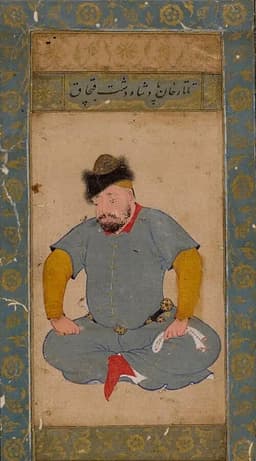
Tauke Khan
Emperor · Modern
51.2Total

Tukoji Rao Holkar III
Emperor · Modern
47.1Total
Basic Information
Born
1635
1890
Died
1715
1978
Era
Modern
Modern
Nationality
Kazakh Khanate
India
Occupation
Emperor
Emperor
Civilization
Eastern
Indian
Score Comparison
Military (10%)
45.0
35.7
Political (20%)
45.0
43.7
Influence (20%)
55.7
49.4
Legacy (20%)
46.7
38.3
Leadership (15%)
68.0
65.7
Strategy (15%)
41.7
51.8
TOTAL
51.2
47.1
Tauke Khan — Complete Timeline
1643 AD
Battle of OrbulaqWar◆ Major
Tauke Khan, then a prince, led a small Kazakh force to victory against a much larger Dzungar army at Orbulaq. The battle demonstrated his military skill and delayed Dzungar expansion into the Kazakh steppe, though it was a defensive action rather than a decisive war-ending engagement.
BattleDzungarsDefense
Impact: regional
1680 AD
Codification of the Zheti ZhargyReform◆ Major
Tauke Khan oversaw the compilation of the 'Zheti Zhargy' (Seven Charters), a comprehensive legal code that updated and expanded upon the earlier Qasym Khannyn Qasqa Zholy. This code addressed criminal, civil, and administrative law, and became the foundational legal document of the Kazakh Khanate.
Legal CodeZheti ZhargyReform
Impact: nationalconstructive
1690 AD
Formation of the Kazakh-Dzungar AlliancePolitical Action◆ Major
Tauke Khan negotiated a peace treaty and temporary alliance with the Dzungar Khanate, ending decades of conflict. This alliance allowed the Kazakh Khanate to focus on internal consolidation and trade, though it was later broken by Dzungar expansion.
TreatyDzungarsPeace
Impact: regional
1715 AD
Unsuccessful Defense against Dzungar InvasionWar◆ Major
In the final year of his reign, Tauke Khan was unable to prevent a major Dzungar invasion that overran much of the Kazakh steppe. The invasion led to widespread displacement and suffering, and Tauke Khan died shortly after, leaving the khanate fragmented.
InvasionDzungarsFragmentation
Impact: nationaltragic
Tukoji Rao Holkar III — Complete Timeline
1947 AD
Accession of Indore to IndiaPolitical Action◆ Major
Tukoji Rao Holkar III, as the ruling Maharaja of Indore, signed the Instrument of Accession, merging the princely state with the Dominion of India. This decision ended Indore's sovereignty and integrated it into the Indian Union.
AccessionIndian UnionIndore
Impact: nationalconstructive
1950 AD
Construction of Holkar StadiumCultural
Tukoji Rao Holkar III oversaw the construction of the Holkar Stadium in Indore, a multi-purpose sports venue. The stadium hosted cricket matches and other events, contributing to the city's sporting infrastructure.
Sports InfrastructureIndoreHolkar
constructive
1971 AD
Abolition of Privy PursePolitical Action◆ Major
Following the Indian government's abolition of privy purses and princely privileges, Tukoji Rao Holkar III lost his official status and financial entitlements. This marked the end of the Holkar dynasty's formal political and economic power.
Privy PurseEnd of Royal PrivilegesIndore
Impact: nationaltragic
This comparison has not been analyzed yet.
One-time AI generation (~1 minute). Scores and timeline are already available below.
Rankings
🥇
Tauke KhanLeader
Mil: 45.0Pol: 45.0Inf: 55.7
51.2
🥈
Tukoji Rao Holkar III
Mil: 35.7Pol: 43.7Inf: 49.4
47.1
+4.1 behind
How This Comparison Works
Algorithm
Each figure is scored on 6 dimensions (0—100 scale) based on structured historical data: Military (10%), Political (20%), Influence (20%), Legacy (20%), Leadership (15%), Strategy (15%). The weighted total produces the final ranking.
Data Sources
Scores are computed from structured sub-indicators in the database. Scale factors adjust for era (Ancient ×0.85, Modern ×1.0) and civilization size (Eastern ×1.05, Other ×0.80) to account for differences in population and military scale.
Maximum 3 Figures
Comparisons are limited to 2—3 figures to ensure readability and statistical meaningfulness.
Error Margins
±5 points per dimension — Sub-scores are derived from historical records with inherent uncertainty. Two figures within 5 points on a dimension should be considered roughly equivalent in that area.
Total Score Accuracy
±3 points overall — The weighted combination of 6 dimensions produces a total score with approximately ±3 points of uncertainty. Differences of less than 3 points are not statistically significant— the figures are effectively tied.
Known Limitations
- Historical records are incomplete and uneven across civilizations
- Figures from oral-tradition societies may be underrepresented
- Occupation labels can misclassify multi-role figures
- Scores measure capability and impact, not moral character
- Quantitative scoring is a comparison tool, not absolute truth
Capability Radar
Military (10%) — Battles & Warfare
Battles
35
32
Win Rate
40
33
Expansion
20
37
Political (20%) — Governance & Reform
Reform
55
20
Diplomacy
50
40
Economy
45
30
Influence (20%) — Cultural & Global Reach
Cultural
45
15
Global
30
10
Legacy (20%) — Historical Impact
Historical
50
20
Longevity
40
10
Leadership (15%) — Power & Stability
Tenure
60
30
Stability
40
35
Strategy (15%) — Tactics & Innovation
Strategy
35
41
Tactics
30
39
Reform
25
45
Similar Comparisons
Comments & Discussion
No comments yet. Be the first to share your thoughts!