Loading...
Tantamani vs Tiberius II
Tantamani leads by 3.5 pts · 2 figures compared
…
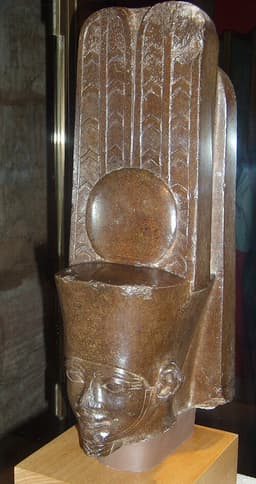
Tantamani
Emperor · Ancient
42.5Total

Tiberius II
Emperor · Ancient
39.0Total
Basic Information
Born
-664
-520
Died
-656
—
Era
Ancient
Ancient
Nationality
Third Intermediate Egypt
Byzantine Empire
Occupation
Emperor
Emperor
Civilization
Other
Western
Score Comparison
Military (10%)
50.0
50.0
Political (20%)
33.6
33.6
Influence (20%)
48.6
44.8
Legacy (20%)
38.3
35.0
Leadership (15%)
44.5
31.2
Strategy (15%)
41.0
43.7
TOTAL
42.5
39.0
Tantamani — Complete Timeline
664 BC
Accession to the thronePolitical Action◆ Major
Tantamani became pharaoh of the 25th Dynasty, succeeding his uncle Taharqa. He inherited a kingdom reduced to Nubia after the Assyrian conquest of Egypt, but he aimed to reconquer the Nile Valley.
Accession25th DynastyKushite
Impact: national
663 BC
Reconquest of EgyptWar◆ Major
Tantamani led a military campaign north from Nubia, recapturing Thebes and Memphis from the Assyrian vassals. He briefly restored Kushite control over Upper and Lower Egypt, executing the Assyrian-appointed rulers.
ReconquestThebesMemphis
Impact: regional
Sack of Thebes by AshurbanipalWar
In response to Tantamani's reconquest, the Assyrian king Ashurbanipal invaded Egypt, defeated Tantamani's forces, and sacked Thebes, looting its temples and treasures. This event marked the end of Kushite rule in Egypt.
Sack of ThebesAshurbanipalKushite Defeat
Impact: regionaltragic
Retreat to NubiaPolitical Action◆ Major
After the sack of Thebes, Tantamani retreated to Nubia, where he continued to rule as king of Kush until his death. He never again attempted to reconquer Egypt, and the 25th Dynasty ended with him.
RetreatNubia25th Dynasty End
Impact: regionaltragic
Tiberius II — Complete Timeline
574 AD
Became Caesar and regent of the Byzantine EmpirePolitical Action◆ Major
Emperor Justin II, incapacitated by madness, appointed Tiberius as Caesar and regent. Tiberius effectively ruled the empire while Justin II remained nominal emperor, stabilizing the government after a period of crisis.
RegencyByzantine EmpireSuccession
Impact: nationalconstructive
578 AD
Renewed war with the Sassanid EmpireWar
Tiberius II continued the war against the Sassanid Persians, achieving some successes in Armenia and Mesopotamia. However, the conflict remained inconclusive and drained the empire's resources.
Roman-Persian WarsMilitary CampaignByzantine Empire
Impact: regional
Became Byzantine EmperorPolitical Action◆ Major
Upon the death of Justin II, Tiberius II Constantine became the sole emperor. His accession was welcomed by the populace due to his reputation for generosity and competent administration.
AccessionByzantine EmpirePopular Rule
Impact: national
Distributed Justin II's treasury to the poorPolitical Action
Upon becoming emperor, Tiberius II distributed a large portion of the imperial treasury to the poor and the army. This act of generosity earned him great popularity but depleted the state's financial reserves.
Social PolicyEconomic PolicyByzantine Empire
Impact: nationalprogressive
Expert Analysis
Origins
Tantamani, born around 660 BCE, was the last pharaoh of the 25th Dynasty, a Kushite line ruling over Egypt and Nubia. He was the son of King Shabaka and nephew of his predecessor Taharqa. Raised in the Kushite capital of Napata (modern Sudan), he inherited a kingdom reduced after the Assyrian conquest of Egypt under Esarhaddon. His background was steeped in the traditions of the Kushite monarchy, which aimed to restore Egyptian glory.
Tiberius II Constantine, born around 520 CE in Thrace, was of humble origins. He rose through the military ranks of the Byzantine Empire, serving as a comes (count) under Emperor Justin II. His early life was marked by service in the imperial guard, and he gained a reputation for competence and generosity. His ascent was not due to birth but merit, reflecting the late Roman emphasis on military capability.
Rise to Power
Tantamani ascended the throne in 664 BCE after Taharqa's death. His key turning point was his reconquest of Egypt in 663 BCE, where he recaptured Thebes and Memphis from Assyrian vassals. However, this provoked a swift response from Ashurbanipal, who invaded Egypt, defeated Tantamani's forces, and sacked Thebes. Tantamani retreated to Nubia, where he ruled as king of Kush until his death around 653 BCE. His rise was brief and dramatic, marked by initial success followed by catastrophic defeat.
Tiberius II's rise was more gradual. In 574 CE, Emperor Justin II, suffering from madness, appointed Tiberius as Caesar and regent. Tiberius effectively ruled the empire while Justin II remained nominally emperor. Upon Justin's death in 578 CE, Tiberius became sole emperor. His accession was welcomed by the populace and the army due to his reputation for generosity. He had no major opponents, as he was seen as a stabilizing figure after Justin's erratic rule.
Leadership & Governance
Tantamani's leadership was focused on military reconquest and restoration of Kushite rule. He scored 44.5 in leadership and 41.0 in strategy. His governance was traditional pharaonic, relying on the support of Nubian nobles and Egyptian priests. He attempted to reassert control over temples and trade routes. However, his failure to secure lasting alliances or adapt to Assyrian military tactics led to his downfall. He lacked the political acumen to consolidate gains, scoring only 33.6 in political skill.
Tiberius II's leadership was marked by clemency and financial reform. He distributed Justin II's treasury to the poor and the army, earning him popularity but depleting resources. He continued the war with the Sassanid Empire, achieving some successes in Armenia and Mesopotamia. His governance was benevolent but ineffective in addressing long-term fiscal and military challenges. He scored 31.2 in leadership and 43.7 in strategy, indicating a tactical mind but weak administrative control. His reign was too short to implement deep reforms.
Triumph & Tragedy
Tantamani's greatest triumph was his reconquest of Egypt, briefly restoring Kushite control over Thebes and Memphis. This was a remarkable feat given the Assyrian dominance. His greatest tragedy was the sack of Thebes by Ashurbanipal, a devastating event that ended any hope of restoring the 25th Dynasty. The city's temples were looted, and Tantamani was forced into exile in Nubia. He never again attempted to reclaim Egypt, and his kingdom remained confined to Nubia.
Tiberius II's triumph was his peaceful accession and initial popularity. He was praised for his generosity and fairness. His tragedy was the continuation of a costly war with Persia that drained the treasury. His financial distributions, while popular, left the empire vulnerable. He died in 582 CE, possibly from illness, leaving the throne to Maurice. His reign was too brief to cement lasting achievements, and his legacy was overshadowed by his successors.
Character & Destiny
Tantamani was characterized by ambition and determination, but his decision-making was flawed. He underestimated Assyrian power and failed to secure his gains. His character led him to attempt reconquest without adequate preparation, resulting in total defeat. He scored 38.3 in legacy, reflecting his role as the last Kushite pharaoh. His destiny was to be a tragic figure, remembered as the one who lost Egypt.
Tiberius II was seen as kind and generous, but his generosity bordered on profligacy. He lacked the ruthlessness needed to stabilize the empire. His character made him popular but ineffective. He scored 35.0 in legacy, as his reforms were temporary. His destiny was to be a transitional figure, remembered more for his character than his achievements.
Legacy
Tantamani's legacy is as the last pharaoh of the 25th Dynasty. After his retreat, Nubia remained independent under Kushite kings for centuries, but Egypt was lost. The sack of Thebes marked the end of an era. His influence score of 48.6 reflects his symbolic importance as a resistance figure. However, his military score of 50.0 and political 33.6 show limited impact.
Tiberius II's legacy is mixed. He is remembered as a good man but a weak emperor. His distribution of wealth set a precedent for imperial charity, but his failure to end the Persian war meant his reign was a prelude to greater conflicts. His total score of 39.0 is lower than Tantamani's 42.5, reflecting his lesser impact.
Conclusion
Tantamani had a greater historical impact than Tiberius II, despite both scoring low overall. Tantamani's total score of 42.5 exceeds Tiberius's 39.0. Tantamani's brief reconquest and the subsequent Assyrian sack of Thebes had profound consequences for Egypt and the Near East, while Tiberius's reign was a minor interlude in Byzantine history. Tantamani's legacy as the last indigenous pharaoh of Egypt gives him enduring significance, whereas Tiberius is a footnote. Thus, Tantamani emerges as the more consequential figure.
Rankings
🥇
TantamaniLeader
Mil: 50.0Pol: 33.6Inf: 48.6
42.5
🥈
Tiberius II
Mil: 50.0Pol: 33.6Inf: 44.8
39.0
+3.5 behind
How This Comparison Works
Algorithm
Each figure is scored on 6 dimensions (0—100 scale) based on structured historical data: Military (10%), Political (20%), Influence (20%), Legacy (20%), Leadership (15%), Strategy (15%). The weighted total produces the final ranking.
Data Sources
Scores are computed from structured sub-indicators in the database. Scale factors adjust for era (Ancient ×0.85, Modern ×1.0) and civilization size (Eastern ×1.05, Other ×0.80) to account for differences in population and military scale.
Maximum 3 Figures
Comparisons are limited to 2—3 figures to ensure readability and statistical meaningfulness.
Error Margins
±5 points per dimension — Sub-scores are derived from historical records with inherent uncertainty. Two figures within 5 points on a dimension should be considered roughly equivalent in that area.
Total Score Accuracy
±3 points overall — The weighted combination of 6 dimensions produces a total score with approximately ±3 points of uncertainty. Differences of less than 3 points are not statistically significant— the figures are effectively tied.
Known Limitations
- Historical records are incomplete and uneven across civilizations
- Figures from oral-tradition societies may be underrepresented
- Occupation labels can misclassify multi-role figures
- Scores measure capability and impact, not moral character
- Quantitative scoring is a comparison tool, not absolute truth
Capability Radar
Military (10%) — Battles & Warfare
Battles
20
20
Win Rate
15
25
Expansion
10
10
Political (20%) — Governance & Reform
Reform
5
30
Diplomacy
10
25
Economy
10
30
Influence (20%) — Cultural & Global Reach
Cultural
20
15
Global
10
10
Legacy (20%) — Historical Impact
Historical
25
20
Longevity
15
10
Leadership (15%) — Power & Stability
Tenure
15
15
Stability
5
20
Strategy (15%) — Tactics & Innovation
Strategy
20
20
Tactics
25
20
Reform
5
15
Similar Comparisons
Comments & Discussion
No comments yet. Be the first to share your thoughts!