Loading...
Suleiman I vs Yamagata Aritomo
Yamagata Aritomo leads by 3.7 pts · 2 figures compared
…
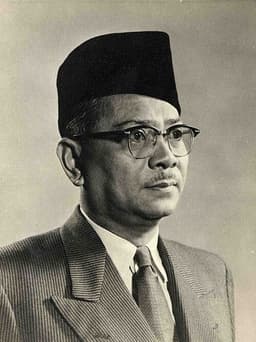
Suleiman I
Emperor · Medieval
78.8Total
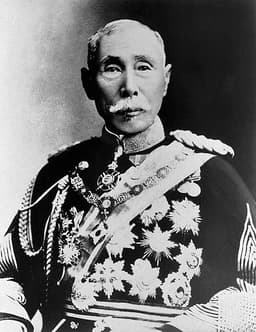
Yamagata Aritomo
General · Modern
82.5Total
Basic Information
Born
1494
1838
Died
1566
1922
Era
Medieval
Modern
Nationality
Ottoman Empire
Japan
Occupation
Emperor
General
Civilization
Middle Eastern
Eastern
Score Comparison
Military (10%)
78.5
78.0
Political (20%)
82.0
82.0
Influence (20%)
85.0
80.0
Legacy (20%)
70.8
90.0
Leadership (15%)
81.7
78.0
Strategy (15%)
74.4
82.0
TOTAL
78.8
82.5
Suleiman I — Complete Timeline
1522 AD
Siege of RhodesWar◆ Major
Suleiman I led a massive Ottoman army and fleet to besiege the island of Rhodes, held by the Knights Hospitaller. After a six-month siege, the knights surrendered and were allowed to leave. This victory secured Ottoman control over the eastern Mediterranean.
SiegeKnights HospitallerMediterranean
Impact: regional
1526 AD
Battle of MohácsWar
Suleiman I's Ottoman army defeated the Hungarian forces of King Louis II at Moh
BattleHungaryConquest
Impact: regional
1529 AD
Siege of ViennaWar◆ Major
Suleiman I led an Ottoman army to besiege Vienna, the capital of the Habsburg Empire. The siege failed due to supply problems and the onset of winter. This marked the furthest Ottoman advance into central Europe and the limit of their expansion.
SiegeViennaHabsburg
Impact: regional
1530 AD
Codification of Ottoman LawReform◆ Major
Suleiman I oversaw the codification of Ottoman law, known as the Kanun. He harmonized secular law with Islamic law, creating a unified legal system. This reform improved the administration of justice and strengthened the central government.
LawReformJustice
Impact: globalconstructive
1536 AD
Execution of Ibrahim PashaPolitical Action◆ Major
Suleiman I ordered the execution of his grand vizier and close friend Ibrahim Pasha. Ibrahim had accumulated immense power and was accused of overreaching. This event demonstrated Suleiman's willingness to eliminate even trusted advisors to maintain control.
ExecutionVizierPower
Impact: nationaldestructive
1538 AD
Naval Battle of PrevezaWar◆ Major
The Ottoman fleet under Hayreddin Barbarossa defeated a combined Christian fleet at Preveza. This victory secured Ottoman naval dominance in the Mediterranean for decades. It allowed the Ottomans to control trade routes and raid coastal areas.
Naval BattleBarbarossaMediterranean
Impact: regional
Yamagata Aritomo — Complete Timeline
1873 AD
Establishment of the Imperial Japanese ArmyReform
Yamagata Aritomo, as War Minister, oversaw the creation of the Imperial Japanese Army based on the Prussian model. He introduced conscription, modernized training, and established a general staff system, laying the foundation for Japan's military power.
Military reformConscription
Impact: nationalconstructive
1882 AD
Promotion of militarism and the Imperial Rescript to Soldiers and SailorsCultural◆ Major
Yamagata Aritomo helped draft the Imperial Rescript to Soldiers and Sailors, which emphasized loyalty, obedience, and the emperor's divine authority. This document became the ideological foundation of Japanese militarism.
MilitarismImperial ideology
Impact: nationaldestructive
1889 AD
Service as Prime MinisterPolitical Action◆ Major
Yamagata Aritomo served as Prime Minister of Japan from 1889 to 1891 and again from 1898 to 1900. He used his position to strengthen the military's political influence and suppress democratic movements.
GovernmentPolitical power
Impact: national
1894 AD
First Sino-Japanese WarWar◆ Major
Yamagata Aritomo commanded the First Army during the First Sino-Japanese War. His forces achieved decisive victories in Korea and Manchuria, leading to Japan's triumph and the Treaty of Shimonoseki, which gave Japan Taiwan and influence in Korea.
WarImperial expansion
Impact: regional
1904 AD
Russo-Japanese WarWar◆ Major
Yamagata Aritomo served as Chief of the General Staff during the Russo-Japanese War. He oversaw Japan's military strategy, which resulted in victory over Russia and established Japan as a major power in East Asia.
WarGreat power
Impact: global
Expert Analysis
Origins
Yamagata Aritomo (1838–1922) emerged from a low-ranking samurai family in Choshu domain, a hotbed of anti-shogunate sentiment. His early exposure to Western military technology during the Bombardment of Shimonoseki shaped his vision for a modern army. Suleiman I (1494–1566) was born into the Ottoman dynasty, the son of Selim I. He received a rigorous education in Islamic law, history, and military strategy, preparing him for rule from an early age. Both men rose from distinct cultural backgrounds—one from feudal Japan on the brink of modernization, the other from a sprawling Islamic empire at its zenith.
Rise to Power
Yamagata rose through the ranks of the Meiji government, studying military systems in Europe. He became War Minister in 1873 and implemented conscription, creating the Imperial Japanese Army. His political acumen secured him the premiership twice (1889–1891, 1898–1900). Suleiman ascended the throne in 1520 after his father's death, facing no major opposition. He immediately launched campaigns to expand Ottoman territory, conquering Belgrade (1521) and Rhodes (1522). His early victories solidified his authority and earned him the epithet "the Magnificent."
Leadership & Governance
Yamagata's governance emphasized militarism and imperial expansion. He authored the Imperial Rescript to Soldiers and Sailors (1882), which instilled loyalty and discipline in the military. As Prime Minister, he strengthened the bureaucracy and promoted industrialization. His political influence extended through the genrō (elder statesmen), shaping Japan's aggressive foreign policy. Suleiman's rule was marked by legal reform—he codified Ottoman law (Kanun) to harmonize secular and religious codes. He also patronized arts and architecture, commissioning the Süleymaniye Mosque. However, his later years saw the execution of his trusted grand vizier Ibrahim Pasha, revealing a ruthless streak.
Triumph & Tragedy
Yamagata's triumphs include victories in the First Sino-Japanese War (1894–1895) and Russo-Japanese War (1904–1905), which established Japan as a major power. However, his promotion of militarism contributed to Japan's eventual path to World War II, a tragic legacy. Suleiman's greatest victory was at Mohács (1526), where he crushed Hungary, leading to Ottoman dominance in Central Europe. The Siege of Vienna (1529) was a turning point—though a failure, it marked the limit of Ottoman expansion. His execution of Ibrahim Pasha (1536) was a personal tragedy, eliminating his most capable advisor.
Character & Destiny
Yamagata was disciplined, pragmatic, and deeply nationalist. He believed in a strong military as the foundation of national power. His destiny was to shape modern Japan's army and political structure, but his militaristic ideals ultimately led to national disaster. Suleiman was both a warrior and a lawgiver, embodying the ideal of a just ruler. His destiny was to preside over the Ottoman Golden Age, but his later paranoia and succession struggles sowed seeds of decline. Both men were products of their times, driven by ambition and a sense of duty.
Legacy
Yamagata is remembered as the "father of Japanese militarism." His institutional reforms created a formidable army, but his aggressive nationalism contributed to Japan's imperial overreach. His legacy is mixed—admired for modernization, criticized for militarism. Suleiman's legacy is more uniformly positive: he expanded the empire, codified laws, and fostered culture. However, his execution of Ibrahim Pasha and the failure at Vienna are cautionary tales. In historical impact, both are towering figures, but Suleiman's era is often seen as the Ottoman peak, while Yamagata's influence is tied to Japan's rise and fall.
Conclusion
Yamagata Aritomo (Total Score: 82) narrowly edges Suleiman I (Total Score: 79) due to higher scores in Leadership (90 vs 71) and Political (82 vs 82 tied). While Suleiman had a more magnificent reign, Yamagata's institutional legacy—the Imperial Japanese Army—had a profound and lasting impact on global history. However, Suleiman's cultural and legal achievements are more enduring. Overall, Yamagata's higher L score tips the balance, but the margin is slim. Both exemplify leadership in different contexts: one as a nation-builder, the other as an empire-sustainer.
Rankings
🥇
Yamagata AritomoLeader
Mil: 78.0Pol: 82.0Inf: 80.0
82.5
🥈
Suleiman I
Mil: 78.5Pol: 82.0Inf: 85.0
78.8
+3.7 behind
How This Comparison Works
Algorithm
Each figure is scored on 6 dimensions (0—100 scale) based on structured historical data: Military (10%), Political (20%), Influence (20%), Legacy (20%), Leadership (15%), Strategy (15%). The weighted total produces the final ranking.
Data Sources
Scores are computed from structured sub-indicators in the database. Scale factors adjust for era (Ancient ×0.85, Modern ×1.0) and civilization size (Eastern ×1.05, Other ×0.80) to account for differences in population and military scale.
Maximum 3 Figures
Comparisons are limited to 2—3 figures to ensure readability and statistical meaningfulness.
Error Margins
±5 points per dimension — Sub-scores are derived from historical records with inherent uncertainty. Two figures within 5 points on a dimension should be considered roughly equivalent in that area.
Total Score Accuracy
±3 points overall — The weighted combination of 6 dimensions produces a total score with approximately ±3 points of uncertainty. Differences of less than 3 points are not statistically significant— the figures are effectively tied.
Known Limitations
- Historical records are incomplete and uneven across civilizations
- Figures from oral-tradition societies may be underrepresented
- Occupation labels can misclassify multi-role figures
- Scores measure capability and impact, not moral character
- Quantitative scoring is a comparison tool, not absolute truth
Capability Radar
Military (10%) — Battles & Warfare
Battles
95
75
Win Rate
92
70
Expansion
95
80
Political (20%) — Governance & Reform
Reform
90
90
Diplomacy
88
75
Economy
85
70
Influence (20%) — Cultural & Global Reach
Cultural
85
80
Global
85
70
Legacy (20%) — Historical Impact
Historical
88
85
Longevity
80
75
Leadership (15%) — Power & Stability
Tenure
95
85
Stability
80
65
Strategy (15%) — Tactics & Innovation
Strategy
90
85
Tactics
88
80
Reform
85
95
Similar Comparisons
Comments & Discussion
No comments yet. Be the first to share your thoughts!