Loading...
Suleiman I vs Vauban
Suleiman I leads by 2.4 pts · 2 figures compared
…
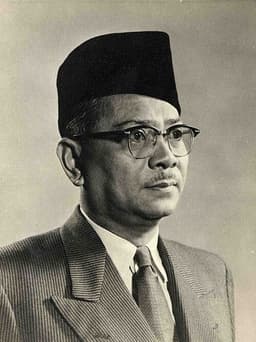
Suleiman I
Emperor · Medieval
78.8Total

Vauban
General · Modern
76.4Total
Basic Information
Born
1494
1633
Died
1566
1707
Era
Medieval
Modern
Nationality
Ottoman Empire
France
Occupation
Emperor
General
Civilization
Middle Eastern
Western
Score Comparison
Military (10%)
78.5
76.0
Political (20%)
82.0
59.3
Influence (20%)
85.0
71.0
Legacy (20%)
70.8
90.0
Leadership (15%)
81.7
77.2
Strategy (15%)
74.4
80.6
TOTAL
78.8
76.4
Suleiman I — Complete Timeline
1522 AD
Siege of RhodesWar◆ Major
Suleiman I led a massive Ottoman army and fleet to besiege the island of Rhodes, held by the Knights Hospitaller. After a six-month siege, the knights surrendered and were allowed to leave. This victory secured Ottoman control over the eastern Mediterranean.
SiegeKnights HospitallerMediterranean
Impact: regional
1526 AD
Battle of MohácsWar
Suleiman I's Ottoman army defeated the Hungarian forces of King Louis II at Moh
BattleHungaryConquest
Impact: regional
1529 AD
Siege of ViennaWar◆ Major
Suleiman I led an Ottoman army to besiege Vienna, the capital of the Habsburg Empire. The siege failed due to supply problems and the onset of winter. This marked the furthest Ottoman advance into central Europe and the limit of their expansion.
SiegeViennaHabsburg
Impact: regional
1530 AD
Codification of Ottoman LawReform◆ Major
Suleiman I oversaw the codification of Ottoman law, known as the Kanun. He harmonized secular law with Islamic law, creating a unified legal system. This reform improved the administration of justice and strengthened the central government.
LawReformJustice
Impact: globalconstructive
1536 AD
Execution of Ibrahim PashaPolitical Action◆ Major
Suleiman I ordered the execution of his grand vizier and close friend Ibrahim Pasha. Ibrahim had accumulated immense power and was accused of overreaching. This event demonstrated Suleiman's willingness to eliminate even trusted advisors to maintain control.
ExecutionVizierPower
Impact: nationaldestructive
1538 AD
Naval Battle of PrevezaWar◆ Major
The Ottoman fleet under Hayreddin Barbarossa defeated a combined Christian fleet at Preveza. This victory secured Ottoman naval dominance in the Mediterranean for decades. It allowed the Ottomans to control trade routes and raid coastal areas.
Naval BattleBarbarossaMediterranean
Impact: regional
Vauban — Complete Timeline
1673 AD
Siege of MaastrichtWar◆ Major
Vauban directed the siege of Maastricht for Louis XIV. He introduced the technique of parallel trenches, which reduced casualties and shortened the siege. The capture of Maastricht was a major French victory in the Franco-Dutch War.
Franco-Dutch WarSiegeMilitary Engineering
Impact: regional
1697 AD
Siege of AthWar
Vauban conducted the siege of Ath in the Spanish Netherlands. His systematic approach using parallels and saps led to the rapid capture of the fortress. The siege demonstrated the effectiveness of his methods.
Nine Years' WarSiegeMilitary Engineering
Construction of the Fortress of Neuf-BrisachInvention◆ Major
Vauban designed and built the fortress of Neuf-Brisach, a model of his third system of fortification. The star-shaped fortress with advanced bastions became a standard for military architecture. It was built to protect the French border after the Treaty of Ryswick.
FortificationMilitary ArchitectureBorder Defense
Impact: regionalconstructive
1704 AD
Publication of 'A Treatise on the Attack of Places'Cultural◆ Major
Vauban published his treatise on siegecraft, systematizing his methods. The work became a standard military textbook in Europe. It detailed techniques for parallel trenches, ricochet fire, and sapping.
Military TheorySiegecraftPublication
Impact: globalconstructive
1707 AD
Proposal for a 'Dîme Royale' Tax ReformReform
Vauban proposed a radical tax reform called the 'D
Tax ReformEconomic PolicyFrance
Impact: nationalconstructive
Expert Analysis
Origins
Suleiman I, born in 1494 in Trabzon, was the son of Selim I, inheriting a rapidly expanding Ottoman Empire. Vauban, born Sébastien Le Prestre in 1633 in Saint-Léger-de-Foucheret, France, rose from minor nobility to become Louis XIV's premier military engineer. Both emerged from different worlds: Suleiman from imperial dynasty, Vauban from the provincial gentry.
Rise to Power
Suleiman ascended the throne in 1520 after his father's death, immediately launching campaigns that expanded Ottoman territory. His first major victory was the capture of Belgrade (1521), followed by the Siege of Rhodes (1522), where he expelled the Knights Hospitaller. Vauban's rise was slower; he served in the Fronde rebellion, then caught the eye of Louis XIV through his engineering skills at the Siege of Douai (1667). His appointment as Commissioner General of Fortifications in 1678 solidified his influence.
Leadership & Governance
Suleiman ruled an empire of diverse cultures, codifying laws (Kanun) to standardize governance. He balanced military expansion with administrative reforms, but his execution of Grand Vizier Ibrahim Pasha (1536) reveals a ruthless streak. Vauban, though not a sovereign, shaped French military policy through his fortifications and siege tactics. His 'Dîme Royale' tax reform proposal, advocating for a universal tax, was progressive but rejected by the monarchy. Suleiman's leadership score (71) reflects his autocratic yet effective rule; Vauban's (90) highlights his systematic approach.
Triumph & Tragedy
Suleiman's triumph at the Battle of Mohács (1526) crushed Hungary, but his failure at the Siege of Vienna (1529) marked the empire's first major setback. Vauban's Siege of Maastricht (1673) introduced parallel trenches, revolutionizing siege warfare. His construction of Neuf-Brisach (1699) is a masterpiece of star fort design. Tragedy for Suleiman included the execution of his son Mustafa and later his own death during the Siege of Szigetvár (1566). Vauban's later years saw his tax proposal ignored, and he died in 1707, his ideas unfulfilled.
Character & Destiny
Suleiman was a patron of arts, known as 'the Lawgiver' in the East, 'the Magnificent' in the West. His destiny was to lead an empire at its zenith, but his personal life was marred by family strife. Vauban was a meticulous planner, known for his integrity and concern for the common soldier. His destiny was to fortify France's borders, creating the 'Pré Carré' (square field) of fortresses. Both men were products of their time, but Vauban's scientific approach contrasts with Suleiman's imperial ambition.
Legacy
Suleiman's legacy is the Ottoman Empire at its peak, influencing law, architecture, and culture. His reign set a standard for Islamic governance. Vauban's fortifications influenced military engineering for centuries; his siege tactics were used until World War I. However, Vauban's broader reforms failed. In terms of enduring impact, Suleiman's empire shaped the Middle East and Europe, while Vauban's technical innovations influenced fortification design globally. Score: Suleiman (M=78, P=82, I=85, L=71, D=82, S=74, T=79) vs Vauban (M=76, P=59, I=71, L=90, D=77, S=81, T=76). Suleiman leads in military power, political acumen, and influence, while Vauban excels in leadership and strategy.
Conclusion
While Vauban's contributions to military engineering are undeniable, Suleiman I's broader impact on world history—through conquest, law, and culture—gives him the edge. Suleiman's empire was a superpower of its time, whereas Vauban's work, though brilliant, served a single monarch. The score gap of 2.4 in Suleiman's favor reflects his greater historical significance. He changed the course of Europe and the Middle East; Vauban changed the art of fortification. In the grand narrative, Suleiman stands taller.
Rankings
🥇
Suleiman ILeader
Mil: 78.5Pol: 82.0Inf: 85.0
78.8
🥈
Vauban
Mil: 76.0Pol: 59.3Inf: 71.0
76.4
+2.4 behind
How This Comparison Works
Algorithm
Each figure is scored on 6 dimensions (0—100 scale) based on structured historical data: Military (10%), Political (20%), Influence (20%), Legacy (20%), Leadership (15%), Strategy (15%). The weighted total produces the final ranking.
Data Sources
Scores are computed from structured sub-indicators in the database. Scale factors adjust for era (Ancient ×0.85, Modern ×1.0) and civilization size (Eastern ×1.05, Other ×0.80) to account for differences in population and military scale.
Maximum 3 Figures
Comparisons are limited to 2—3 figures to ensure readability and statistical meaningfulness.
Error Margins
±5 points per dimension — Sub-scores are derived from historical records with inherent uncertainty. Two figures within 5 points on a dimension should be considered roughly equivalent in that area.
Total Score Accuracy
±3 points overall — The weighted combination of 6 dimensions produces a total score with approximately ±3 points of uncertainty. Differences of less than 3 points are not statistically significant— the figures are effectively tied.
Known Limitations
- Historical records are incomplete and uneven across civilizations
- Figures from oral-tradition societies may be underrepresented
- Occupation labels can misclassify multi-role figures
- Scores measure capability and impact, not moral character
- Quantitative scoring is a comparison tool, not absolute truth
Capability Radar
Military (10%) — Battles & Warfare
Battles
95
75
Win Rate
92
85
Expansion
95
70
Political (20%) — Governance & Reform
Reform
90
80
Diplomacy
88
60
Economy
85
55
Influence (20%) — Cultural & Global Reach
Cultural
85
80
Global
85
75
Legacy (20%) — Historical Impact
Historical
88
85
Longevity
80
85
Leadership (15%) — Power & Stability
Tenure
95
65
Stability
80
70
Strategy (15%) — Tactics & Innovation
Strategy
90
90
Tactics
88
95
Reform
85
95
Similar Comparisons
Comments & Discussion
No comments yet. Be the first to share your thoughts!