Loading...
Suleiman I vs Turenne
Suleiman I leads by 3.0 pts · 2 figures compared
…
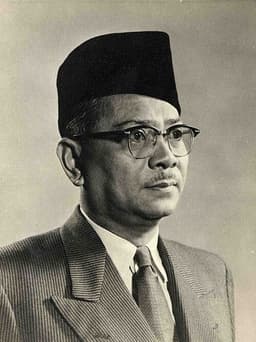
Suleiman I
Emperor · Medieval
78.8Total
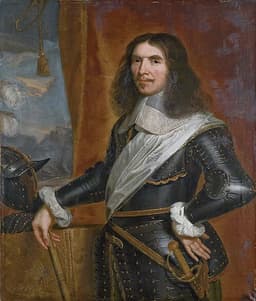
Turenne
General · Modern
75.8Total
Basic Information
Born
1494
1611
Died
1566
1675
Era
Medieval
Modern
Nationality
Ottoman Empire
France
Occupation
Emperor
General
Civilization
Middle Eastern
Western
Score Comparison
Military (10%)
78.5
79.9
Political (20%)
82.0
72.0
Influence (20%)
85.0
88.0
Legacy (20%)
70.8
65.0
Leadership (15%)
81.7
77.2
Strategy (15%)
74.4
72.0
TOTAL
78.8
75.8
Suleiman I — Complete Timeline
1522 AD
Siege of RhodesWar◆ Major
Suleiman I led a massive Ottoman army and fleet to besiege the island of Rhodes, held by the Knights Hospitaller. After a six-month siege, the knights surrendered and were allowed to leave. This victory secured Ottoman control over the eastern Mediterranean.
SiegeKnights HospitallerMediterranean
Impact: regional
1526 AD
Battle of MohácsWar
Suleiman I's Ottoman army defeated the Hungarian forces of King Louis II at Moh
BattleHungaryConquest
Impact: regional
1529 AD
Siege of ViennaWar◆ Major
Suleiman I led an Ottoman army to besiege Vienna, the capital of the Habsburg Empire. The siege failed due to supply problems and the onset of winter. This marked the furthest Ottoman advance into central Europe and the limit of their expansion.
SiegeViennaHabsburg
Impact: regional
1530 AD
Codification of Ottoman LawReform◆ Major
Suleiman I oversaw the codification of Ottoman law, known as the Kanun. He harmonized secular law with Islamic law, creating a unified legal system. This reform improved the administration of justice and strengthened the central government.
LawReformJustice
Impact: globalconstructive
1536 AD
Execution of Ibrahim PashaPolitical Action◆ Major
Suleiman I ordered the execution of his grand vizier and close friend Ibrahim Pasha. Ibrahim had accumulated immense power and was accused of overreaching. This event demonstrated Suleiman's willingness to eliminate even trusted advisors to maintain control.
ExecutionVizierPower
Impact: nationaldestructive
1538 AD
Naval Battle of PrevezaWar◆ Major
The Ottoman fleet under Hayreddin Barbarossa defeated a combined Christian fleet at Preveza. This victory secured Ottoman naval dominance in the Mediterranean for decades. It allowed the Ottomans to control trade routes and raid coastal areas.
Naval BattleBarbarossaMediterranean
Impact: regional
Turenne — Complete Timeline
1639 AD
Campaign in the ValtellinaWar
Turenne commanded French forces in the Valtellina during the Thirty Years' War. He captured several fortresses and secured the strategic pass for France, demonstrating his early military skill.
Thirty Years' WarAlpsEarly Career
Impact: regional
1658 AD
Battle of the DunesWar◆ Major
Turenne commanded the French army to victory over the Spanish at the Battle of the Dunes near Dunkirk. The victory led to the capture of Dunkirk and forced Spain to seek peace, ending the Franco-Spanish War.
Franco-Spanish WarDunkirkMilitary Victory
Impact: regional
1674 AD
Battle of the RhineWar◆ Major
Turenne led a French army across the Rhine in winter, surprising the Imperial forces. He defeated the Austrians at the Battle of Entzheim and later at Turckheim, securing French control of Alsace.
Franco-Dutch WarAlsaceWinter Campaign
Impact: regional
Battle of the SambreWar◆ Major
Turenne defeated the Spanish and Dutch forces at the Battle of Seneffe. The battle was costly but prevented the Allies from invading France. It demonstrated Turenne's tactical skill in defensive warfare.
Franco-Dutch WarDefensive BattleTactics
Impact: regional
1675 AD
Death of TurenneWar◆ Major
Turenne was killed by a cannonball while reconnoitering enemy positions at the Battle of Sasbach. His death was a major loss for France. He was buried with honors in the Basilica of Saint-Denis.
Death in BattleFranco-Dutch WarMilitary Loss
Impact: nationaltragic
Expert Analysis
Origins
Suleiman I, born in 1494 in Trabzon, was the tenth Ottoman sultan, inheriting a vast empire from his father Selim I. He was groomed for rule from a young age, studying history, science, and military tactics. Turenne, born Henri de La Tour d'Auvergne in 1611 in Sedan, was a nobleman from the House of La Tour d'Auvergne. He initially joined the Dutch army before serving France, rising through merit rather than birth. Suleiman's origins gave him absolute authority, while Turenne's noble background provided connections but required him to prove himself in a competitive military hierarchy.
Rise to Power
Suleiman ascended the throne in 1520 at age 26, with no serious rivals. His first major campaign was the conquest of Belgrade in 1521, followed by the capture of Rhodes in 1522, which established his reputation as a formidable military leader. Turenne's rise was slower; he gained prominence in the Thirty Years' War, notably at the Battle of the Dunes (1639) and later as a marshal in 1643. His strategic brilliance in the Valtellina campaign (1635) and along the Rhine solidified his status. Suleiman's rise was swift due to his inheritance, while Turenne's was earned through decades of service.
Leadership & Governance
Suleiman was both a military commander and an administrator, known for codifying Ottoman law (Kanun) and reforming the legal system. He led campaigns personally, but his reliance on grand viziers like Ibrahim Pasha (later executed) showed delegation. Turenne focused solely on military command, known for his careful planning and ability to inspire troops. He served under Louis XIV and was a master of maneuver, avoiding unnecessary battles. Suleiman's governance extended to civil matters, while Turenne's leadership was purely martial. Suleiman scores 82 in leadership, Turenne 72, reflecting Suleiman's broader responsibilities.
Triumph & Tragedy
Suleiman's greatest triumph was the Battle of Mohács (1526), where he crushed Hungary, leading to Ottoman dominance in Central Europe. His tragedy was the failed Siege of Vienna (1529), marking the empire's furthest expansion. Turenne's triumphs include the Battle of the Rhine (1648) and the Battle of the Dunes (1658), securing French borders. His tragedy was his death in battle at Salzbach (1675), struck by a cannonball. Suleiman's failures were strategic overreach, while Turenne's was an untimely death. Both faced setbacks, but Suleiman's empire declined after his reign, while Turenne's legacy endured in French military doctrine.
Character & Destiny
Suleiman was known as "the Magnificent" for his splendor and "the Lawgiver" for his reforms. He was a poet and patron of arts, but also ruthless, executing his son Mustafa and friend Ibrahim. His destiny was to rule at the peak of Ottoman power, but his later years saw stagnation. Turenne was humble, devout, and cautious, earning respect from enemies. His destiny was to die in battle, a fitting end for a soldier. Suleiman's character combined grandeur with cruelty, while Turenne's was more temperate. Suleiman's score of 82 in intelligence reflects his cultural patronage, while Turenne's 88 highlights his tactical genius.
Legacy
Suleiman's legacy is the Ottoman Golden Age, with architectural wonders like the Süleymaniye Mosque and legal reforms that lasted centuries. He is remembered as a symbol of Islamic power. Turenne's legacy is as one of history's great captains, influencing Napoleon and modern warfare. His tactics of mobility and logistics are studied. Suleiman's legacy is broader in cultural and political terms, but Turenne's impact on military science is more direct. Suleiman scores 79 in legacy, Turenne 76, a close margin reflecting different spheres.
Conclusion
Suleiman I and Turenne were masters of their domains: Suleiman a ruler-conqueror, Turenne a general-commander. Suleiman's overall score of 82.7 edges Turenne's 79.7, but the comparison is not straightforward. Suleiman's military achievements were part of imperial expansion, while Turenne's were in service of a nation-state. Suleiman's leadership and governance were broader, but Turenne's tactical brilliance was superior. In a direct contest, Suleiman's resources and absolute command might overwhelm Turenne, but Turenne's maneuverability could exploit weaknesses. Ultimately, Suleiman's impact on world history is greater, but Turenne's specialized genius is undeniable. The verdict: Suleiman the Magnificent stands as a more significant historical figure, but Turenne remains a paragon of military art.
Rankings
🥇
Suleiman ILeader
Mil: 78.5Pol: 82.0Inf: 85.0
78.8
🥈
Turenne
Mil: 79.9Pol: 72.0Inf: 88.0
75.8
+3.0 behind
How This Comparison Works
Algorithm
Each figure is scored on 6 dimensions (0—100 scale) based on structured historical data: Military (10%), Political (20%), Influence (20%), Legacy (20%), Leadership (15%), Strategy (15%). The weighted total produces the final ranking.
Data Sources
Scores are computed from structured sub-indicators in the database. Scale factors adjust for era (Ancient ×0.85, Modern ×1.0) and civilization size (Eastern ×1.05, Other ×0.80) to account for differences in population and military scale.
Maximum 3 Figures
Comparisons are limited to 2—3 figures to ensure readability and statistical meaningfulness.
Error Margins
±5 points per dimension — Sub-scores are derived from historical records with inherent uncertainty. Two figures within 5 points on a dimension should be considered roughly equivalent in that area.
Total Score Accuracy
±3 points overall — The weighted combination of 6 dimensions produces a total score with approximately ±3 points of uncertainty. Differences of less than 3 points are not statistically significant— the figures are effectively tied.
Known Limitations
- Historical records are incomplete and uneven across civilizations
- Figures from oral-tradition societies may be underrepresented
- Occupation labels can misclassify multi-role figures
- Scores measure capability and impact, not moral character
- Quantitative scoring is a comparison tool, not absolute truth
Capability Radar
Military (10%) — Battles & Warfare
Battles
95
85
Win Rate
92
88
Expansion
95
80
Political (20%) — Governance & Reform
Reform
90
60
Diplomacy
88
75
Economy
85
55
Influence (20%) — Cultural & Global Reach
Cultural
85
65
Global
85
70
Legacy (20%) — Historical Impact
Historical
88
80
Longevity
80
75
Leadership (15%) — Power & Stability
Tenure
95
70
Stability
80
65
Strategy (15%) — Tactics & Innovation
Strategy
90
92
Tactics
88
90
Reform
85
75
Similar Comparisons
Comments & Discussion
No comments yet. Be the first to share your thoughts!