Loading...
Suleiman I vs Trajan
Suleiman I leads by 2.8 pts · 2 figures compared
…
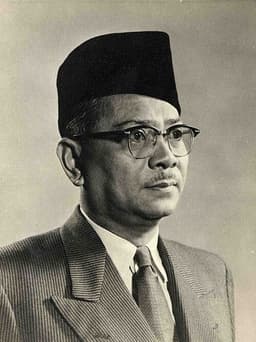
Suleiman I
Emperor · Medieval
78.8Total

Trajan
Emperor · Ancient
76.0Total
Basic Information
Born
1494
53
Died
1566
117
Era
Medieval
Ancient
Nationality
Ottoman Empire
Roman Empire
Occupation
Emperor
Emperor
Civilization
Middle Eastern
Western
Score Comparison
Military (10%)
78.5
86.0
Political (20%)
82.0
79.2
Influence (20%)
85.0
82.0
Legacy (20%)
70.8
65.6
Leadership (15%)
81.7
73.2
Strategy (15%)
74.4
76.0
TOTAL
78.8
76.0
Suleiman I — Complete Timeline
1522 AD
Siege of RhodesWar◆ Major
Suleiman I led a massive Ottoman army and fleet to besiege the island of Rhodes, held by the Knights Hospitaller. After a six-month siege, the knights surrendered and were allowed to leave. This victory secured Ottoman control over the eastern Mediterranean.
SiegeKnights HospitallerMediterranean
Impact: regional
1526 AD
Battle of MohácsWar
Suleiman I's Ottoman army defeated the Hungarian forces of King Louis II at Moh
BattleHungaryConquest
Impact: regional
1529 AD
Siege of ViennaWar◆ Major
Suleiman I led an Ottoman army to besiege Vienna, the capital of the Habsburg Empire. The siege failed due to supply problems and the onset of winter. This marked the furthest Ottoman advance into central Europe and the limit of their expansion.
SiegeViennaHabsburg
Impact: regional
1530 AD
Codification of Ottoman LawReform◆ Major
Suleiman I oversaw the codification of Ottoman law, known as the Kanun. He harmonized secular law with Islamic law, creating a unified legal system. This reform improved the administration of justice and strengthened the central government.
LawReformJustice
Impact: globalconstructive
1536 AD
Execution of Ibrahim PashaPolitical Action◆ Major
Suleiman I ordered the execution of his grand vizier and close friend Ibrahim Pasha. Ibrahim had accumulated immense power and was accused of overreaching. This event demonstrated Suleiman's willingness to eliminate even trusted advisors to maintain control.
ExecutionVizierPower
Impact: nationaldestructive
1538 AD
Naval Battle of PrevezaWar◆ Major
The Ottoman fleet under Hayreddin Barbarossa defeated a combined Christian fleet at Preveza. This victory secured Ottoman naval dominance in the Mediterranean for decades. It allowed the Ottomans to control trade routes and raid coastal areas.
Naval BattleBarbarossaMediterranean
Impact: regional
Trajan — Complete Timeline
101 AD
Implemented the Alimenta Welfare ProgramReform◆ Major
Trajan expanded the Alimenta program, a state-funded welfare system that provided food subsidies and educational support for poor children in Italy. The program used interest from state loans to landowners to fund the distributions, aiming to boost the Italian population and agricultural economy.
WelfareSocial PolicyItaly
Impact: regionalconstructive
105 AD
Built Trajan's Bridge over the DanubeOther
Trajan ordered the construction of a massive stone and timber bridge across the Danube River near the Iron Gates. Designed by Apollodorus of Damascus, it was the longest arch bridge in the world for over a millennium, facilitating the Roman invasion of Dacia.
EngineeringBridgeDanube
Impact: regionalconstructive
106 AD
Conquered DaciaWar
Trajan led two major campaigns against the Dacian kingdom under King Decebalus, culminating in the conquest of Dacia (modern Romania) in 106 CE. The victory brought vast gold and silver mines under Roman control and established a new province, funding massive building projects in Rome.
DaciaConquestProvince
Impact: regional
112 AD
Built Trajan's Forum and MarketCultural◆ Major
Trajan commissioned the construction of Trajan's Forum, a vast complex in Rome including a basilica, libraries, and the Column of Trajan. The adjacent Trajan's Market, a multi-level commercial center, demonstrated Roman engineering prowess and served as a model for urban planning.
ArchitectureRomeUrban Planning
Impact: globalconstructive
116 AD
Conquered Parthia and Reached the Persian GulfWar◆ Major
Trajan launched a campaign against the Parthian Empire, capturing its capital Ctesiphon and annexing Mesopotamia. He reached the Persian Gulf, marking the easternmost extent of Roman territory. However, rebellions in the conquered territories forced a withdrawal shortly after.
ParthiaMesopotamiaExpansion
Impact: global
Expert Analysis
Origins
Suleiman I was born in 1494 in Trabzon, the only surviving son of Sultan Selim I. He inherited a vast, expanding Ottoman Empire and was groomed for leadership from an early age. Trajan, born in 53 CE in Italica (Spain), was the first Roman emperor not of Italian origin. He rose through the military ranks under Domitian and Nerva, who adopted him as heir. Both came from strong military traditions, but Suleiman's path was dynastic, while Trajan's was merit-based.
Rise to Power
Suleiman ascended the throne in 1520 upon his father's death, facing no opposition. He immediately launched campaigns that would define his reign: conquering Belgrade (1521) and Rhodes (1522). Trajan became emperor in 98 CE after Nerva's death, having been adopted as successor due to his military reputation. He quickly moved to consolidate power by executing the Praetorian prefect who had forced Nerva to adopt him. Suleiman's rise was smoother, but Trajan's adoption reflected a more deliberate selection process.
Leadership & Governance
Suleiman is known as "the Lawgiver" for codifying Ottoman law (Kanun), harmonizing secular and religious codes. He centralized administration and expanded the bureaucracy, but also executed his grand vizier Ibrahim Pasha, showing a ruthless streak. Trajan was praised for his justice and building projects, including the Alimenta welfare program for orphans and Trajan's Forum and Market. He also built Trajan's Bridge over the Danube, the longest arch bridge for a millennium. Both were effective administrators, but Suleiman's legal reforms had longer-lasting impact.
Triumph & Tragedy
Suleiman's greatest triumph was the Battle of Mohács (1526), which led to the collapse of Hungary. However, his Siege of Vienna (1529) ended in failure, marking the limit of Ottoman expansion. The execution of his son Mustafa and Ibrahim Pasha tarnished his legacy. Trajan's conquest of Dacia (101-106) brought immense wealth to Rome, and his Parthian campaign (113-117) reached the Persian Gulf, the empire's easternmost point. However, he died before consolidating these gains, and his successor Hadrian withdrew from Mesopotamia. Both had mixed outcomes: Suleiman's expansion stalled, while Trajan's overextension proved unsustainable.
Character & Destiny
Suleiman was a poet and patron of the arts, known for his justice but also his paranoia in later years. Trajan was celebrated for his military prowess and modesty, though his reign was marked by costly wars. Suleiman's destiny was to rule the Ottoman Empire at its zenith; Trajan's to expand Rome to its greatest extent. Both died on campaign: Suleiman during the Siege of Szigetvár (1566), Trajan in Selinus (117). Their characters reflected their empires' strengths and weaknesses.
Legacy
Suleiman's legacy includes the Ottoman legal code, architectural masterpieces by Mimar Sinan, and the empire's peak. Trajan's legacy includes Trajan's Column, the Alimenta program, and the title "Optimus Princeps" (Best Ruler). Suleiman's empire lasted until 1922, while Trajan's empire continued until 476 (Western) or 1453 (Eastern). Suleiman's legal reforms shaped the Ottoman system for centuries, while Trajan's building projects and welfare programs set standards for Roman governance. Trajan's conquests had more lasting demographic impact (Romanization of Dacia), but Suleiman's cultural influence was profound.
Conclusion
Suleiman I and Trajan both ruled at their empires' peaks, but Suleiman's broader governance reforms and longer-lasting impact give him a slight edge. His codification of law, architectural patronage, and strategic vision (despite Vienna's failure) demonstrate a more comprehensive leadership. Trajan's military brilliance and administrative achievements are undeniable, but his expansion was unsustainable. Score gap: 2.8 in favor of Suleiman. **Winner: Suleiman I**.
Rankings
🥇
Suleiman ILeader
Mil: 78.5Pol: 82.0Inf: 85.0
78.8
🥈
Trajan
Mil: 86.0Pol: 79.2Inf: 82.0
76.0
+2.8 behind
How This Comparison Works
Algorithm
Each figure is scored on 6 dimensions (0—100 scale) based on structured historical data: Military (10%), Political (20%), Influence (20%), Legacy (20%), Leadership (15%), Strategy (15%). The weighted total produces the final ranking.
Data Sources
Scores are computed from structured sub-indicators in the database. Scale factors adjust for era (Ancient ×0.85, Modern ×1.0) and civilization size (Eastern ×1.05, Other ×0.80) to account for differences in population and military scale.
Maximum 3 Figures
Comparisons are limited to 2—3 figures to ensure readability and statistical meaningfulness.
Error Margins
±5 points per dimension — Sub-scores are derived from historical records with inherent uncertainty. Two figures within 5 points on a dimension should be considered roughly equivalent in that area.
Total Score Accuracy
±3 points overall — The weighted combination of 6 dimensions produces a total score with approximately ±3 points of uncertainty. Differences of less than 3 points are not statistically significant— the figures are effectively tied.
Known Limitations
- Historical records are incomplete and uneven across civilizations
- Figures from oral-tradition societies may be underrepresented
- Occupation labels can misclassify multi-role figures
- Scores measure capability and impact, not moral character
- Quantitative scoring is a comparison tool, not absolute truth
Capability Radar
Military (10%) — Battles & Warfare
Battles
95
95
Win Rate
92
98
Expansion
95
95
Political (20%) — Governance & Reform
Reform
90
88
Diplomacy
88
85
Economy
85
90
Influence (20%) — Cultural & Global Reach
Cultural
85
85
Global
85
85
Legacy (20%) — Historical Impact
Historical
88
90
Longevity
80
88
Leadership (15%) — Power & Stability
Tenure
95
90
Stability
80
92
Strategy (15%) — Tactics & Innovation
Strategy
90
92
Tactics
88
88
Reform
85
85
Similar Comparisons
Comments & Discussion
No comments yet. Be the first to share your thoughts!