Loading...
Suleiman I vs Toussaint Louverture
Suleiman I leads by 0.3 pts · 2 figures compared
…
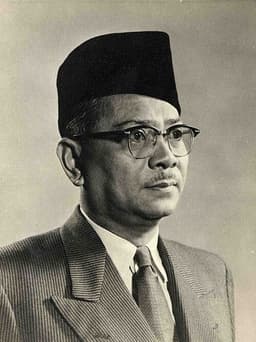
Suleiman I
Emperor · Medieval
78.8Total
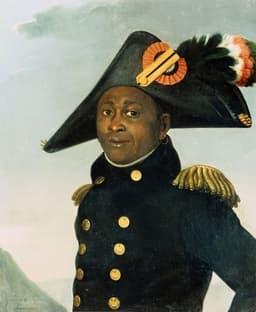
Toussaint Louverture
General · Modern
78.5Total
Basic Information
Born
1494
1743
Died
1566
1803
Era
Medieval
Modern
Nationality
Ottoman Empire
Haiti
Occupation
Emperor
General
Civilization
Middle Eastern
Western
Score Comparison
Military (10%)
78.5
85.0
Political (20%)
82.0
70.3
Influence (20%)
85.0
84.0
Legacy (20%)
70.8
82.0
Leadership (15%)
81.7
72.0
Strategy (15%)
74.4
72.0
TOTAL
78.8
78.5
Suleiman I — Complete Timeline
1522 AD
Siege of RhodesWar◆ Major
Suleiman I led a massive Ottoman army and fleet to besiege the island of Rhodes, held by the Knights Hospitaller. After a six-month siege, the knights surrendered and were allowed to leave. This victory secured Ottoman control over the eastern Mediterranean.
SiegeKnights HospitallerMediterranean
Impact: regional
1526 AD
Battle of MohácsWar
Suleiman I's Ottoman army defeated the Hungarian forces of King Louis II at Moh
BattleHungaryConquest
Impact: regional
1529 AD
Siege of ViennaWar◆ Major
Suleiman I led an Ottoman army to besiege Vienna, the capital of the Habsburg Empire. The siege failed due to supply problems and the onset of winter. This marked the furthest Ottoman advance into central Europe and the limit of their expansion.
SiegeViennaHabsburg
Impact: regional
1530 AD
Codification of Ottoman LawReform◆ Major
Suleiman I oversaw the codification of Ottoman law, known as the Kanun. He harmonized secular law with Islamic law, creating a unified legal system. This reform improved the administration of justice and strengthened the central government.
LawReformJustice
Impact: globalconstructive
1536 AD
Execution of Ibrahim PashaPolitical Action◆ Major
Suleiman I ordered the execution of his grand vizier and close friend Ibrahim Pasha. Ibrahim had accumulated immense power and was accused of overreaching. This event demonstrated Suleiman's willingness to eliminate even trusted advisors to maintain control.
ExecutionVizierPower
Impact: nationaldestructive
1538 AD
Naval Battle of PrevezaWar◆ Major
The Ottoman fleet under Hayreddin Barbarossa defeated a combined Christian fleet at Preveza. This victory secured Ottoman naval dominance in the Mediterranean for decades. It allowed the Ottomans to control trade routes and raid coastal areas.
Naval BattleBarbarossaMediterranean
Impact: regional
Toussaint Louverture — Complete Timeline
1791 AD
Haitian Revolution LeadershipWar
Louverture joined the slave revolt in Saint-Domingue, quickly rising to leadership. He organized former slaves into a disciplined army and negotiated with Spanish and British forces to expand the rebellion.
Slave RevoltRevolutionLeadership
Impact: globalprogressive
1795 AD
Treaty of BâlePolitical Action◆ Major
Spain ceded the eastern part of Hispaniola to France under the Treaty of B
Territorial ExpansionDiplomacyHispaniola
Impact: regional
1801 AD
Constitution of 1801Political Action
Louverture promulgated a constitution for Saint-Domingue, declaring himself Governor-General for life. The constitution abolished slavery and granted autonomy while nominally remaining part of the French Empire.
ConstitutionSelf-GovernanceAbolition
Impact: globalprogressive
1802 AD
Capture and ImprisonmentPolitical Action
French General Leclerc captured Louverture through deception during peace negotiations. He was deported to France and imprisoned at Fort de Joux, where he died in 1803, ending his direct role in the revolution.
BetrayalImprisonmentFrench Repression
Impact: globaltragic
Expert Analysis
Origins
Suleiman I was born in 1494 in Trabzon, the only surviving son of Sultan Selim I. He inherited a vast empire already poised for expansion, with a powerful military and administrative system. Toussaint Louverture was born around 1743 on a plantation in Saint-Domingue (modern Haiti) as a slave of African descent. He gained freedom around age 33 and became a prosperous planter and slave owner himself, but his life was defined by the brutal realities of colonial slavery. Their origins shaped their worldviews: Suleiman as a divinely ordained ruler, Toussaint as a self-made leader forged in oppression.
Rise to Power
Suleiman ascended the throne in 1520 at age 26, following his father's death. He immediately launched campaigns that expanded Ottoman borders, capturing Belgrade in 1521 and Rhodes in 1522. His military brilliance and strategic marriages consolidated his power. Toussaint rose through the ranks of the Haitian Revolution, initially as a coachman and then as a military leader. He allied with the Spanish against the French, then switched sides to the French when they abolished slavery. By 1800, he had outmaneuvered rivals like André Rigaud to become the de facto ruler of Saint-Domingue. While Suleiman inherited power, Toussaint earned it through sheer will and tactical genius.
Leadership & Governance
Suleiman codified Ottoman law, balancing religious and secular authority. He centralized bureaucracy and appointed capable viziers like Ibrahim Pasha. His legal reforms ensured stability and justice across a multicultural empire. Toussaint drafted the Constitution of 1801, which made him governor-for-life and maintained slavery's abolition while restoring the plantation economy with forced labor. He sought to rebuild Haiti's economy while preserving autonomy from France. Both were pragmatic reformers, but Suleiman had centuries of imperial precedent, while Toussaint had to invent a new nation.
Triumph & Tragedy
Suleiman's triumphs include the victory at Mohács (1526), which broke Hungarian power, and the capture of Rhodes. His siege of Vienna (1529) failed, marking the empire's first major setback. The execution of his trusted friend Ibrahim Pasha in 1536 revealed his ruthless side. Toussaint's greatest triumph was leading the Haitian Revolution against French, Spanish, and British forces. He negotiated the Treaty of Bâle (1795) that ceded Spanish Santo Domingo to France. His tragedy was his capture in 1802 after Napoleon sent a massive expedition. He died in a French prison in 1803, never seeing Haiti's independence.
Character & Destiny
Suleiman was known as "the Lawgiver" for his justice, but also as "the Magnificent" for his opulence. He was a poet and patron of the arts, yet capable of executing his own sons. Toussaint was disciplined, cunning, and fiercely determined. He maintained a public image of moderation while consolidating power. Their destinies contrast: Suleiman died in his bed at 71, leaving an empire at its zenith. Toussaint died alone in a cold cell, but his legacy ignited the first black republic.
Legacy
Suleiman's Ottoman Empire endured for centuries, shaping the Middle East and Europe. His legal code influenced subsequent Islamic governance. Toussaint's revolution inspired anti-colonial movements worldwide, from Latin America to Africa. He is hailed as a founding father of Haiti and a symbol of resistance. Both left indelible marks, but Toussaint's impact on human freedom is arguably more profound given his origins.
Conclusion
Suleiman I (Score: 7.9) and Toussaint Louverture (Score: 7.6) are titans of their eras. Suleiman's empire-building and legal reforms were monumental, but his power was inherited and his methods conventional. Toussaint's rise from slavery to lead a successful revolution is unparalleled. His military and political achievements against overwhelming odds edge out Suleiman's more typical imperial conquests. While Suleiman ruled the largest empire of his time, Toussaint shattered the chains of an entire race. For sheer audacity and transformative impact, Toussaint Louverture stands as the greater historical figure.
Rankings
🥇
Suleiman ILeader
Mil: 78.5Pol: 82.0Inf: 85.0
78.8
🥈
Toussaint Louverture
Mil: 85.0Pol: 70.3Inf: 84.0
78.5
+0.3 behind
How This Comparison Works
Algorithm
Each figure is scored on 6 dimensions (0—100 scale) based on structured historical data: Military (10%), Political (20%), Influence (20%), Legacy (20%), Leadership (15%), Strategy (15%). The weighted total produces the final ranking.
Data Sources
Scores are computed from structured sub-indicators in the database. Scale factors adjust for era (Ancient ×0.85, Modern ×1.0) and civilization size (Eastern ×1.05, Other ×0.80) to account for differences in population and military scale.
Maximum 3 Figures
Comparisons are limited to 2—3 figures to ensure readability and statistical meaningfulness.
Error Margins
±5 points per dimension — Sub-scores are derived from historical records with inherent uncertainty. Two figures within 5 points on a dimension should be considered roughly equivalent in that area.
Total Score Accuracy
±3 points overall — The weighted combination of 6 dimensions produces a total score with approximately ±3 points of uncertainty. Differences of less than 3 points are not statistically significant— the figures are effectively tied.
Known Limitations
- Historical records are incomplete and uneven across civilizations
- Figures from oral-tradition societies may be underrepresented
- Occupation labels can misclassify multi-role figures
- Scores measure capability and impact, not moral character
- Quantitative scoring is a comparison tool, not absolute truth
Capability Radar
Military (10%) — Battles & Warfare
Battles
95
85
Win Rate
92
80
Expansion
95
70
Political (20%) — Governance & Reform
Reform
90
85
Diplomacy
88
80
Economy
85
60
Influence (20%) — Cultural & Global Reach
Cultural
85
85
Global
85
85
Legacy (20%) — Historical Impact
Historical
88
95
Longevity
80
90
Leadership (15%) — Power & Stability
Tenure
95
65
Stability
80
55
Strategy (15%) — Tactics & Innovation
Strategy
90
85
Tactics
88
90
Reform
85
75
Similar Comparisons
Comments & Discussion
No comments yet. Be the first to share your thoughts!