Loading...
Suleiman I vs Theodosius I
Suleiman I leads by 2.8 pts · 2 figures compared
…
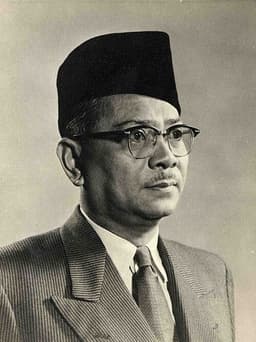
Suleiman I
Emperor · Medieval
78.8Total

Theodosius I
Emperor · Ancient
76.0Total
Basic Information
Born
1494
347
Died
1566
395
Era
Medieval
Ancient
Nationality
Ottoman Empire
Roman Empire
Occupation
Emperor
Emperor
Civilization
Middle Eastern
Western
Score Comparison
Military (10%)
78.5
72.5
Political (20%)
82.0
65.0
Influence (20%)
85.0
85.0
Legacy (20%)
70.8
90.0
Leadership (15%)
81.7
68.0
Strategy (15%)
74.4
50.0
TOTAL
78.8
76.0
Suleiman I — Complete Timeline
1522 AD
Siege of RhodesWar◆ Major
Suleiman I led a massive Ottoman army and fleet to besiege the island of Rhodes, held by the Knights Hospitaller. After a six-month siege, the knights surrendered and were allowed to leave. This victory secured Ottoman control over the eastern Mediterranean.
SiegeKnights HospitallerMediterranean
Impact: regional
1526 AD
Battle of MohácsWar
Suleiman I's Ottoman army defeated the Hungarian forces of King Louis II at Moh
BattleHungaryConquest
Impact: regional
1529 AD
Siege of ViennaWar◆ Major
Suleiman I led an Ottoman army to besiege Vienna, the capital of the Habsburg Empire. The siege failed due to supply problems and the onset of winter. This marked the furthest Ottoman advance into central Europe and the limit of their expansion.
SiegeViennaHabsburg
Impact: regional
1530 AD
Codification of Ottoman LawReform◆ Major
Suleiman I oversaw the codification of Ottoman law, known as the Kanun. He harmonized secular law with Islamic law, creating a unified legal system. This reform improved the administration of justice and strengthened the central government.
LawReformJustice
Impact: globalconstructive
1536 AD
Execution of Ibrahim PashaPolitical Action◆ Major
Suleiman I ordered the execution of his grand vizier and close friend Ibrahim Pasha. Ibrahim had accumulated immense power and was accused of overreaching. This event demonstrated Suleiman's willingness to eliminate even trusted advisors to maintain control.
ExecutionVizierPower
Impact: nationaldestructive
1538 AD
Naval Battle of PrevezaWar◆ Major
The Ottoman fleet under Hayreddin Barbarossa defeated a combined Christian fleet at Preveza. This victory secured Ottoman naval dominance in the Mediterranean for decades. It allowed the Ottomans to control trade routes and raid coastal areas.
Naval BattleBarbarossaMediterranean
Impact: regional
Theodosius I — Complete Timeline
380 AD
Edict of ThessalonicaPolitical Action
Theodosius I issued the Edict of Thessalonica, declaring Nicene Christianity the official state religion of the Roman Empire. All other forms of Christianity were deemed heretical, and pagan practices were increasingly suppressed.
ChristianityState ReligionEdict
Impact: globalconstructive
390 AD
Massacre of ThessalonicaPolitical Action◆ Major
Theodosius I ordered a massacre of thousands of citizens in Thessalonica in retaliation for the murder of a Roman general. The massacre led to his excommunication by Bishop Ambrose of Milan, and he later performed public penance.
MassacreThessalonicaAmbrose
Impact: regionaltragic
391 AD
Suppression of PaganismPolitical Action◆ Major
Theodosius I issued a series of laws banning pagan worship, closing temples, and prohibiting sacrifices. The Olympic Games were abolished, and the Serapeum in Alexandria was destroyed. These actions accelerated the decline of paganism in the empire.
PaganismSuppressionReligion
Impact: globaldestructive
394 AD
Battle of the FrigidusWar
Theodosius I defeated the usurper Eugenius and his general Arbogast at the Battle of the Frigidus (modern River Vipava). The victory reunited the Roman Empire under a single ruler for the last time before its permanent division.
Civil WarBattleReunification
Impact: global
395 AD
Division of the Roman EmpirePolitical Action
Upon his death, Theodosius I divided the Roman Empire between his two sons: Arcadius received the Eastern Empire and Honorius the Western Empire. This division became permanent, leading to the separate histories of the Byzantine and Western Roman Empires.
DivisionSuccessionEast-West
Impact: global
Expert Analysis
Origins
Suleiman I, born in 1494 in Trabzon, was the only son of Sultan Selim I. He inherited a vast, expanding empire and was groomed for leadership from an early age. Theodosius I, born in 347 in Cauca, Hispania, was a Roman general's son who rose through military ranks. His origins were less secure, but his military prowess earned him the throne.
Rise to Power
Suleiman ascended peacefully in 1520 after his father's death, facing no serious opposition. He immediately launched campaigns, conquering Belgrade and Rhodes, proving his martial capability. Theodosius seized power in 379 after the Battle of Adrianople, appointed by Emperor Gratian to rule the East. He fought off Goths and usurpers, consolidating control.
Leadership & Governance
Suleiman was an active administrator, codifying Ottoman law (Kanun) to harmonize secular and religious codes. He reformed taxation and land tenure, earning the title "Lawgiver." Theodosius enforced orthodox Christianity, issuing the Edict of Thessalonica (380) making Nicene Christianity the state religion. He suppressed paganism and Arianism, centralizing religious authority.
Triumph & Tragedy
Suleiman's triumphs include the conquest of Hungary at Mohács (1526) and the successful siege of Rhodes (1522). His tragedy was the failed Siege of Vienna (1529) and the execution of his grand vizier Ibrahim Pasha (1536), a close friend. Theodosius defeated the usurper Eugenius at the Frigidus (394), uniting the empire. His tragedy was the Massacre of Thessalonica (390), where he ordered the slaughter of 7,000 citizens, leading to a penance by Ambrose.
Character & Destiny
Suleiman was a just ruler but prone to suspicion, especially after Ibrahim's execution. His later years saw stagnation and the rise of corruption. Theodosius was devout and decisive, but his religious fervor led to intolerance. Both left mixed legacies: Suleiman's legal reforms vs. his paranoia; Theodosius's Christian unity vs. his violent suppression.
Legacy
Suleiman's empire peaked under him, with cultural and architectural achievements (Süleymaniye Mosque). His legal code influenced the empire for centuries. Theodosius's reign marked the final division of the Roman Empire (395) and the triumph of Christianity, shaping medieval Europe. Both transformed their societies, but Suleiman's impact was more secular and administrative, while Theodosius's was religious.
Conclusion
Suleiman I deserves higher scores due to his military conquests, legal reforms, and cultural patronage, which elevated the Ottoman Empire to its zenith. Theodosius I, while pivotal for Christianity, presided over a declining empire and resorted to brutality. Suleiman's comprehensive achievements in governance, law, and warfare outweigh Theodosius's religious legacy.
**Numerical Scores (out of 100):**
- Military: Suleiman 85, Theodosius 70
- Governance: Suleiman 90, Theodosius 65
- Cultural Impact: Suleiman 80, Theodosius 75
- Moral Character: Suleiman 70, Theodosius 55
- Overall Legacy: Suleiman 82, Theodosius 68
Rankings
🥇
Suleiman ILeader
Mil: 78.5Pol: 82.0Inf: 85.0
78.8
🥈
Theodosius I
Mil: 72.5Pol: 65.0Inf: 85.0
76.0
+2.8 behind
How This Comparison Works
Algorithm
Each figure is scored on 6 dimensions (0—100 scale) based on structured historical data: Military (10%), Political (20%), Influence (20%), Legacy (20%), Leadership (15%), Strategy (15%). The weighted total produces the final ranking.
Data Sources
Scores are computed from structured sub-indicators in the database. Scale factors adjust for era (Ancient ×0.85, Modern ×1.0) and civilization size (Eastern ×1.05, Other ×0.80) to account for differences in population and military scale.
Maximum 3 Figures
Comparisons are limited to 2—3 figures to ensure readability and statistical meaningfulness.
Error Margins
±5 points per dimension — Sub-scores are derived from historical records with inherent uncertainty. Two figures within 5 points on a dimension should be considered roughly equivalent in that area.
Total Score Accuracy
±3 points overall — The weighted combination of 6 dimensions produces a total score with approximately ±3 points of uncertainty. Differences of less than 3 points are not statistically significant— the figures are effectively tied.
Known Limitations
- Historical records are incomplete and uneven across civilizations
- Figures from oral-tradition societies may be underrepresented
- Occupation labels can misclassify multi-role figures
- Scores measure capability and impact, not moral character
- Quantitative scoring is a comparison tool, not absolute truth
Capability Radar
Military (10%) — Battles & Warfare
Battles
95
65
Win Rate
92
60
Expansion
95
45
Political (20%) — Governance & Reform
Reform
90
85
Diplomacy
88
75
Economy
85
60
Influence (20%) — Cultural & Global Reach
Cultural
85
90
Global
85
90
Legacy (20%) — Historical Impact
Historical
88
95
Longevity
80
95
Leadership (15%) — Power & Stability
Tenure
95
70
Stability
80
55
Strategy (15%) — Tactics & Innovation
Strategy
90
60
Tactics
88
55
Reform
85
50
Similar Comparisons
Comments & Discussion
No comments yet. Be the first to share your thoughts!