Loading...
This comparison has not been analyzed yet.
One-time AI generation (~1 minute). Scores and timeline are already available below.
Smenkhkare vs Userkaf
Smenkhkare leads by 3.9 pts · 2 figures compared
…

Smenkhkare
Emperor · Ancient
44.3Total
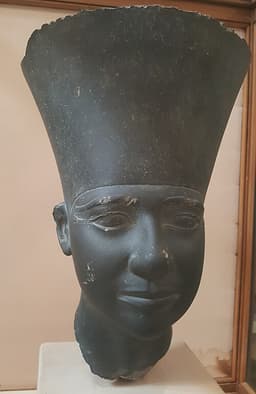
Userkaf
Emperor · Ancient
40.4Total
Basic Information
Born
-1333
-2460
Died
-1332
-2450
Era
Ancient
Ancient
Nationality
New Kingdom Egypt
Old Kingdom Egypt
Occupation
Emperor
Emperor
Civilization
Middle Eastern
Middle Eastern
Score Comparison
Military (10%)
33.6
22.8
Political (20%)
68.0
30.8
Influence (20%)
42.4
50.2
Legacy (20%)
32.5
39.2
Leadership (15%)
42.2
38.1
Strategy (15%)
56.4
54.7
TOTAL
44.3
40.4
Smenkhkare — Complete Timeline
1334 BC
Possible Co-regency with AkhenatenPolitical Action
Evidence suggests Smenkhkare may have served as co-regent with Akhenaten in the final years of the latter's reign. Inscriptions from Amarna show them ruling together, possibly to manage the transition of power. This co-regency, if it occurred, was brief and ended with Akhenaten's death.
Co-regencyAmarnaSuccession
Impact: national
1333 BC
Brief Reign as Amarna Period PharaohPolitical Action◆ Major
Smenkhkare ruled for a very short period, likely less than a year, during the turbulent Amarna period. He succeeded Akhenaten and may have been a co-regent before becoming sole ruler. His reign is poorly documented, and his identity remains debated, with theories suggesting he was a brother or son of Akhenaten.
Amarna PeriodSuccessionMystery
Impact: national
1332 BC
Burial in Tomb KV55Cultural
Smenkhkare is believed to have been buried in Tomb KV55 in the Valley of the Kings. The tomb contained a mummy, a gilded coffin, and canopic jars, but the identity of the occupant is disputed. The burial was disturbed in antiquity, and the remains have been linked to both Smenkhkare and Akhenaten.
BurialKV55Amarna
Impact: national
Userkaf — Complete Timeline
2460 BC
Foundation of the Fifth DynastyPolitical Action
Userkaf founded the Fifth Dynasty, succeeding Shepseskaf. His accession marked a new royal line, possibly through marriage or a coup. The dynasty is known for its close association with the sun god Ra and the construction of sun temples.
Dynasty FoundationFifth DynastyPolitical Change
Impact: nationalconstructive
2455 BC
Construction of the Sun Temple at AbusirOther◆ Major
Userkaf built a sun temple at Abusir, dedicated to Ra. The temple, known as Nekhenre, featured a large obelisk on a platform, an open courtyard, and storage rooms. This was the first of several sun temples built by Fifth Dynasty pharaohs, emphasizing the solar cult.
Sun TempleAbusirReligion
Impact: nationalconstructive
Construction of the Pyramid at SaqqaraOther
Userkaf built a pyramid at Saqqara, near the Step Pyramid of Djoser. The pyramid was smaller than those of the Fourth Dynasty, with a base of about 73 meters. It was built of rough stone and mudbrick, reflecting a decline in pyramid construction scale.
Pyramid ConstructionSaqqaraFifth Dynasty
This comparison has not been analyzed yet.
One-time AI generation (~1 minute). Scores and timeline are already available below.
Rankings
🥇
SmenkhkareLeader
Mil: 33.6Pol: 68.0Inf: 42.4
44.3
🥈
Userkaf
Mil: 22.8Pol: 30.8Inf: 50.2
40.4
+3.9 behind
How This Comparison Works
Algorithm
Each figure is scored on 6 dimensions (0—100 scale) based on structured historical data: Military (10%), Political (20%), Influence (20%), Legacy (20%), Leadership (15%), Strategy (15%). The weighted total produces the final ranking.
Data Sources
Scores are computed from structured sub-indicators in the database. Scale factors adjust for era (Ancient ×0.85, Modern ×1.0) and civilization size (Eastern ×1.05, Other ×0.80) to account for differences in population and military scale.
Maximum 3 Figures
Comparisons are limited to 2—3 figures to ensure readability and statistical meaningfulness.
Error Margins
±5 points per dimension — Sub-scores are derived from historical records with inherent uncertainty. Two figures within 5 points on a dimension should be considered roughly equivalent in that area.
Total Score Accuracy
±3 points overall — The weighted combination of 6 dimensions produces a total score with approximately ±3 points of uncertainty. Differences of less than 3 points are not statistically significant— the figures are effectively tied.
Known Limitations
- Historical records are incomplete and uneven across civilizations
- Figures from oral-tradition societies may be underrepresented
- Occupation labels can misclassify multi-role figures
- Scores measure capability and impact, not moral character
- Quantitative scoring is a comparison tool, not absolute truth
Capability Radar
Military (10%) — Battles & Warfare
Battles
36
36
Win Rate
43
39
Expansion
43
42
Political (20%) — Governance & Reform
Reform
0
25
Diplomacy
0
20
Economy
0
30
Influence (20%) — Cultural & Global Reach
Cultural
5
30
Global
5
10
Legacy (20%) — Historical Impact
Historical
10
25
Longevity
5
20
Leadership (15%) — Power & Stability
Tenure
1
10
Stability
0
35
Strategy (15%) — Tactics & Innovation
Strategy
44
48
Tactics
50
47
Reform
53
55
Similar Comparisons
Comments & Discussion
No comments yet. Be the first to share your thoughts!