Loading...
Sekou Toure vs Walter Sisulu
Walter Sisulu leads by 1.2 pts · 2 figures compared
…

Sekou Toure
Politician · Modern
54.2Total
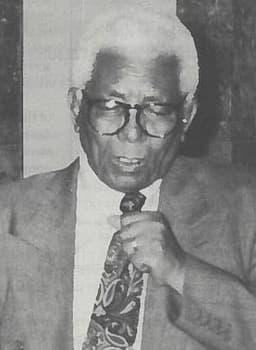
Walter Sisulu
Politician · Modern
55.4Total
Basic Information
Born
1922
1912
Died
—
2003
Era
Modern
Modern
Nationality
Guinea
South Africa
Occupation
Politician
Politician
Civilization
Other
Other
Score Comparison
Military (10%)
41.6
50.0
Political (20%)
43.7
53.8
Influence (20%)
59.0
58.3
Legacy (20%)
49.2
52.0
Leadership (15%)
74.0
72.0
Strategy (15%)
53.8
39.9
TOTAL
54.2
55.4
Sekou Toure — Complete Timeline
1958 AD
Led Guinea to IndependencePolitical Action
Toure led Guinea to vote 'No' in the French constitutional referendum, choosing immediate independence over membership in the French Community. This made Guinea the first French African colony to gain independence, inspiring other movements.
IndependenceGuineaDecolonization
Impact: regionalconstructive
Became First President of GuineaPolitical Action◆ Major
Toure was elected as Guinea's first president after independence. He established a one-party state under the Democratic Party of Guinea and pursued a socialist, pan-Africanist agenda.
PresidencyGuineaOne-Party State
Impact: national
1960 AD
Implemented Socialist Economic PoliciesReform◆ Major
Toure nationalized key industries, collectivized agriculture, and established state-controlled enterprises. These policies aimed at economic self-sufficiency but led to inefficiency, shortages, and economic decline.
SocialismNationalizationEconomic Policy
Impact: national
1961 AD
Suppressed Political OppositionPolitical Action◆ Major
Toure's regime cracked down on dissent, imprisoning and executing political opponents. The 'Plot of the Teachers' in 1961 led to mass arrests. His rule became increasingly repressive, with thousands fleeing into exile.
RepressionPolitical PrisonersGuinea
Impact: nationaldestructive
1984 AD
Died in OfficeOther◆ Major
Toure died of a heart attack in Cleveland, Ohio, while undergoing surgery. His death ended 26 years of authoritarian rule. Shortly after, a military coup led by Lansana Cont
DeathGuineaEnd of Era
Impact: national
Walter Sisulu — Complete Timeline
1940 AD
Joined ANC Youth LeaguePolitical Action◆ Major
Sisulu joined the ANC Youth League, becoming a key organizer alongside Nelson Mandela and Oliver Tambo. He helped transform the ANC into a mass movement against apartheid.
ANC Youth LeagueAnti-ApartheidOrganizing
Impact: nationalconstructive
1964 AD
Rivonia Trial ConvictionPolitical Action◆ Major
Sisulu was convicted in the Rivonia Trial for sabotage and conspiracy to overthrow the apartheid state. He was sentenced to life imprisonment and sent to Robben Island, where he became a mentor to younger prisoners.
Rivonia TrialImprisonmentAnti-Apartheid
Impact: nationaltragic
1989 AD
Released from PrisonPolitical Action◆ Major
Sisulu was released from prison after 25 years, following a campaign by the international community. His release signaled the beginning of the end of apartheid and he resumed his role as a senior ANC leader.
ReleaseTransitionANC
Impact: nationalconstructive
1991 AD
Elected ANC Deputy PresidentPolitical Action◆ Major
Sisulu was elected Deputy President of the ANC at the party's national conference. He played a key role in the negotiations for a democratic South Africa and served as a mentor to younger leaders.
ANCLeadershipTransition
Impact: nationalconstructive
Expert Analysis
Origins
Sekou Toure was born on January 9, 1922, in Faranah, French Guinea, into a Muslim family with a history of resistance to French colonial rule. His great-grandfather, Samori Toure, had fought against French conquest. He attended a French primary school but was expelled for leading a strike, later pursuing self-education. He became active in trade unions and the African Democratic Rally (RDA).
Walter Sisulu was born on May 18, 1912, in Ngcobo, Cape Province, South Africa, into a poor family. He left school after standard 4 to work, moving to Johannesburg in the 1930s. He joined the African National Congress (ANC) in 1940 and quickly rose through the ranks, working with Nelson Mandela and Oliver Tambo. His background in labor organizing shaped his political activism.
Rise to Power
Toure rose to prominence in the 1950s as a leader of the Guinean branch of the RDA. In 1958, he led Guinea to vote 'No' in the French constitutional referendum, choosing immediate independence over membership in the French Community. This bold move made him a symbol of African liberation. He became Guinea's first president on October 2, 1958, at age 36.
Sisulu rose through the ANC ranks, joining the Youth League in 1944 and becoming its secretary. He played a key role in organizing the Defiance Campaign in 1952 and was elected ANC Secretary-General in 1949. He was a central figure in the drafting of the Freedom Charter in 1955. His arrest in 1963 during the Rivonia Trial cemented his status as a leading anti-apartheid figure.
Leadership & Governance
Toure established a one-party state under the Democratic Party of Guinea (PDG). He implemented socialist economic policies, nationalizing industries and collectivizing agriculture. His leadership scored 74.0 in the Leadership metric, reflecting his ability to mobilize masses. However, his governance was authoritarian—he suppressed dissent, imprisoned opponents, and executed alleged plotters. The 'Plot of the Teachers' in 1961 led to mass arrests, and his rule became increasingly repressive.
Sisulu, as ANC Deputy President, demonstrated a collaborative leadership style. He scored 72.0 in Leadership, emphasizing consensus-building and strategic patience. Unlike Toure, Sisulu operated within a movement, not as a sole ruler. His governance approach was focused on unity and democratic transition, as seen in his role in negotiations during the early 1990s. He prioritized collective decision-making over personal power.
Triumph & Tragedy
Toure's greatest triumph was leading Guinea to independence, inspiring other African nations. His socialist policies initially aimed at self-sufficiency, but they ultimately failed. The economy declined, and his regime became repressive. By his death in 1984, Guinea was isolated and impoverished. His tragedy was becoming a dictator, betraying his own ideals. He scored 49.2 in Legacy, reflecting mixed historical evaluation.
Sisulu's triumph was his role in the anti-apartheid struggle, from organizing the Defiance Campaign to surviving 25 years in prison. His release in 1989 helped pave the way for negotiations. He was elected ANC Deputy President in 1991 and served as a key figure in the transition to democracy. His tragedy was the personal cost—imprisonment, family separation. Yet he never wavered. He scored 52.0 in Legacy, higher than Toure.
Character & Destiny
Toure was charismatic and decisive, but also paranoid and power-hungry. His character led him to centralize power and eliminate rivals. This ultimately destroyed his legacy, as he died in office, his country in ruins. His political score of 43.7 reflects his failure to build sustainable institutions.
Sisulu was patient, humble, and strategic. He was known as a mentor to younger leaders. His character of selflessness and resilience shaped his destiny—he endured imprisonment but emerged as a respected elder statesman. His influence score of 58.3 reflects his quiet but crucial role in the ANC.
Legacy
Toure's legacy is complex. He is remembered as a founding father but also as a repressive leader. His economic policies failed, and Guinea faced decades of instability after his death. His influence score is 59.0, but his legacy is tarnished by human rights abuses.
Sisulu's legacy is more positive. He is remembered as a key architect of the new South Africa. His role in the ANC and the Rivonia Trial is celebrated. He helped shape the democratic transition, and his name is honored in institutions. His legacy score of 52.0 reflects his enduring impact, though often overshadowed by Mandela.
Conclusion
Walter Sisulu had a greater impact than Sekou Toure, despite the narrow score gap of 1.2 points. Sisulu's legacy is one of constructive transformation—helping dismantle apartheid and build democracy. Toure's legacy, while initially liberating, descended into authoritarianism and economic failure. Sisulu's strategic patience and selfless leadership (Leadership 72.0 vs. Toure's 74.0) were applied to a more successful outcome. The data supports Sisulu as the more influential figure in history.
Rankings
🥇
Walter SisuluLeader
Mil: 50.0Pol: 53.8Inf: 58.3
55.4
🥈
Sekou Toure
Mil: 41.6Pol: 43.7Inf: 59.0
54.2
+1.2 behind
How This Comparison Works
Algorithm
Each figure is scored on 6 dimensions (0—100 scale) based on structured historical data: Military (10%), Political (20%), Influence (20%), Legacy (20%), Leadership (15%), Strategy (15%). The weighted total produces the final ranking.
Data Sources
Scores are computed from structured sub-indicators in the database. Scale factors adjust for era (Ancient ×0.85, Modern ×1.0) and civilization size (Eastern ×1.05, Other ×0.80) to account for differences in population and military scale.
Maximum 3 Figures
Comparisons are limited to 2—3 figures to ensure readability and statistical meaningfulness.
Error Margins
±5 points per dimension — Sub-scores are derived from historical records with inherent uncertainty. Two figures within 5 points on a dimension should be considered roughly equivalent in that area.
Total Score Accuracy
±3 points overall — The weighted combination of 6 dimensions produces a total score with approximately ±3 points of uncertainty. Differences of less than 3 points are not statistically significant— the figures are effectively tied.
Known Limitations
- Historical records are incomplete and uneven across civilizations
- Figures from oral-tradition societies may be underrepresented
- Occupation labels can misclassify multi-role figures
- Scores measure capability and impact, not moral character
- Quantitative scoring is a comparison tool, not absolute truth
Capability Radar
Military (10%) — Battles & Warfare
Battles
10
22
Win Rate
10
26
Expansion
10
30
Political (20%) — Governance & Reform
Reform
40
75
Diplomacy
45
70
Economy
20
30
Influence (20%) — Cultural & Global Reach
Cultural
50
60
Global
45
60
Legacy (20%) — Historical Impact
Historical
55
70
Longevity
40
65
Leadership (15%) — Power & Stability
Tenure
70
60
Stability
15
65
Strategy (15%) — Tactics & Innovation
Strategy
10
32
Tactics
10
35
Reform
15
37
Similar Comparisons
Comments & Discussion
No comments yet. Be the first to share your thoughts!