Loading...
This comparison has not been analyzed yet.
One-time AI generation (~1 minute). Scores and timeline are already available below.
Richard Wellesley vs Walter Lini
Richard Wellesley leads by 13.6 pts · 2 figures compared
…

Richard Wellesley
Politician · Modern
70.0Total
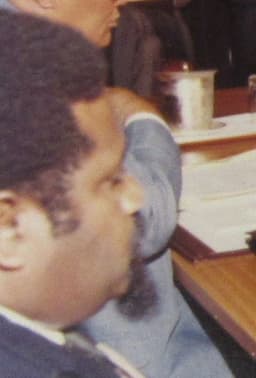
Walter Lini
Politician · Modern
56.4Total
Basic Information
Born
1760
1942
Died
1842
—
Era
Modern
Modern
Nationality
United Kingdom
Vanuatu
Occupation
Politician
Politician
Civilization
Western
Other
Score Comparison
Military (10%)
67.3
42.3
Political (20%)
72.0
72.0
Influence (20%)
68.0
59.0
Legacy (20%)
68.0
50.0
Leadership (15%)
80.0
66.0
Strategy (15%)
65.0
41.7
TOTAL
70.0
56.4
Richard Wellesley — Complete Timeline
1798 AD
Subsidiary Alliance SystemReform◆ Major
Wellesley formalized the Subsidiary Alliance system, requiring Indian states to accept British troops and a British resident in exchange for protection. States like Hyderabad, Mysore, and the Maratha Peshwa accepted these alliances, effectively making them British protectorates and expanding British influence without direct rule.
DiplomacyExpansionAlliance
Impact: regional
Appointed Governor-General of IndiaPolitical Action◆ Major
Richard Wellesley was appointed Governor-General of India in 1798. He pursued an aggressive policy of territorial expansion through the Subsidiary Alliance system, which brought many Indian states under British control without direct annexation.
Governor-GeneralExpansionSubsidiary Alliance
Impact: regional
1799 AD
Fourth Anglo-Mysore WarWar◆ Major
Wellesley ordered the invasion of Mysore in 1799, leading to the Fourth Anglo-Mysore War. British forces captured Seringapatam and killed Tipu Sultan. The kingdom was divided, with the British taking direct control of large territories and restoring the Wodeyar dynasty as a client state.
Anglo-Mysore WarTipu SultanAnnexation
Impact: regional
1803 AD
Second Anglo-Maratha WarWar◆ Major
Wellesley launched the Second Anglo-Maratha War in 1803, defeating the Maratha Confederacy in a series of battles including Assaye and Laswari. The war resulted in the British gaining control of Delhi, Agra, and large parts of central India, and the Maratha Peshwa becoming a British dependent.
Anglo-Maratha WarExpansionMaratha
Impact: regional
Walter Lini — Complete Timeline
1980 AD
Implemented Melanesian socialism policiesReform◆ Major
Lini's government pursued Melanesian socialism, nationalizing key industries and promoting land reform. These policies aimed to reduce foreign influence but faced economic challenges.
SocialismNationalization
Impact: nationalconstructive
Led Vanuatu to independencePolitical Action
Walter Lini, as leader of the Vanua'aku Pati, led the New Hebrides to independence from joint French-British colonial rule, becoming the first Prime Minister of Vanuatu.
IndependenceFounding Father
Impact: nationalprogressive
1988 AD
Survived a no-confidence motionPolitical Action
Lini faced a no-confidence motion in Parliament but survived, maintaining power. The motion reflected growing internal dissent within his party.
Political CrisisNo-confidence
Impact: national
This comparison has not been analyzed yet.
One-time AI generation (~1 minute). Scores and timeline are already available below.
Rankings
🥇
Richard WellesleyLeader
Mil: 67.3Pol: 72.0Inf: 68.0
70.0
🥈
Walter Lini
Mil: 42.3Pol: 72.0Inf: 59.0
56.4
+13.6 behind
How This Comparison Works
Algorithm
Each figure is scored on 6 dimensions (0—100 scale) based on structured historical data: Military (10%), Political (20%), Influence (20%), Legacy (20%), Leadership (15%), Strategy (15%). The weighted total produces the final ranking.
Data Sources
Scores are computed from structured sub-indicators in the database. Scale factors adjust for era (Ancient ×0.85, Modern ×1.0) and civilization size (Eastern ×1.05, Other ×0.80) to account for differences in population and military scale.
Maximum 3 Figures
Comparisons are limited to 2—3 figures to ensure readability and statistical meaningfulness.
Error Margins
±5 points per dimension — Sub-scores are derived from historical records with inherent uncertainty. Two figures within 5 points on a dimension should be considered roughly equivalent in that area.
Total Score Accuracy
±3 points overall — The weighted combination of 6 dimensions produces a total score with approximately ±3 points of uncertainty. Differences of less than 3 points are not statistically significant— the figures are effectively tied.
Known Limitations
- Historical records are incomplete and uneven across civilizations
- Figures from oral-tradition societies may be underrepresented
- Occupation labels can misclassify multi-role figures
- Scores measure capability and impact, not moral character
- Quantitative scoring is a comparison tool, not absolute truth
Capability Radar
Military (10%) — Battles & Warfare
Battles
75
21
Win Rate
80
23
Expansion
90
29
Political (20%) — Governance & Reform
Reform
70
70
Diplomacy
80
75
Economy
75
45
Influence (20%) — Cultural & Global Reach
Cultural
55
50
Global
75
35
Legacy (20%) — Historical Impact
Historical
80
55
Longevity
70
40
Leadership (15%) — Power & Stability
Tenure
75
60
Stability
60
55
Strategy (15%) — Tactics & Innovation
Strategy
85
31
Tactics
65
35
Reform
70
36
Similar Comparisons
Comments & Discussion
No comments yet. Be the first to share your thoughts!