Loading...
This comparison has not been analyzed yet.
One-time AI generation (~1 minute). Scores and timeline are already available below.
Pierre de Coubertin vs Vladimir Meciar
Pierre de Coubertin leads by 10.4 pts · 2 figures compared
…

Pierre de Coubertin
Politician · Modern
61.0Total
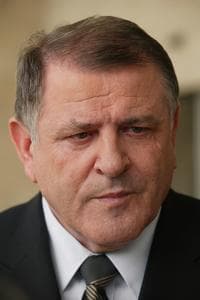
Vladimir Meciar
Politician · Modern
50.6Total
Basic Information
Born
1863
1942
Died
1937
—
Era
Modern
Modern
Nationality
France
Slovakia
Occupation
Politician
Politician
Civilization
Western
Western
Score Comparison
Military (10%)
48.4
35.5
Political (20%)
68.0
48.0
Influence (20%)
88.0
51.0
Legacy (20%)
40.0
40.0
Leadership (15%)
65.0
74.0
Strategy (15%)
41.6
60.0
TOTAL
61.0
50.6
Pierre de Coubertin — Complete Timeline
1894 AD
Founding of the International Olympic CommitteePolitical Action
Coubertin convened the Sorbonne Congress in Paris, where delegates from 12 countries voted to revive the Olympic Games and established the International Olympic Committee (IOC). He became the IOC's second president and drafted the Olympic Charter, laying the foundation for the modern Olympic movement.
Olympic GamesIOCSports
Impact: globalconstructive
1896 AD
First Modern Olympic Games in AthensCultural◆ Major
Coubertin organized the first modern Olympic Games in Athens, Greece, with 241 athletes from 14 nations competing in 43 events. The games were a success, establishing the quadrennial tradition and promoting international athletic competition and amateurism.
Olympic GamesAthensSports
Impact: globalconstructive
1914 AD
Introduction of the Olympic Oath and FlagCultural
Coubertin designed the Olympic flag with five interlocking rings representing the five continents, and introduced the Olympic oath for athletes. These symbols were first used at the 1920 Antwerp Games, becoming enduring icons of the Olympic movement.
Olympic SymbolsFlagOath
Impact: globalconstructive
1925 AD
Resignation from IOC PresidencyPolitical Action
Coubertin resigned as IOC President in 1925 after 29 years, citing a desire to focus on educational work. He was succeeded by Henri de Baillet-Latour. Coubertin continued to promote Olympism through writing and lectures until his death in 1937.
IOCResignationOlympic Movement
Impact: global
Vladimir Meciar — Complete Timeline
1993 AD
First term as Prime Minister of SlovakiaPolitical Action◆ Major
Meciar became the first Prime Minister of independent Slovakia after the dissolution of Czechoslovakia. His government pursued nationalist policies, centralized power, and clashed with President Michal Kovac, leading to political instability.
IndependenceNationalismCentralization
Impact: national
1995 AD
Abduction of Michal Kovac's sonPolitical Action◆ Major
The son of President Michal Kovac was abducted and taken to Austria. Meciar's government was widely accused of involvement, though he denied it. The incident deepened the political crisis and damaged Slovakia's international reputation.
AbductionPolitical CrisisScandal
Impact: nationaldestructive
1997 AD
Referendum on NATO membership blockedPolitical Action◆ Major
Meciar's government blocked a referendum on NATO membership, contributing to Slovakia's exclusion from the first round of NATO enlargement. This decision was criticized as undermining Slovakia's Euro-Atlantic integration.
NATOReferendumIntegration
Impact: nationaldestructive
1998 AD
Loss of power in 1998 electionsPolitical Action
Meciar's party lost the parliamentary elections to a reformist coalition led by Mikulas Dzurinda. The defeat ended his third term as Prime Minister and marked a shift toward pro-Western reforms in Slovakia.
ElectionPolitical ChangeReform
Impact: national
This comparison has not been analyzed yet.
One-time AI generation (~1 minute). Scores and timeline are already available below.
Rankings
🥇
Pierre de CoubertinLeader
Mil: 48.4Pol: 68.0Inf: 88.0
61.0
🥈
Vladimir Meciar
Mil: 35.5Pol: 48.0Inf: 51.0
50.6
+10.4 behind
How This Comparison Works
Algorithm
Each figure is scored on 6 dimensions (0—100 scale) based on structured historical data: Military (10%), Political (20%), Influence (20%), Legacy (20%), Leadership (15%), Strategy (15%). The weighted total produces the final ranking.
Data Sources
Scores are computed from structured sub-indicators in the database. Scale factors adjust for era (Ancient ×0.85, Modern ×1.0) and civilization size (Eastern ×1.05, Other ×0.80) to account for differences in population and military scale.
Maximum 3 Figures
Comparisons are limited to 2—3 figures to ensure readability and statistical meaningfulness.
Error Margins
±5 points per dimension — Sub-scores are derived from historical records with inherent uncertainty. Two figures within 5 points on a dimension should be considered roughly equivalent in that area.
Total Score Accuracy
±3 points overall — The weighted combination of 6 dimensions produces a total score with approximately ±3 points of uncertainty. Differences of less than 3 points are not statistically significant— the figures are effectively tied.
Known Limitations
- Historical records are incomplete and uneven across civilizations
- Figures from oral-tradition societies may be underrepresented
- Occupation labels can misclassify multi-role figures
- Scores measure capability and impact, not moral character
- Quantitative scoring is a comparison tool, not absolute truth
Capability Radar
Military (10%) — Battles & Warfare
Battles
31
47
Win Rate
34
53
Expansion
33
52
Political (20%) — Governance & Reform
Reform
70
45
Diplomacy
60
40
Economy
20
35
Influence (20%) — Cultural & Global Reach
Cultural
75
25
Global
80
20
Legacy (20%) — Historical Impact
Historical
80
30
Longevity
75
20
Leadership (15%) — Power & Stability
Tenure
0
65
Stability
30
20
Strategy (15%) — Tactics & Innovation
Strategy
35
53
Tactics
42
58
Reform
43
61
Similar Comparisons
Comments & Discussion
No comments yet. Be the first to share your thoughts!