Loading...
Phraates IV vs Vakhtang I of Iberia
Vakhtang I of Iberia leads by 5.7 pts · 2 figures compared
…

Phraates IV
Emperor · Ancient
51.8Total
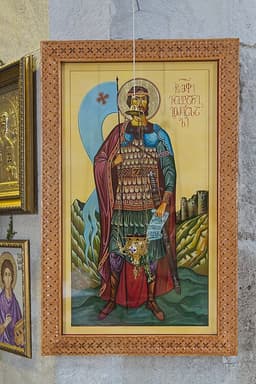
Vakhtang I of Iberia
Emperor · Ancient
57.5Total
Basic Information
Born
-60
440
Died
-2
502
Era
Ancient
Ancient
Nationality
Parthian Empire
Georgia
Occupation
Emperor
Emperor
Civilization
Middle Eastern
Western
Score Comparison
Military (10%)
30.0
67.5
Political (20%)
68.0
45.0
Influence (20%)
57.2
58.0
Legacy (20%)
49.2
54.0
Leadership (15%)
40.0
68.0
Strategy (15%)
60.0
58.0
TOTAL
51.8
57.5
Phraates IV — Complete Timeline
37 BC
Murder of his Father Orodes IIPolitical Action◆ Major
Phraates IV murdered his father Orodes II and his brothers to secure the Parthian throne. This act of fratricide and patricide destabilized the Parthian court and led to a period of internal conflict and noble revolts.
UsurpationRegicideCivil War
Impact: nationaldestructive
32 BC
Revolt of Tiridates IIWar◆ Major
Phraates IV faced a rebellion by the Parthian noble Tiridates II, who briefly seized the throne and minted coins in his own name. Phraates was forced to flee to the Scythians before returning with aid to crush the revolt and regain power.
Civil WarRebellionScythian Alliance
Impact: nationaldestructive
20 BC
Negotiation of the Treaty with AugustusPolitical Action
Phraates IV negotiated a diplomatic settlement with the Roman emperor Augustus, returning the Roman standards captured at Carrhae and releasing Roman prisoners. In exchange, Augustus recognized Parthian control over Armenia and established a period of peace between the two empires.
Roman-Parthian RelationsDiplomacyStandards
Impact: regionalconstructive
Vakhtang I of Iberia — Complete Timeline
479 AD
Founding of TbilisiPolitical Action
Vakhtang I is credited with founding the city of Tbilisi, which became the capital of Georgia. According to tradition, he ordered the construction of a fortress and settlement around the hot springs.
FoundingTbilisiGeorgia
Impact: nationalconstructive
482 AD
War against the Sassanid EmpireWar◆ Major
Vakhtang I led a rebellion against Sassanid Persian rule, seeking to restore Iberian independence. The war ended in defeat, and Vakhtang was forced into exile, but it inspired later resistance.
WarPersiaGeorgia
Impact: regionaldestructive
490 AD
Church ReformsReform◆ Major
Vakhtang I reorganized the Georgian Orthodox Church, establishing it as an autocephalous entity under the Patriarchate of Antioch. This strengthened Christianity's role in Iberia.
ChurchReligionGeorgia
Impact: nationalconstructive
Expert Analysis
Origins
Phraates IV (born c. 70 BCE) was a son of Orodes II, the Parthian king who defeated the Romans at Carrhae in 53 BCE. Raised in the Parthian court, he was steeped in the traditions of the Arsacid dynasty. His early life was marked by the constant threat of Roman expansion and internal noble rivalries. He received a typical Parthian education in horsemanship, archery, and court politics.
Vakhtang I of Iberia (born c. 440 CE) was a prince of the Chosroid dynasty, which ruled the kingdom of Iberia (eastern Georgia). His nickname "Gorgasali" means "wolf-head," reflecting his fierce reputation. He was raised in a Christian kingdom under Sassanid Persian suzerainty. His father, Mihrdat V, was a vassal king. Vakhtang likely received military training and exposure to both Persian and Byzantine cultures.
Rise to Power
Phraates IV rose to power in 37 BCE by murdering his father Orodes II and his brothers, a bloody coup that eliminated all rivals. This act, while securing his throne, created lasting instability. He faced immediate challenges from the Roman-backed claimant Tiridates II, who briefly seized power in 32 BCE. Phraates regained control with help from the Scythians, but the revolt weakened his authority.
Vakhtang I ascended to the Iberian throne around 447 CE as a young king, initially under the regency of his mother. He quickly asserted independence by resisting Sassanid attempts to impose Zoroastrianism. His early reign focused on consolidating power and strengthening the church. In 482 CE, he led a rebellion against the Sassanids, allying with the Byzantine emperor Zeno. The revolt initially succeeded but was crushed in 484 CE, forcing Vakhtang into exile.
Leadership & Governance
Phraates IV ruled Parthia for about 35 years. His governance was characterized by diplomacy over warfare. He negotiated the Treaty of 20 BCE with Augustus, returning the Roman standards lost at Carrhae and securing peace. This political move scored 68.0, reflecting his skill in avoiding costly wars. However, his reliance on diplomacy alienated military nobles, contributing to internal dissent. He also faced a rebellion from his son Phraates V, whom he had sent to Rome as a hostage.
Vakhtang I focused on military expansion and cultural consolidation. He scored 67.5 in military, leading campaigns against the Sassanids and the Alans. He founded Tbilisi as a capital around 479 CE, strategically located at the crossroads of trade routes. His church reforms, establishing autocephaly under Antioch, strengthened Georgian identity. His political score of 45.0 indicates less success in maintaining stable alliances.
Triumph & Tragedy
Phraates IV's greatest triumph was the diplomatic resolution with Rome. By returning the standards, he achieved peace without ceding territory, a rare feat. His tragedy was the internal chaos caused by his violent rise. The murder of his family set a precedent for succession struggles that plagued Parthia. The revolt of Tiridates II exposed his weak control over the nobility.
Vakhtang I's triumph was the founding of Tbilisi, which remains Georgia's capital. His church reforms created an autocephalous institution that survived centuries. His tragedy was the failed war against the Sassanids. After his defeat, he was forced to recognize Sassanid suzerainty, and his kingdom became a vassal. He died in battle around 502 CE, possibly against the Huns.
Character & Destiny
Phraates IV was a calculating pragmatist. His decision to murder his family shows a ruthless streak, but his long reign suggests adaptability. He prioritized stability over glory, which earned him the contempt of the warrior class. His character shaped a destiny of relative peace but internal decay.
Vakhtang I was a warrior-king driven by ideals of independence and faith. His nickname "wolf-head" implies ferocity. He took risks, like the rebellion against Persia, which ultimately failed. His character led to heroic status but limited political success.
Legacy
Phraates IV's legacy is mixed. He is remembered for the treaty with Rome, which established a long peace. However, his methods weakened the monarchy. His total score of 51.8 reflects this ambiguity. The return of the standards was a propaganda victory for Augustus, but Phraates secured Parthia's borders.
Vakhtang I's legacy is more tangible. Tbilisi's founding and church reforms shaped Georgian identity. He is a national hero, canonized as a saint. His total score of 57.5 reflects higher military and leadership scores. However, his political failures limited long-term impact.
Conclusion
Vakhtang I had greater impact on his nation's identity. His founding of Tbilisi and church reforms created enduring institutions. Phraates IV, despite diplomatic success, left a fragile monarchy. The score gap of 5.7 points supports this: Vakhtang's military and leadership scores (67.5 and 68.0) outweigh Phraates' political skill (68.0) because they produced lasting structures. Phraates' treaty was significant but temporary; Vakhtang's legacy persists in modern Georgia.
Rankings
🥇
Vakhtang I of IberiaLeader
Mil: 67.5Pol: 45.0Inf: 58.0
57.5
🥈
Phraates IV
Mil: 30.0Pol: 68.0Inf: 57.2
51.8
+5.7 behind
How This Comparison Works
Algorithm
Each figure is scored on 6 dimensions (0—100 scale) based on structured historical data: Military (10%), Political (20%), Influence (20%), Legacy (20%), Leadership (15%), Strategy (15%). The weighted total produces the final ranking.
Data Sources
Scores are computed from structured sub-indicators in the database. Scale factors adjust for era (Ancient ×0.85, Modern ×1.0) and civilization size (Eastern ×1.05, Other ×0.80) to account for differences in population and military scale.
Maximum 3 Figures
Comparisons are limited to 2—3 figures to ensure readability and statistical meaningfulness.
Error Margins
±5 points per dimension — Sub-scores are derived from historical records with inherent uncertainty. Two figures within 5 points on a dimension should be considered roughly equivalent in that area.
Total Score Accuracy
±3 points overall — The weighted combination of 6 dimensions produces a total score with approximately ±3 points of uncertainty. Differences of less than 3 points are not statistically significant— the figures are effectively tied.
Known Limitations
- Historical records are incomplete and uneven across civilizations
- Figures from oral-tradition societies may be underrepresented
- Occupation labels can misclassify multi-role figures
- Scores measure capability and impact, not moral character
- Quantitative scoring is a comparison tool, not absolute truth
Capability Radar
Military (10%) — Battles & Warfare
Battles
45
55
Win Rate
40
60
Expansion
35
65
Political (20%) — Governance & Reform
Reform
40
65
Diplomacy
75
70
Economy
50
60
Influence (20%) — Cultural & Global Reach
Cultural
40
65
Global
45
45
Legacy (20%) — Historical Impact
Historical
55
70
Longevity
50
65
Leadership (15%) — Power & Stability
Tenure
70
70
Stability
45
55
Strategy (15%) — Tactics & Innovation
Strategy
55
70
Tactics
50
65
Reform
30
60
Similar Comparisons
Comments & Discussion
No comments yet. Be the first to share your thoughts!