Loading...
Philip V of Spain vs Pomare I
Philip V of Spain leads by 10.1 pts · 2 figures compared
…

Philip V of Spain
Emperor · Modern
58.8Total
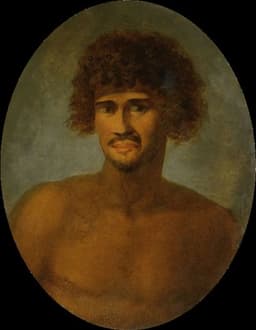
Pomare I
Emperor · Modern
48.7Total
Basic Information
Born
1683
1753
Died
1746
1803
Era
Modern
Modern
Nationality
Spain
Tahiti
Occupation
Emperor
Emperor
Civilization
Western
Other
Score Comparison
Military (10%)
50.0
50.0
Political (20%)
60.0
48.0
Influence (20%)
62.0
49.4
Legacy (20%)
50.0
39.2
Leadership (15%)
72.0
71.0
Strategy (15%)
60.0
36.8
TOTAL
58.8
48.7
Philip V of Spain — Complete Timeline
1700 AD
Became First Bourbon King of SpainPolitical Action
Philip V was proclaimed king of Spain after the death of Charles II, inheriting the throne through his grandmother Maria Theresa of Spain. His accession as a Bourbon prince triggered the War of Spanish Succession against the Habsburg coalition.
SuccessionBourbon DynastyWar of Spanish Succession
Impact: global
1707 AD
Implemented the Nueva Planta DecreesReform◆ Major
Philip V issued the Nueva Planta Decrees, abolishing the traditional laws and institutions of the Crown of Aragon (Catalonia, Valencia, Aragon, and Mallorca). These decrees centralized power in Castile and imposed absolutist rule, ending regional autonomy.
CentralizationAbsolutismRegional Autonomy
Impact: nationaldestructive
1713 AD
Founded the Royal Academy of Spanish LanguageCultural◆ Major
Philip V established the Real Academia Espa
LanguageCultural InstitutionStandardization
Impact: globalconstructive
1714 AD
Won the War of Spanish SuccessionWar
Philip V's forces, supported by France, defeated the Habsburg coalition in the War of Spanish Succession. The Treaty of Utrecht (1713) and Treaty of Rastatt (1714) confirmed his throne but forced Spain to cede European territories to Austria and Britain.
WarTreaty of UtrechtTerritorial Loss
Impact: global
1724 AD
Abdicated the ThronePolitical Action◆ Major
Philip V abdicated the throne in favor of his son Louis I, but resumed the crown after Louis's death seven months later. His abdication was influenced by mental health issues and the influence of his wife, Elisabeth Farnese.
AbdicationSuccessionMental Health
Impact: national
Pomare I — Complete Timeline
1789 AD
Alliance with the Bounty MutineersPolitical Action
Pomare I provided support and refuge to the mutineers of HMS Bounty who settled on Tahiti. This alliance brought European firearms and military knowledge to Pomare's forces, which he used to subdue rival chiefs and strengthen his military position.
European ContactMutinyFirearms
1790 AD
Unification of TahitiPolitical Action◆ Major
Pomare I consolidated control over the various chiefdoms of Tahiti through warfare and alliances, establishing himself as the first paramount ruler of a unified Tahiti. This ended the period of internecine conflict among the island's clans and created a centralized kingdom.
UnificationTahitiKingdom
Impact: regional
1797 AD
Adoption of ChristianityCultural◆ Major
Pomare I welcomed the first Protestant missionaries from the London Missionary Society who arrived on the Duff. He allowed them to establish a mission on Tahiti, which later led to the conversion of the Tahitian royal family and the spread of Christianity across the islands.
MissionariesChristianityCultural Change
Impact: regionalconstructive
Expert Analysis
Origins
Philip V of Spain was born in 1683 at Versailles, the second son of the Grand Dauphin and grandson of Louis XIV. His Bourbon lineage placed him in the heart of European power politics. He was educated in the French court, exposed to the absolutist model of governance. His claim to the Spanish throne came through his grandmother, Maria Theresa of Spain, making him a legitimate heir under Spanish law but a foreign prince in the eyes of many.
Pomare I, born around 1742 on Tahiti, was a chief of the Pare district. His early life was shaped by the fragmented political landscape of Tahiti, where multiple chiefdoms vied for control. He inherited a small domain but possessed ambitions to unify the island. His exposure to European navigators and missionaries began later, but his initial rise relied on traditional Tahitian warfare and alliances.
Rise to Power
Philip V's rise was triggered by the death of the childless Charles II of Spain in 1700. Charles's will named Philip as his successor, leading to the War of Spanish Succession (1701-1714). Philip's claim was contested by the Habsburg Archduke Charles, supported by England, the Dutch Republic, and the Holy Roman Empire. With French military support, Philip secured his throne after victories at Almansa and Villaviciosa. The Treaty of Utrecht (1713) recognized him as king but stripped Spain of European territories. This conflict established Philip as a monarch who retained his crown at the cost of empire.
Pomare I rose through a combination of warfare and strategic marriages. He defeated rival chiefdoms, notably the Teva clan, and formed alliances with other powerful figures. By the 1790s, he controlled most of Tahiti, but his power was solidified by European contact. The arrival of the Bounty mutineers in 1789 provided him with firearms and military advisors. He used these to crush remaining opposition, becoming the first paramount ruler of a unified Tahiti by 1797.
Leadership & Governance
Philip V ruled Spain with a focus on centralization and reform. His signature policy was the Nueva Planta Decrees (1707-1716), which abolished the separate legal systems of the Crown of Aragon (Catalonia, Valencia, Aragon, and Mallorca) and imposed Castilian law. This created a more unified Spanish state but alienated Catalonia and Valencia, causing resentment that persists in some forms today. He also established the Royal Academy of Spanish Language in 1713 to standardize the language. His leadership score of 72.0 reflects his decisive, if controversial, governance.
Pomare I governed as a traditional Tahitian chief but adapted to European influence. He adopted Christianity in 1812 after pressure from missionaries, which helped him consolidate power by aligning with the London Missionary Society. He also implemented laws based on Christian morality, such as banning infanticide and polygamy. His governance was less systematic than Philip's, relying on personal authority and the strategic use of European technology. His leadership score of 71.0 is comparable, but his political score of 48.0 shows less institutional impact.
Triumph & Tragedy
Philip V's greatest triumph was winning the War of Spanish Succession and establishing the Bourbon dynasty in Spain, which continues to this day. His Nueva Planta Decrees created a more centralized state, and his patronage of the arts and language fostered cultural unity. However, his abdication in 1724 in favor of his son Louis I was a disaster; Louis died seven months later, forcing Philip to resume the throne. His reign also saw Spain's decline as a major European power, with the loss of territories like Gibraltar and Menorca. His military score of 50.0 reflects limited strategic success.
Pomare I's triumph was the unification of Tahiti, ending centuries of internecine warfare. His adoption of Christianity brought Tahiti into the global religious and political sphere, and his alliance with European powers gave him a legacy as a modernizer. However, his dependence on missionaries and European goods undermined Tahitian sovereignty. His influence score of 49.4 and legacy score of 39.2 indicate that his achievements were largely local and short-lived, as Tahiti was soon annexed by France in 1842.
Character & Destiny
Philip V was known for his piety and indecisiveness, often dominated by his wives (Marie Louise of Savoy and later Elisabeth Farnese) and ministers. He suffered from depression and bouts of mania, which led to his abdication. His character shaped his destiny: his reliance on French support and his inability to fully modernize Spain left the country behind its rivals. Historians view him as a capable but unremarkable monarch.
Pomare I was pragmatic and adaptable, using European tools to achieve traditional goals. He welcomed missionaries and mutineers alike, but his openness also led to cultural erosion. His character was decisive in unifying Tahiti, but he lacked the vision to preserve independence. Historical assessments note his role as a bridge between ancient and colonial Tahiti.
Legacy
Philip V's legacy is mixed. He founded the Spanish Bourbon dynasty, which still reigns, and his centralizing reforms influenced Spanish governance for centuries. The Royal Academy of Spanish Language remains a key institution. However, his reign marked the end of Spain's status as a great power. His total score of 58.8 reflects moderate impact.
Pomare I's legacy is primarily local. He unified Tahiti and introduced Christianity, but his kingdom was short-lived. His descendants ruled for a few decades before French colonization. His total score of 48.7 indicates a smaller footprint.
Conclusion
Philip V of Spain had a greater impact on history than Pomare I. His total score of 58.8 is 10.1 points higher than Pomare's 48.7. Philip's reforms reshaped Spain's political structure and language, with effects lasting centuries, while Pomare's unification of Tahiti was a prelude to colonization. Despite his flaws, Philip V's influence on European history and the development of modern Spain outweighs Pomare I's regional legacy.
Rankings
🥇
Philip V of SpainLeader
Mil: 50.0Pol: 60.0Inf: 62.0
58.8
🥈
Pomare I
Mil: 50.0Pol: 48.0Inf: 49.4
48.7
+10.1 behind
How This Comparison Works
Algorithm
Each figure is scored on 6 dimensions (0—100 scale) based on structured historical data: Military (10%), Political (20%), Influence (20%), Legacy (20%), Leadership (15%), Strategy (15%). The weighted total produces the final ranking.
Data Sources
Scores are computed from structured sub-indicators in the database. Scale factors adjust for era (Ancient ×0.85, Modern ×1.0) and civilization size (Eastern ×1.05, Other ×0.80) to account for differences in population and military scale.
Maximum 3 Figures
Comparisons are limited to 2—3 figures to ensure readability and statistical meaningfulness.
Error Margins
±5 points per dimension — Sub-scores are derived from historical records with inherent uncertainty. Two figures within 5 points on a dimension should be considered roughly equivalent in that area.
Total Score Accuracy
±3 points overall — The weighted combination of 6 dimensions produces a total score with approximately ±3 points of uncertainty. Differences of less than 3 points are not statistically significant— the figures are effectively tied.
Known Limitations
- Historical records are incomplete and uneven across civilizations
- Figures from oral-tradition societies may be underrepresented
- Occupation labels can misclassify multi-role figures
- Scores measure capability and impact, not moral character
- Quantitative scoring is a comparison tool, not absolute truth
Capability Radar
Military (10%) — Battles & Warfare
Battles
55
15
Win Rate
45
20
Expansion
40
25
Political (20%) — Governance & Reform
Reform
65
30
Diplomacy
60
35
Economy
55
25
Influence (20%) — Cultural & Global Reach
Cultural
45
20
Global
55
15
Legacy (20%) — Historical Impact
Historical
55
25
Longevity
50
20
Leadership (15%) — Power & Stability
Tenure
70
40
Stability
50
30
Strategy (15%) — Tactics & Innovation
Strategy
50
20
Tactics
40
15
Reform
60
10
Similar Comparisons
Comments & Discussion
No comments yet. Be the first to share your thoughts!