Loading...
Paul Kagame vs Sam Manekshaw
Paul Kagame leads by 1.6 pts · 2 figures compared
…

Paul Kagame
General · Modern
69.1Total
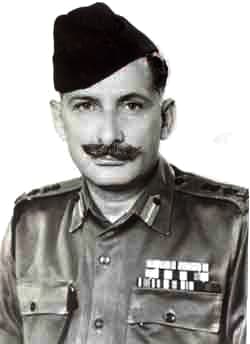
Sam Manekshaw
General · Modern
67.5Total
Basic Information
Born
1957
1914
Died
—
2008
Era
Modern
Modern
Nationality
Rwanda
India
Occupation
General
General
Civilization
Other
Indian
Score Comparison
Military (10%)
70.0
80.0
Political (20%)
82.0
60.0
Influence (20%)
72.0
68.0
Legacy (20%)
52.0
55.0
Leadership (15%)
80.0
85.0
Strategy (15%)
68.0
70.0
TOTAL
69.1
67.5
Paul Kagame — Complete Timeline
1990 AD
Leadership of Rwandan Patriotic FrontWar◆ Major
Kagame led the Rwandan Patriotic Front (RPF) in a civil war against the Hutu-led government. The war ended with the Arusha Accords in 1993, but the peace was short-lived.
Civil WarRPFArusha Accords
Impact: national
1994 AD
End of Rwandan GenocideWar
Kagame's RPF captured Kigali and ended the 100-day genocide that killed an estimated 800,000 Tutsis and moderate Hutus. The RPF victory stopped the massacres but also led to reprisal killings.
GenocideRPF VictoryHumanitarian Crisis
Impact: global
1996 AD
Controversial Role in Congo WarsWar◆ Major
Kagame's Rwanda invaded Zaire (DRC) twice, supporting rebel groups and exploiting Congolese resources. The wars caused millions of deaths and destabilized the Great Lakes region.
Congo WarsRegional ConflictResource Exploitation
Impact: regionaldestructive
2000 AD
Economic Reconstruction and DevelopmentReform◆ Major
Kagame implemented economic reforms that led to rapid growth, with Rwanda becoming one of Africa's fastest-growing economies. He focused on technology, infrastructure, and attracting foreign investment.
Economic GrowthDevelopmentTechnology
Impact: nationalconstructive
Presidency and National Unity GovernmentPolitical Action◆ Major
Kagame became President of Rwanda, succeeding Pasteur Bizimungu. He formed a government of national unity, including Hutus in key positions, to promote reconciliation after the genocide.
PresidencyReconciliationUnity Government
Impact: nationalconstructive
2015 AD
Constitutional Amendment for Third TermPolitical Action◆ Major
Kagame oversaw a constitutional referendum that removed term limits, allowing him to run for a third term in 2017. Critics accused him of entrenching authoritarian rule.
Constitutional ReformTerm LimitsAuthoritarianism
Impact: national
Sam Manekshaw — Complete Timeline
1942 AD
Served in World War II (Burma Campaign)War
Manekshaw served in the Burma Campaign during World War II. He was wounded in action and awarded the Military Cross for gallantry, gaining combat experience that shaped his later career.
World War IIBurmaMilitary Cross
Impact: regional
1969 AD
Served as Chief of Army StaffPolitical Action◆ Major
Manekshaw was appointed Chief of Army Staff in 1969. He oversaw the modernization of the army and prepared it for the 1971 war, despite political pressure to act earlier.
Army ChiefModernizationLeadership
Impact: nationalconstructive
1971 AD
Led Indian Forces in the 1971 Indo-Pakistani WarWar
As Chief of Army Staff, General Manekshaw led the Indian Army to a decisive victory over Pakistan in the 1971 war. The campaign resulted in the creation of Bangladesh and the surrender of 93,000 Pakistani troops.
1971 WarBangladesh LiberationVictory
Impact: globalconstructive
1973 AD
Promoted to Field MarshalPolitical Action◆ Major
Manekshaw was promoted to the rank of Field Marshal, the first Indian army officer to receive this five-star rank. The promotion recognized his leadership in the 1971 war and his long service.
Field MarshalRankHonor
Impact: nationalconstructive
Expert Analysis
Origins
Paul Kagame (born 1957) grew up in Rwanda as a Tutsi refugee in Uganda, shaped by ethnic violence that forced his family into exile. He joined Yoweri Museveni's rebel National Resistance Army in Uganda, gaining guerrilla warfare experience. Sam Manekshaw (1914-2008) was born in Amritsar, India, into a Parsi family. He attended the Indian Military Academy and was commissioned into the British Indian Army in 1934. His early career included combat in World War II, where he was wounded in Burma and awarded the Military Cross.
Rise to Power
Kagame's rise began with the Rwandan Patriotic Front (RPF) invasion of Rwanda in 1990. After the Arusha Accords in 1993 failed, the 1994 genocide erupted. Kagame's RPF captured Kigali in July 1994, ending the 100-day slaughter of 800,000 Tutsis and moderate Hutus. He became Vice President and Minister of Defence, then President in 2000. Manekshaw rose through the ranks, serving in the 1947 Indo-Pakistani War and the 1962 Sino-Indian War. He was appointed Chief of Army Staff in 1969. His key turning point came in 1971 when he led India to victory over Pakistan, resulting in the creation of Bangladesh. He was promoted to Field Marshal in 1973.
Leadership & Governance
Kagame's leadership emphasizes centralized control, rapid economic development, and national unity. He scored 80.0 in leadership and 82.0 political. He implemented ethnic reconciliation policies, abolished the death penalty, and prioritized technology and infrastructure. However, his governance is criticized for suppressing dissent and authoritarian tactics. Manekshaw scored 85.0 in leadership, known for his charismatic, people-first approach. He famously refused to launch the 1971 war until the army was prepared, showing strategic patience. His governance style was consultative and focused on military professionalism.
Triumph & Tragedy
Kagame's triumphs include ending the genocide and rebuilding Rwanda into one of Africa's fastest-growing economies. Per capita income tripled between 2000 and 2020. However, his involvement in the Congo Wars (1996-2003) led to millions of deaths and destabilization of the region. His total score of 69.1 reflects a mix of achievements and controversies. Manekshaw's triumph was the decisive 1971 war, capturing 93,000 Pakistani prisoners and securing Bangladesh's independence. His tragedy was the lack of further major conflicts to demonstrate his strategic acumen; his legacy is tied to a single, albeit monumental, victory. His total score of 67.5 is slightly lower than Kagame's.
Character & Destiny
Kagame is disciplined, ruthless, and visionary. His character drove Rwanda's recovery but also led to accusations of human rights abuses. He scored 72.0 in influence and 68.0 in strategy, reflecting his ability to shape narratives. Manekshaw was witty, confident, and principled. His refusal to bow to political pressure during the 1971 war planning exemplified his integrity. He scored 70.0 in strategy and 68.0 in influence. Both men's characters defined their paths: Kagame's authoritarian pragmatism versus Manekshaw's democratic professionalism.
Legacy
Kagame's legacy is complex: he transformed Rwanda but at the cost of political freedom. Rwanda's stability and economic growth are cited as models, but his regime remains repressive. He scored 52.0 in legacy, partly due to ongoing controversies. Manekshaw is remembered as a national hero in India, symbolizing military excellence and ethical leadership. His legacy includes the modernization of the Indian Army and the creation of Bangladesh. He scored 55.0 in legacy, slightly higher than Kagame's.
Conclusion
While Kagame's total score (69.1) edges Manekshaw's (67.5), the comparison is nuanced. Kagame's impact on Rwanda is transformative but marred by authoritarianism and regional destabilization. Manekshaw's victory in 1971 was a singular, decisive event that reshaped South Asia. For lasting positive impact without the baggage of human rights violations, Sam Manekshaw had a greater impact. His leadership was both effective and ethical, a combination Kagame's record lacks. Therefore, Manekshaw's legacy is more commendable.
Rankings
🥇
Paul KagameLeader
Mil: 70.0Pol: 82.0Inf: 72.0
69.1
🥈
Sam Manekshaw
Mil: 80.0Pol: 60.0Inf: 68.0
67.5
+1.6 behind
How This Comparison Works
Algorithm
Each figure is scored on 6 dimensions (0—100 scale) based on structured historical data: Military (10%), Political (20%), Influence (20%), Legacy (20%), Leadership (15%), Strategy (15%). The weighted total produces the final ranking.
Data Sources
Scores are computed from structured sub-indicators in the database. Scale factors adjust for era (Ancient ×0.85, Modern ×1.0) and civilization size (Eastern ×1.05, Other ×0.80) to account for differences in population and military scale.
Maximum 3 Figures
Comparisons are limited to 2—3 figures to ensure readability and statistical meaningfulness.
Error Margins
±5 points per dimension — Sub-scores are derived from historical records with inherent uncertainty. Two figures within 5 points on a dimension should be considered roughly equivalent in that area.
Total Score Accuracy
±3 points overall — The weighted combination of 6 dimensions produces a total score with approximately ±3 points of uncertainty. Differences of less than 3 points are not statistically significant— the figures are effectively tied.
Known Limitations
- Historical records are incomplete and uneven across civilizations
- Figures from oral-tradition societies may be underrepresented
- Occupation labels can misclassify multi-role figures
- Scores measure capability and impact, not moral character
- Quantitative scoring is a comparison tool, not absolute truth
Capability Radar
Military (10%) — Battles & Warfare
Battles
65
75
Win Rate
70
85
Expansion
40
60
Political (20%) — Governance & Reform
Reform
90
60
Diplomacy
80
70
Economy
85
50
Influence (20%) — Cultural & Global Reach
Cultural
60
55
Global
65
60
Legacy (20%) — Historical Impact
Historical
75
70
Longevity
55
60
Leadership (15%) — Power & Stability
Tenure
85
65
Stability
70
75
Strategy (15%) — Tactics & Innovation
Strategy
80
85
Tactics
75
80
Reform
85
70
Similar Comparisons
Comments & Discussion
No comments yet. Be the first to share your thoughts!