Loading...
Park Geun-hye vs Truong Tan Sang
Truong Tan Sang leads by 6.4 pts · 2 figures compared
…
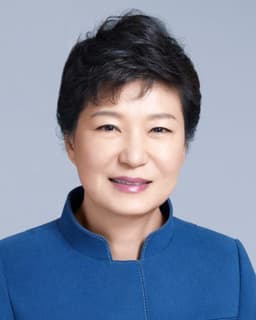
Park Geun-hye
Politician · Modern
40.5Total

Truong Tan Sang
Politician · Modern
46.9Total
Basic Information
Born
1952
1949
Died
—
—
Era
Modern
Modern
Nationality
Korea
Vietnam
Occupation
Politician
Politician
Civilization
Eastern
Eastern
Score Comparison
Military (10%)
15.4
14.4
Political (20%)
35.1
53.8
Influence (20%)
51.0
50.2
Legacy (20%)
40.0
40.8
Leadership (15%)
55.3
72.0
Strategy (15%)
26.9
38.0
TOTAL
40.5
46.9
Park Geun-hye — Complete Timeline
2013 AD
Elected President of South KoreaPolitical Action◆ Major
Park Geun-hye won the presidential election as the Saenuri Party candidate, becoming South Korea's first female president. She was the daughter of former dictator Park Chung-hee.
ElectionFirst Female President
Impact: nationalconstructive
2017 AD
Impeachment and removal from officePolitical Action◆ Major
Park was impeached by the National Assembly over a corruption scandal involving her confidante Choi Soon-sil. The Constitutional Court upheld the impeachment, and Park was removed from office and later arrested.
ImpeachmentCorruption Scandal
Impact: nationaltragic
2018 AD
Conviction for corruptionPolitical Action◆ Major
Park Geun-hye was convicted of bribery, coercion, and abuse of power, receiving a 25-year prison sentence. The case exposed deep ties between political power and corporate conglomerates in South Korea.
CorruptionConviction
Impact: nationaltragic
Truong Tan Sang — Complete Timeline
2011 AD
Elected President of VietnamPolitical Action◆ Major
Truong Tan Sang was elected President of Vietnam by the National Assembly, succeeding Nguyen Minh Triet. As head of state, he represented Vietnam in diplomatic affairs and oversaw national security.
PresidencyGovernment Leadership
Impact: national
2013 AD
Re-elected as PresidentPolitical Action◆ Major
Truong Tan Sang was re-elected as President for a second term. He continued his role in guiding foreign policy and economic development, including strengthening ties with the United States and China.
Re-electionGovernment Leadership
Impact: national
2016 AD
End of PresidencyPolitical Action◆ Major
Truong Tan Sang completed his second term as President and was succeeded by Tran Dai Quang. He retired from active politics, having served as a key Politburo member and head of state.
RetirementPolitical Transition
Impact: national
Expert Analysis
Origins
Park Geun-hye was born on February 2, 1952, in Daegu, South Korea, as the eldest daughter of Park Chung-hee, the military dictator who ruled South Korea from 1961 to 1979. Her mother, Yuk Young-soo, was assassinated in 1974, after which Park acted as first lady until her father's assassination in 1979. She studied engineering at Sogang University but never completed a degree. Her early life was steeped in political tragedy and privilege.
Truong Tan Sang was born on January 21, 1949, in Duc Hoa, Long An Province, Vietnam. He joined the Communist Party in 1969 during the Vietnam War, serving as a youth cadre. His father was a revolutionary, and Sang was imprisoned by the South Vietnamese regime from 1971 to 1973. After the war, he studied law at Ho Chi Minh City University of Law, but his education was interrupted by political activities. His early life was marked by war and ideological commitment.
Rise to Power
Park Geun-hye entered politics in 1998, winning a seat in the National Assembly. She quickly became a conservative force, chairing the Grand National Party. In 2012, she won the presidency with 51.6% of the vote, becoming South Korea's first female president. Her rise was fueled by her father's legacy and public nostalgia for rapid economic growth.
Truong Tan Sang rose through the Communist Party ranks. He served as party secretary of Ho Chi Minh City from 1996 to 2000, overseeing economic reforms. In 2011, he was elected President of Vietnam by the National Assembly, with 97.4% approval. His rise was a result of party consensus and his reputation as a pragmatic reformer.
Leadership & Governance
Park Geun-hye's leadership style was top-down and secretive. She relied heavily on a small circle of advisors, including Choi Soon-sil, a private citizen with no official role. Her governance score of 55.3 reflects her early economic initiatives, such as the 'Creative Economy' policy, which aimed to foster innovation. However, her lack of transparency led to the 2016 corruption scandal, where Choi manipulated state affairs. Park's military score of 15.4 is low due to her handling of the 2014 Sewol ferry disaster, where her delayed response drew criticism.
Truong Tan Sang, with a leadership score of 72.0, governed as a party loyalist. He focused on economic growth, promoting foreign investment and trade. He supported the Trans-Pacific Partnership and strengthened ties with the US and China. His political score of 53.8 reflects his ability to maintain party unity. However, his presidency saw limited political reforms, and he did not challenge the one-party system. His military score of 14.4 is low as he had no direct military role.
Triumph & Tragedy
Park Geun-hye's greatest success was her election as the first female president, symbolizing progress. She also pursued economic diplomacy, signing free trade agreements with China and the US. However, her tragedy was the corruption scandal that led to her impeachment in December 2016 and removal in March 2017. She was later convicted and sentenced to 25 years in prison, marking a dramatic fall.
Truong Tan Sang's triumph was his role in Vietnam's economic integration. Under his presidency, GDP growth averaged 6% annually. He also helped resolve border disputes with China. His tragedy was his failure to advance political freedoms. Human rights groups criticized his government for suppressing dissent. He left office in 2016 with mixed legacies.
Character & Destiny
Park Geun-hye was known for her aloof and stubborn personality. She rarely held press conferences and avoided public scrutiny. Her character shaped her destiny: her isolation allowed Choi to exploit her trust, leading to her downfall. Historians assess her as a tragic figure whose legacy was tainted by corruption.
Truong Tan Sang was a disciplined party man. He was pragmatic but cautious, avoiding bold reforms. His character aligned with the Vietnamese Communist Party's collective leadership, ensuring his political survival. He retired peacefully, a contrast to Park's imprisonment.
Legacy
Park Geun-hye's legacy is overshadowed by her impeachment. She scored 40.0 in legacy. Her presidency weakened public trust in South Korean democracy, but it also led to reforms in presidential accountability. Her father's legacy remains more significant.
Truong Tan Sang's legacy, scoring 40.8, is tied to Vietnam's economic growth. He is remembered as a steady hand during a period of integration. However, his lack of political reform means his impact is limited to economic spheres.
Conclusion
Truong Tan Sang had greater impact, scoring 46.9 overall compared to Park Geun-hye's 40.5. While Park broke gender barriers, her presidency ended in disgrace. Sang's leadership contributed to Vietnam's economic rise, albeit within a repressive system. His political score of 53.8 versus Park's 35.1 underscores his effectiveness in navigating communist governance. Therefore, Sang's influence on Vietnam's development outweighs Park's flawed tenure.
Rankings
🥇
Truong Tan SangLeader
Mil: 14.4Pol: 53.8Inf: 50.2
46.9
🥈
Park Geun-hye
Mil: 15.4Pol: 35.1Inf: 51.0
40.5
+6.4 behind
How This Comparison Works
Algorithm
Each figure is scored on 6 dimensions (0—100 scale) based on structured historical data: Military (10%), Political (20%), Influence (20%), Legacy (20%), Leadership (15%), Strategy (15%). The weighted total produces the final ranking.
Data Sources
Scores are computed from structured sub-indicators in the database. Scale factors adjust for era (Ancient ×0.85, Modern ×1.0) and civilization size (Eastern ×1.05, Other ×0.80) to account for differences in population and military scale.
Maximum 3 Figures
Comparisons are limited to 2—3 figures to ensure readability and statistical meaningfulness.
Error Margins
±5 points per dimension — Sub-scores are derived from historical records with inherent uncertainty. Two figures within 5 points on a dimension should be considered roughly equivalent in that area.
Total Score Accuracy
±3 points overall — The weighted combination of 6 dimensions produces a total score with approximately ±3 points of uncertainty. Differences of less than 3 points are not statistically significant— the figures are effectively tied.
Known Limitations
- Historical records are incomplete and uneven across civilizations
- Figures from oral-tradition societies may be underrepresented
- Occupation labels can misclassify multi-role figures
- Scores measure capability and impact, not moral character
- Quantitative scoring is a comparison tool, not absolute truth
Capability Radar
Military (10%) — Battles & Warfare
Battles
12
13
Win Rate
16
18
Expansion
21
20
Political (20%) — Governance & Reform
Reform
20
60
Diplomacy
30
55
Economy
25
60
Influence (20%) — Cultural & Global Reach
Cultural
15
20
Global
20
20
Legacy (20%) — Historical Impact
Historical
20
25
Longevity
10
20
Leadership (15%) — Power & Stability
Tenure
40
55
Stability
10
55
Strategy (15%) — Tactics & Innovation
Strategy
23
21
Tactics
28
25
Reform
31
27
Similar Comparisons
Comments & Discussion
No comments yet. Be the first to share your thoughts!