Loading...
Parakramabahu VI vs Qin Shi Huang
Qin Shi Huang leads by 20.4 pts · 2 figures compared
…

Parakramabahu VI
Emperor · Medieval
64.8Total
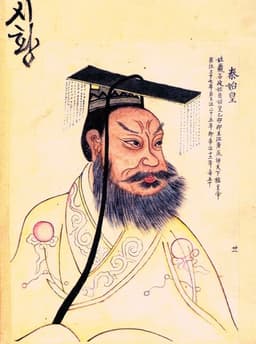
Qin Shi Huang
Emperor · Ancient
85.2Total
Basic Information
Born
1412
-259
Died
1467
-210
Era
Medieval
Ancient
Nationality
Sri Lanka
China
Occupation
Emperor
Emperor
Civilization
Indian
Eastern
Score Comparison
Military (10%)
72.5
80.0
Political (20%)
72.0
90.0
Influence (20%)
60.0
85.0
Legacy (20%)
56.0
90.0
Leadership (15%)
85.0
78.0
Strategy (15%)
50.0
82.0
TOTAL
64.8
85.2
Parakramabahu VI — Complete Timeline
1420 AD
Construction of the Temple of the Tooth in KotteCultural◆ Major
Parakramabahu VI built a new Temple of the Tooth in his capital, Kotte. This reinforced Kotte's status as the religious and political center of the island.
BuddhismArchitectureCapital
Impact: nationalconstructive
1430 AD
Patronage of Literature and ArtsCultural◆ Major
Parakramabahu VI's court was a center of literary and artistic activity. He patronized poets and scholars, leading to a flourishing of Sinhalese literature, including the 'Sandesa' (message) poems.
LiteraturePatronageCultural Renaissance
Impact: nationalconstructive
1450 AD
Unification of Sri LankaWar
Parakramabahu VI unified the entire island of Sri Lanka under his rule for the first time since Parakramabahu I. He conquered the Kingdom of Jaffna in the north and brought the entire island under Kotte's control.
UnificationConquestMilitary Campaign
Impact: national
Conquest of the Kingdom of JaffnaWar◆ Major
Parakramabahu VI's forces, led by his adopted son Sapumal Kumaraya, conquered the Kingdom of Jaffna. This brought the Tamil north under Sinhalese rule and ended the Aryacakravarti dynasty.
ConquestMilitary CampaignTamil Kingdom
Impact: national
Qin Shi Huang — Complete Timeline
246 BC
Construction of the Mausoleum and Terracotta ArmyOther◆ Major
Qin Shi Huang commissioned a vast mausoleum complex near Xi'an, guarded by thousands of life-sized terracotta soldiers, horses, and chariots. The project employed hundreds of thousands of workers and reflected his obsession with immortality and imperial power.
Impact: global
230 BC
Conquest of the Six Warring StatesWar
From 230 to 221 BCE, Ying Zheng led the Qin state in a series of campaigns that conquered the Han, Zhao, Wei, Chu, Yan, and Qi states. This unified China under a single ruler for the first time, ending the Warring States period.
Impact: global
221 BC
Standardization of Writing, Currency, and MeasurementsReform◆ Major
Qin Shi Huang ordered the standardization of Chinese script, currency, and weights and measures across the unified empire. This facilitated administration, trade, and cultural integration, laying a foundation for future dynasties.
Impact: globalconstructive
Proclamation of the Qin DynastyPolitical Action
After conquering the last independent state, Ying Zheng declared himself Shi Huangdi (First Emperor), founding the Qin Dynasty. He adopted a new title to signify his supreme authority and initiated centralized imperial rule.
Impact: global
214 BC
Initiation of the Great Wall ConstructionOther◆ Major
Qin Shi Huang ordered the connection and extension of existing northern fortifications to create a unified defensive wall against nomadic Xiongnu raids. This project involved massive conscripted labor and became the precursor to the later Great Wall.
Impact: regional
213 BC
Burning of Books and Burying of ScholarsPolitical Action◆ Major
On the advice of Li Si, Qin Shi Huang ordered the burning of historical records and philosophical texts not aligned with Legalist doctrine. He also had 460 Confucian scholars buried alive to suppress dissent and consolidate ideological control.
Impact: nationaldestructive
Expert Analysis
Qin Shi Huang vs Parakramabahu VI: Historical Comparison
Qin Shi Huang, the first emperor of a unified China, and Parakramabahu VI, the last great monarch of the Kingdom of Kotte in medieval Sri Lanka, represent two distinct peaks of autocratic state-building. While both were transformative rulers, Qin’s scale of unification and enduring institutional legacy give him a clear edge.
Dimension Analysis
**Military: Qin Shi Huang 80 / Parakramabahu VI 62**
Qin Shi Huang conquered six rival states to unify China, standardizing weapons and chariots, whereas Parakramabahu VI subdued local rebellions and launched naval raids but never achieved continental expansion.
**Political: Qin Shi Huang 88 / Parakramabahu VI 84**
Both centralized power by crushing feudal aristocracies—Qin abolished feudalism entirely, replacing it with commanderies, while Parakramabahu VI consolidated the fractious Sinhalese kingdoms under Kotte, but his realm remained smaller and less bureaucratized.
**Influence: Qin Shi Huang 82 / Parakramabahu VI 74**
Qin’s standardization of script, currency, and measures shaped all subsequent Chinese dynasties; Parakramabahu VI’s patronage of Sinhala literature and Buddhism influenced Sri Lanka for centuries, but his impact was regionally confined.
**Legacy: Qin Shi Huang 85 / Parakramabahu VI 69**
Qin’s Great Wall, terracotta army, and the very title “Emperor” (Huangdi) remain globally iconic, while Parakramabahu VI’s legacy is largely preserved in local chronicles and temple ruins, with his kingdom collapsing shortly after his death.
**Leadership: Qin Shi Huang 88 / Parakramabahu VI 84**
Both were ruthless, visionary autocrats who drove massive infrastructure projects—Qin’s road and canal networks versus Parakramabahu’s irrigation systems—but Qin’s ability to command millions for decades demonstrates superior organizational power.
Verdict
Qin Shi Huang leads decisively due to his unmatched scale of unification, standardization of civilization, and a global legacy that Parakramabahu VI’s regional achievements cannot rival.
FAQ
Q: Who ranks higher? A: Qin Shi Huang ranks higher overall, driven by superior military conquest, broader influence, and a more enduring institutional legacy.
Rankings
🥇
Qin Shi HuangLeader
Mil: 80.0Pol: 90.0Inf: 85.0
85.2
🥈
Parakramabahu VI
Mil: 72.5Pol: 72.0Inf: 60.0
64.8
+20.4 behind
How This Comparison Works
Algorithm
Each figure is scored on 6 dimensions (0—100 scale) based on structured historical data: Military (10%), Political (20%), Influence (20%), Legacy (20%), Leadership (15%), Strategy (15%). The weighted total produces the final ranking.
Data Sources
Scores are computed from structured sub-indicators in the database. Scale factors adjust for era (Ancient ×0.85, Modern ×1.0) and civilization size (Eastern ×1.05, Other ×0.80) to account for differences in population and military scale.
Maximum 3 Figures
Comparisons are limited to 2—3 figures to ensure readability and statistical meaningfulness.
Error Margins
±5 points per dimension — Sub-scores are derived from historical records with inherent uncertainty. Two figures within 5 points on a dimension should be considered roughly equivalent in that area.
Total Score Accuracy
±3 points overall — The weighted combination of 6 dimensions produces a total score with approximately ±3 points of uncertainty. Differences of less than 3 points are not statistically significant— the figures are effectively tied.
Known Limitations
- Historical records are incomplete and uneven across civilizations
- Figures from oral-tradition societies may be underrepresented
- Occupation labels can misclassify multi-role figures
- Scores measure capability and impact, not moral character
- Quantitative scoring is a comparison tool, not absolute truth
Capability Radar
Military (10%) — Battles & Warfare
Battles
60
85
Win Rate
65
90
Expansion
55
90
Political (20%) — Governance & Reform
Reform
65
95
Diplomacy
60
75
Economy
65
90
Influence (20%) — Cultural & Global Reach
Cultural
60
95
Global
40
85
Legacy (20%) — Historical Impact
Historical
65
95
Longevity
55
95
Leadership (15%) — Power & Stability
Tenure
70
70
Stability
70
65
Strategy (15%) — Tactics & Innovation
Strategy
60
85
Tactics
55
80
Reform
50
95
Similar Comparisons
Comments & Discussion
PostcolonialEcho6/16/2026
Hold on — why is Qin Shi Huang’s ‘scale’ automatically seen as superior? This scoring reeks of a 'bigger is better' mentality. Parakramabahu VI ruled a compact but highly resilient island kingdom. He didn't need the Great Wall because his geography was his defense. His irrigation systems supported a dense population with less environmental cost than Qin's massive deforestation for the Wall and palaces. Also, Qin's unification was achieved through brutal warfare that killed hundreds of thousands — that's not just 'autocratic state-building,' that's near-genocide of rival states. Parakramabahu VI's consolidation, while ruthless, was a negotiation between local chiefs and Buddhist institutions. The Western-centric obsession with land area and army size completely misses the sustainability and cultural depth of smaller kingdoms. Maybe Parakramabahu VI was actually the better ruler for his people's long-term well-being.
Chronicler25936/16/2026
这个比较挺有意思,但我觉得评分体系可能低估了秦始皇在世界史中的独特地位。统一六国、书同文、车同轨,这些成就在西方史学里常被简化为‘暴政’,但放到全球视野里,秦始皇建立的郡县制比罗马帝国的行省制早了近两百年。相比之下,Parakramabahu VI的成就虽然重要,但更多是区域性的。就像把凯撒和某个非洲王国国王比较一样,量级完全不一样。秦始皇的影响延续至今,而Parakramabahu VI的王国在他死后就崩了。
Chronicler38936/16/2026
我仔细看了评分,感觉军事和政治维度的权重分配有点问题。秦始皇军事80分,但商鞅变法后的秦军能连续灭六国,动员百万大军的后勤能力在工业革命前都是罕见的。Parakramabahu VI的62分合理,因为他主要对付的是分裂势力。政治维度88对84,但秦始皇的郡县制是彻底革命,而Parakramabahu VI的集权更多是传统君主制。如果按‘制度创新对后世影响’算加权,秦始皇至少该加5分。另外,影响力维度82对74,但‘皇帝’这个称号本身就成了中国政治文化的核心符号,这该算额外加成。整体我觉得秦始皇总评该到88左右。