Loading...
Parakramabahu I vs Qin Shi Huang
Qin Shi Huang leads by 19.1 pts · 2 figures compared
…
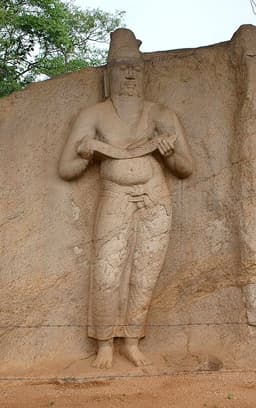
Parakramabahu I
Emperor · Medieval
66.1Total
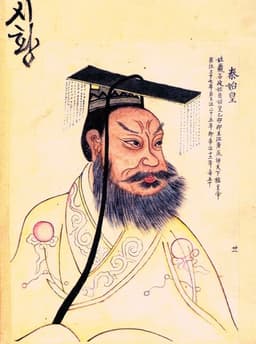
Qin Shi Huang
Emperor · Ancient
85.2Total
Basic Information
Born
1123
-259
Died
1186
-210
Era
Medieval
Ancient
Nationality
Sri Lanka
China
Occupation
Emperor
Emperor
Civilization
Indian
Eastern
Score Comparison
Military (10%)
82.0
80.0
Political (20%)
72.0
90.0
Influence (20%)
61.0
85.0
Legacy (20%)
52.0
90.0
Leadership (15%)
82.0
78.0
Strategy (15%)
65.4
82.0
TOTAL
66.1
85.2
Parakramabahu I — Complete Timeline
1153 AD
Unification of Sri LankaWar
Parakramabahu I unified the entire island of Sri Lanka under his rule after a series of military campaigns. He defeated the rulers of Ruhuna and other regional kingdoms, ending a period of fragmentation.
Impact: national
1160 AD
Construction of Parakrama SamudraOther◆ Major
Parakramabahu I constructed the Parakrama Samudra, a massive man-made sea of interconnected tanks and canals near Polonnaruwa. This irrigation system, covering over 5,000 acres, was a major engineering achievement.
Impact: regionalconstructive
1165 AD
Invasion of BurmaWar◆ Major
Parakramabahu I launched a naval invasion of Burma (Pagan Kingdom) in retaliation for a trade dispute. The Sinhalese fleet captured the port of Kusumiya and sacked the city, demonstrating Sri Lanka's naval power.
Impact: regional
Reform of the Buddhist SanghaReform◆ Major
Parakramabahu I convened a council to purify the Buddhist Sangha. He expelled corrupt monks and re-established discipline, strengthening Theravada Buddhism in Sri Lanka.
Impact: nationalconstructive
1170 AD
Construction of Polonnaruwa VatadageCultural◆ Major
Parakramabahu I built the Polonnaruwa Vatadage, a circular relic house for the Tooth Relic of the Buddha. This structure is considered a masterpiece of Sinhalese architecture.
Impact: nationalconstructive
Qin Shi Huang — Complete Timeline
246 BC
Construction of the Mausoleum and Terracotta ArmyOther◆ Major
Qin Shi Huang commissioned a vast mausoleum complex near Xi'an, guarded by thousands of life-sized terracotta soldiers, horses, and chariots. The project employed hundreds of thousands of workers and reflected his obsession with immortality and imperial power.
Impact: global
230 BC
Conquest of the Six Warring StatesWar
From 230 to 221 BCE, Ying Zheng led the Qin state in a series of campaigns that conquered the Han, Zhao, Wei, Chu, Yan, and Qi states. This unified China under a single ruler for the first time, ending the Warring States period.
Impact: global
221 BC
Standardization of Writing, Currency, and MeasurementsReform◆ Major
Qin Shi Huang ordered the standardization of Chinese script, currency, and weights and measures across the unified empire. This facilitated administration, trade, and cultural integration, laying a foundation for future dynasties.
Impact: globalconstructive
Proclamation of the Qin DynastyPolitical Action
After conquering the last independent state, Ying Zheng declared himself Shi Huangdi (First Emperor), founding the Qin Dynasty. He adopted a new title to signify his supreme authority and initiated centralized imperial rule.
Impact: global
214 BC
Initiation of the Great Wall ConstructionOther◆ Major
Qin Shi Huang ordered the connection and extension of existing northern fortifications to create a unified defensive wall against nomadic Xiongnu raids. This project involved massive conscripted labor and became the precursor to the later Great Wall.
Impact: regional
213 BC
Burning of Books and Burying of ScholarsPolitical Action◆ Major
On the advice of Li Si, Qin Shi Huang ordered the burning of historical records and philosophical texts not aligned with Legalist doctrine. He also had 460 Confucian scholars buried alive to suppress dissent and consolidate ideological control.
Impact: nationaldestructive
Expert Analysis
parakramabahu-i-vs-qin-shi-huang
# The Unifier and the Consolidator
On a spring morning in 221 BCE, a 38-year-old king stood before his assembled generals in the Wei Valley, having just witnessed the surrender of Qi, the last independent state of ancient China. He declared himself *Shi Huangdi*—the First Emperor—and set in motion a transformation of civilization that echoes into our own time. Thirteen centuries later and three thousand miles to the southwest, another king, Parakramabahu I, waded through the marshes of Polonnaruwa, personally directing the construction of a reservoir so vast it would be called the "Sea of Parakrama." Both men unified fractured lands, both built monuments that survive today, yet their paths diverged in ways that reveal the deepest currents of their respective civilizations.
Origins
Ying Zheng was born in 259 BCE, a prince of the western state of Qin, a frontier kingdom hardened by perpetual warfare against nomadic tribes. His childhood was a crucible of violence and intrigue—his father was a hostage in a neighboring state, and the young prince spent his early years in the shadow of a powerful eunuch, Lü Buwei, who may have been his biological father. The Warring States period had raged for two centuries, and Qin had emerged as a brutal, meritocratic machine built on Legalist philosophy, which valued order above all.
Parakramabahu I, born in 1123 CE, inherited a different world. Sri Lanka was already Buddhist, already literate, already connected to Indian Ocean trade networks that stretched from East Africa to Southeast Asia. The island had known unification under earlier kings, but by the 12th century, it had fragmented into warring principalities. Parakramabahu grew up in the royal court of Polonnaruwa, surrounded by the ruins of ancient hydraulic civilizations and the living tradition of Theravada Buddhism. His challenge was not to invent a new order but to restore a golden age.
Rise to Power
Qin Shi Huang's ascent was methodical and merciless. From 230 to 221 BCE, he unleashed a series of campaigns that consumed the six rival states one by one—Han fell first, then Zhao, Wei, Chu, Yan, and finally Qi. His general Wang Jian was a master of siege warfare, but the First Emperor's true innovation was psychological: he offered clemency to surrendered nobles while systematically dismantling their power structures. By 221 BCE, the map of China was a blank slate.
Parakramabahu's path was more circuitous. He first had to survive the intrigues of his own family, then wage a decade-long civil war against his uncle and cousin. In 1153 CE, after a decisive battle at Polonnaruwa, he finally controlled the entire island. Unlike the First Emperor, who conquered with overwhelming force, Parakramabahu relied on alliances with local chieftains and Buddhist monasteries. His unification was a negotiation as much as a conquest.
Leadership & Governance
Here the two rulers diverge most dramatically. Qin Shi Huang governed through terror and standardization. He ordered the burning of all books except those on medicine, agriculture, and divination—a purge that erased centuries of philosophical debate. He buried 460 scholars alive for criticizing his rule. His Legalist minister Li Si designed a system of mutual responsibility: if one man broke the law, his entire family and neighborhood suffered. The result was an empire of breathtaking efficiency and absolute fear.
Parakramabahu governed through infrastructure and piety. His greatest achievement was the Parakrama Samudra, a man-made sea covering 2,500 hectares, fed by a network of canals that still irrigate Sri Lankan rice fields today. He convened a Buddhist council that expelled corrupt monks and re-established monastic discipline. When he invaded Burma in 1165 CE over a trade dispute, his fleet returned not with plunder but with a new appreciation for maritime power. His rule was harsh by modern standards—rebels were executed—but it lacked the systematic cruelty of the Qin.
Triumph & Tragedy
The First Emperor's triumph was absolute: he unified China, standardized writing and currency, and began the Great Wall. Yet his tragedy was equally absolute. Obsessed with immortality, he consumed mercury elixirs prescribed by alchemists, which likely hastened his death in 210 BCE at age 49. His empire collapsed within four years of his passing, torn apart by the very Legalist system that had built it. His mausoleum, guarded by the Terracotta Army, stands as a monument to both his vision and his folly—a city for the dead that the living could not sustain.
Parakramabahu's triumph was more modest but more durable. His irrigation systems allowed Sri Lanka to feed a growing population for centuries. The Polonnaruwa Vatadage, a circular relic house for the Buddha's Tooth, became a pilgrimage site that survives today. Yet his tragedy was the fragility of his achievement. After his death in 1186 CE, Sri Lanka fragmented again, and within a century, the island's capital moved back to the dry zone, leaving Polonnaruwa to the jungle.
Character & Destiny
Qin Shi Huang was a man of terrible clarity. He saw the chaos of the Warring States and concluded that only absolute control could prevent its return. His paranoia was legendary—he slept in different rooms each night and never revealed his location. This fear drove him to build walls, both physical and ideological, that would define China for two millennia.
Parakramabahu was a man of practical ambition. He saw the ruined tanks and canals of earlier kingdoms and concluded that water, not walls, was the foundation of civilization. His famous saying—"Not even a drop of rain should go to the sea without serving man"—reveals a mind focused on abundance rather than control. Where the First Emperor built to separate, Parakramabahu built to connect.
Legacy
Qin Shi Huang's legacy is paradoxical. His dynasty lasted only 15 years, yet the system he created—centralized bureaucracy, standardized script, unified measurements—survived for over two millennia. Every Chinese emperor who followed ruled in his shadow. The Great Wall, though much rebuilt, remains a symbol of Chinese civilization. His Terracotta Army, discovered in 1974, has become one of the world's great archaeological wonders.
Parakramabahu's legacy is quieter but no less profound. The Parakrama Samudra still irrigates Sri Lankan fields. The Buddhist Sangha he purified remains the island's dominant religious institution. His name appears in textbooks as the greatest king of medieval Sri Lanka, though his fame rarely extends beyond the island's shores.
Conclusion
Standing before the Terracotta Army in Xi'an, one feels the weight of absolute power—the First Emperor's ability to command the labor of 700,000 workers for 38 years. Standing on the embankment of the Parakrama Samudra, one feels something different: the patience of a king who understood that water, properly managed, could sustain a civilization without crushing it. Both men unified their worlds, but they chose different tools. Qin Shi Huang built walls; Parakramabahu built reservoirs. One sought to control humanity; the other sought to harness nature. In the end, perhaps the difference between a tyrant and a great king is simply whether the monuments they leave behind serve the living or merely commemorate the dead.
Rankings
🥇
Qin Shi HuangLeader
Mil: 80.0Pol: 90.0Inf: 85.0
85.2
🥈
Parakramabahu I
Mil: 82.0Pol: 72.0Inf: 61.0
66.1
+19.1 behind
How This Comparison Works
Algorithm
Each figure is scored on 6 dimensions (0—100 scale) based on structured historical data: Military (10%), Political (20%), Influence (20%), Legacy (20%), Leadership (15%), Strategy (15%). The weighted total produces the final ranking.
Data Sources
Scores are computed from structured sub-indicators in the database. Scale factors adjust for era (Ancient ×0.85, Modern ×1.0) and civilization size (Eastern ×1.05, Other ×0.80) to account for differences in population and military scale.
Maximum 3 Figures
Comparisons are limited to 2—3 figures to ensure readability and statistical meaningfulness.
Error Margins
±5 points per dimension — Sub-scores are derived from historical records with inherent uncertainty. Two figures within 5 points on a dimension should be considered roughly equivalent in that area.
Total Score Accuracy
±3 points overall — The weighted combination of 6 dimensions produces a total score with approximately ±3 points of uncertainty. Differences of less than 3 points are not statistically significant— the figures are effectively tied.
Known Limitations
- Historical records are incomplete and uneven across civilizations
- Figures from oral-tradition societies may be underrepresented
- Occupation labels can misclassify multi-role figures
- Scores measure capability and impact, not moral character
- Quantitative scoring is a comparison tool, not absolute truth
Capability Radar
Military (10%) — Battles & Warfare
Battles
75
85
Win Rate
80
90
Expansion
70
90
Political (20%) — Governance & Reform
Reform
80
95
Diplomacy
70
75
Economy
75
90
Influence (20%) — Cultural & Global Reach
Cultural
65
95
Global
40
85
Legacy (20%) — Historical Impact
Historical
70
95
Longevity
60
95
Leadership (15%) — Power & Stability
Tenure
85
70
Stability
80
65
Strategy (15%) — Tactics & Innovation
Strategy
75
85
Tactics
70
80
Reform
65
95
Similar Comparisons
Comments & Discussion
STORMING_TERRACOTTA6/17/2026
A Legalist would have executed Parakramabahu for wasting resources on irrigation instead of canals for grain transport and border fortifications. Qin Shi Huang standardized axle widths for strategic mobility; Parakramabahu’s “sea” was just a lake for rice paddies. China built a wall; Sri Lanka built a dam. One conquered history, the other flooded it. Uncle Qin wins every time on scale and impact—Asia’s center still feels his fist. Parakrama’s pond stays local.
RAIN_BOW_ARCHER6/17/2026
数据狂魔必须指出:秦朝时日均粮运效率是斯里兰卡的十倍。Parakramabahu的巨型水库虽然看着壮丽,但其灌溉面积仅相当于现代一个中型农场的产能。地理决定论——中国有黄河平原,斯里兰卡只有热带雨林和沼泽。统一度量衡才是真功绩,建个水池算啥?秦始皇的标准化管理体系让中国2000年不分裂,Parakramabahu的“海”三年没维护就干涸了。数据和事实打脸浪漫想象。
BUDDHA_AND_BUSHIDO6/17/2026
Parakramabahu didn’t just build a reservoir—he designed it with fractal irrigation channels that still supply water today, while Qin Shi Huang’s Great Wall is mostly rubble tourists walk on. Sri Lanka’s king was an engineer; China’s was a dictator who buried scholars alive. Parakramabahu also wrote poetry in Pali, built stupas, and encouraged trade with Southeast Asia. Qin Shi Huang? Burnt books, executed intellectuals, and died chasing immortality pills. Give me the Buddhist king who made water
墨池铁画6/17/2026
我是汉简爱好者,对文献记录敏感。秦始皇子孙未及三代即亡,留下的是焚书坑儒的骂名;Parakramabahu却能稳固统治三十三年,其留下的《大史》与《铜掌》文献详尽记录了王权与寺庙的平衡。他甚至在外国使者面前用梵语、泰米尔语、僧伽罗语同时演讲,文化包容力远超秦始皇单一文字的强制统一。文明的存续靠的是水渠和佛经,不是兵马俑和碑文。
WAVING_SWORD_AND_STONE6/17/2026
Let’s cut the romanticized Southeast Asian paradise: Parakramabahu expanded his kingdom by invading Burma and India, but his naval campaigns were embarrassments—lost at sea, ships wrecked. Qin Shi Huang conquered six states with a brutal, efficient war machine. One unified a subcontinent permanently, the other briefly expanded a tiny island’s influence. Military historians rate Qin’s organizational genius (standardized crossbows, conscription logistics) over Parakramab