Loading...
This comparison has not been analyzed yet.
One-time AI generation (~1 minute). Scores and timeline are already available below.
Ouyang Xiu vs Shen Shixing
Ouyang Xiu leads by 5.0 pts · 2 figures compared
…

Ouyang Xiu
Politician · Medieval
56.1Total
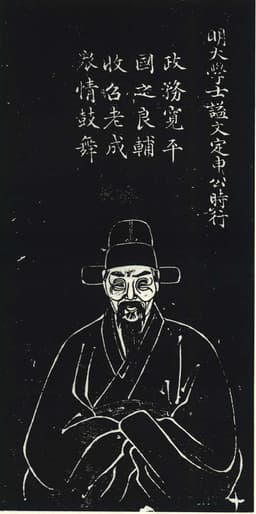
Shen Shixing
Politician · Medieval
51.1Total
Basic Information
Born
1007
1535
Died
1072
1614
Era
Medieval
Medieval
Nationality
China
China
Occupation
Politician
Politician
Civilization
Eastern
Eastern
Score Comparison
Military (10%)
32.7
17.7
Political (20%)
55.0
68.0
Influence (20%)
65.0
51.8
Legacy (20%)
55.0
45.0
Leadership (15%)
72.0
72.0
Strategy (15%)
37.9
41.0
TOTAL
56.1
51.1
Ouyang Xiu — Complete Timeline
1030 AD
Passed the Imperial Examination and Entered BureaucracyPolitical Action◆ Major
Ouyang Xiu passed the jinshi examination, the highest level of the imperial civil service exams, at age 23. This achievement launched his career as a Song dynasty official and provided him with the platform to advocate for literary and political reforms.
Imperial ExaminationCareer StartSong Dynasty
Impact: nationalconstructive
1040 AD
Led the Ancient Prose MovementCultural◆ Major
Ouyang Xiu championed the Ancient Prose Movement, advocating for a return to clear, unadorned prose styles of earlier Chinese classics. He rejected the ornate parallel prose of his time, influencing generations of writers and becoming one of the Eight Masters of the Tang and Song.
Literary ReformAncient Prose MovementEight Masters
Impact: nationalconstructive
1045 AD
Exiled for Political CriticismPolitical Action
Ouyang Xiu was exiled to Chuzhou after being accused of improper conduct by political rivals. This exile was part of the factional struggles during the Qingli Reforms, but he continued to write and produce influential literary works during his time away from court.
ExileFactional StrifeSong Dynasty
Impact: nationaltragic
1060 AD
Compiled the New Book of TangCultural◆ Major
Ouyang Xiu was the lead editor of the New Book of Tang, an official history of the Tang dynasty. This work became a standard historical source, reflecting his scholarly rigor and his role in shaping historical narratives for the Song court.
HistoriographyTang HistorySong Dynasty
Impact: nationalconstructive
Shen Shixing — Complete Timeline
1583 AD
Appointed Grand SecretaryPolitical Action◆ Major
Shen Shixing was appointed to the Grand Secretariat under the Wanli Emperor. He was known for his attempts to mediate between the emperor and the officials, especially during the succession dispute.
Ming DynastyGrand SecretariatWanli Reign
Impact: nationalconstructive
1586 AD
Mediated in the succession disputePolitical Action◆ Major
Shen Shixing tried to mediate between the Wanli Emperor and officials over the choice of heir. The emperor wanted to name his younger son, while officials insisted on the eldest, leading to a prolonged deadlock.
Ming DynastySuccession DisputeWanli Reign
Impact: national
1591 AD
Retired from officePolitical Action
Shen Shixing retired from the Grand Secretariat after failing to resolve the succession dispute. His retirement marked the end of his efforts to maintain harmony between the emperor and the bureaucracy.
Ming DynastyRetirementSuccession Dispute
Impact: national
This comparison has not been analyzed yet.
One-time AI generation (~1 minute). Scores and timeline are already available below.
Rankings
🥇
Ouyang XiuLeader
Mil: 32.7Pol: 55.0Inf: 65.0
56.1
🥈
Shen Shixing
Mil: 17.7Pol: 68.0Inf: 51.8
51.1
+5.0 behind
How This Comparison Works
Algorithm
Each figure is scored on 6 dimensions (0—100 scale) based on structured historical data: Military (10%), Political (20%), Influence (20%), Legacy (20%), Leadership (15%), Strategy (15%). The weighted total produces the final ranking.
Data Sources
Scores are computed from structured sub-indicators in the database. Scale factors adjust for era (Ancient ×0.85, Modern ×1.0) and civilization size (Eastern ×1.05, Other ×0.80) to account for differences in population and military scale.
Maximum 3 Figures
Comparisons are limited to 2—3 figures to ensure readability and statistical meaningfulness.
Error Margins
±5 points per dimension — Sub-scores are derived from historical records with inherent uncertainty. Two figures within 5 points on a dimension should be considered roughly equivalent in that area.
Total Score Accuracy
±3 points overall — The weighted combination of 6 dimensions produces a total score with approximately ±3 points of uncertainty. Differences of less than 3 points are not statistically significant— the figures are effectively tied.
Known Limitations
- Historical records are incomplete and uneven across civilizations
- Figures from oral-tradition societies may be underrepresented
- Occupation labels can misclassify multi-role figures
- Scores measure capability and impact, not moral character
- Quantitative scoring is a comparison tool, not absolute truth
Capability Radar
Military (10%) — Battles & Warfare
Battles
38
36
Win Rate
41
40
Expansion
42
43
Political (20%) — Governance & Reform
Reform
70
40
Diplomacy
60
65
Economy
55
45
Influence (20%) — Cultural & Global Reach
Cultural
85
30
Global
70
20
Legacy (20%) — Historical Impact
Historical
80
40
Longevity
75
30
Leadership (15%) — Power & Stability
Tenure
65
60
Stability
60
50
Strategy (15%) — Tactics & Innovation
Strategy
45
46
Tactics
53
49
Reform
53
52
Similar Comparisons
Comments & Discussion
No comments yet. Be the first to share your thoughts!