Loading...
This comparison has not been analyzed yet.
One-time AI generation (~1 minute). Scores and timeline are already available below.
Olybrius vs Ramesses IX
Olybrius leads by 2.8 pts · 2 figures compared
…

Olybrius
Emperor · Ancient
41.7Total
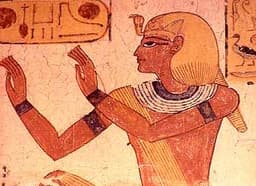
Ramesses IX
Emperor · Ancient
38.9Total
Basic Information
Born
430
-1128
Died
472
-1111
Era
Ancient
Ancient
Nationality
Western Roman Empire
New Kingdom Egypt
Occupation
Emperor
Emperor
Civilization
Western
Middle Eastern
Score Comparison
Military (10%)
10.7
22.6
Political (20%)
40.8
26.4
Influence (20%)
56.4
44.0
Legacy (20%)
39.2
37.5
Leadership (15%)
45.0
55.3
Strategy (15%)
38.2
39.6
TOTAL
41.7
38.9
Olybrius — Complete Timeline
472 AD
Proclaimed Western Roman Emperor by RicimerPolitical Action◆ Major
After the death of Anthemius during the siege of Rome, the powerful magister militum Ricimer proclaimed Olybrius as Western Roman Emperor. Olybrius was a member of the Anician family and had ties to the Vandal king Gaiseric.
Imperial SuccessionPower Struggle
Impact: regional
Died of natural causesOther◆ Major
Olybrius died of natural causes after a reign of only a few months. His death occurred shortly after that of Ricimer, leaving the Western Empire without effective leadership and plunging it into further instability.
DeathImperial Succession
Impact: regional
Ramesses IX — Complete Timeline
1128 BC
Construction of Tomb KV6Cultural
Ramesses IX ordered the construction of his tomb in the Valley of the Kings, designated KV6. The tomb was completed but later plundered in antiquity, reflecting the weakened state of royal necropolis security during his reign.
Tomb ConstructionValley of the Kings
1120 BC
Loss of Control over Western ThebesWar◆ Major
During Ramesses IX's reign, the authority of the pharaoh weakened in Upper Egypt, particularly in Western Thebes. The High Priest of Amun gained increasing power, effectively ruling the region independently, marking a step toward the fragmentation of the New Kingdom.
Political FragmentationThebesPriesthood
Impact: nationaldestructive
1118 BC
Tomb Robbery Scandal InvestigationPolitical Action◆ Major
During Ramesses IX's reign, a major scandal erupted over the systematic looting of royal tombs in the Theban necropolis. An official investigation was launched, leading to the trial and punishment of several tomb robbers, but the incident highlighted the decline of central authority and economic hardship.
Tomb RobberyScandalDecline
Impact: nationaldestructive
This comparison has not been analyzed yet.
One-time AI generation (~1 minute). Scores and timeline are already available below.
Rankings
🥇
OlybriusLeader
Mil: 10.7Pol: 40.8Inf: 56.4
41.7
🥈
Ramesses IX
Mil: 22.6Pol: 26.4Inf: 44.0
38.9
+2.8 behind
How This Comparison Works
Algorithm
Each figure is scored on 6 dimensions (0—100 scale) based on structured historical data: Military (10%), Political (20%), Influence (20%), Legacy (20%), Leadership (15%), Strategy (15%). The weighted total produces the final ranking.
Data Sources
Scores are computed from structured sub-indicators in the database. Scale factors adjust for era (Ancient ×0.85, Modern ×1.0) and civilization size (Eastern ×1.05, Other ×0.80) to account for differences in population and military scale.
Maximum 3 Figures
Comparisons are limited to 2—3 figures to ensure readability and statistical meaningfulness.
Error Margins
±5 points per dimension — Sub-scores are derived from historical records with inherent uncertainty. Two figures within 5 points on a dimension should be considered roughly equivalent in that area.
Total Score Accuracy
±3 points overall — The weighted combination of 6 dimensions produces a total score with approximately ±3 points of uncertainty. Differences of less than 3 points are not statistically significant— the figures are effectively tied.
Known Limitations
- Historical records are incomplete and uneven across civilizations
- Figures from oral-tradition societies may be underrepresented
- Occupation labels can misclassify multi-role figures
- Scores measure capability and impact, not moral character
- Quantitative scoring is a comparison tool, not absolute truth
Capability Radar
Military (10%) — Battles & Warfare
Battles
6
10
Win Rate
7
10
Expansion
14
5
Political (20%) — Governance & Reform
Reform
0
15
Diplomacy
10
20
Economy
0
15
Influence (20%) — Cultural & Global Reach
Cultural
0
20
Global
0
10
Legacy (20%) — Historical Impact
Historical
5
25
Longevity
0
20
Leadership (15%) — Power & Stability
Tenure
5
60
Stability
0
10
Strategy (15%) — Tactics & Innovation
Strategy
11
10
Tactics
16
10
Reform
20
5
Similar Comparisons
Comments & Discussion
No comments yet. Be the first to share your thoughts!