Loading...
Okada Keisuke vs Zuo Zongtang
Zuo Zongtang leads by 11.7 pts · 2 figures compared
…
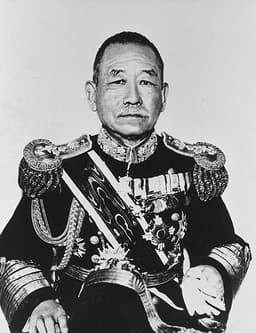
Okada Keisuke
General · Modern
58.5Total

Zuo Zongtang
General · Modern
70.2Total
Basic Information
Born
1868
1812
Died
1952
1885
Era
Modern
Modern
Nationality
Japan
China
Occupation
General
General
Civilization
Eastern
Eastern
Score Comparison
Military (10%)
46.7
78.0
Political (20%)
62.7
78.0
Influence (20%)
55.7
55.0
Legacy (20%)
50.0
72.0
Leadership (15%)
80.0
78.0
Strategy (15%)
60.0
72.0
TOTAL
58.5
70.2
Okada Keisuke — Complete Timeline
1934 AD
Service as Prime MinisterPolitical Action
Okada Keisuke became Prime Minister in July 1934, succeeding Saito Makoto. His cabinet attempted to maintain civilian control over the military and pursued moderate foreign policies, but faced increasing pressure from ultranationalist factions.
Prime MinisterCivilian Control
Impact: national
1936 AD
Survival of the February 26 IncidentPolitical Action◆ Major
During the February 26 Incident, Prime Minister Okada Keisuke narrowly escaped assassination when rebels mistakenly killed his brother-in-law, who resembled him. Okada hid in a closet while rebels searched his residence, then fled to safety. His survival allowed him to continue as PM.
Coup AttemptEscapePolitical Violence
Impact: national
Resignation After February 26 IncidentPolitical Action◆ Major
Okada resigned as Prime Minister in March 1936, taking responsibility for the February 26 Incident and the breakdown of public order. His resignation marked the end of party cabinets and the beginning of military-dominated governments.
ResignationPolitical Crisis
Impact: nationaltragic
1945 AD
Post-War Role as Privy CouncillorPolitical Action
After World War II, Okada served as a member of the Privy Council and advised the government during the Allied occupation. He supported the new constitution and Japan's demilitarization, helping to transition Japan to a peaceful state.
Post-WarOccupationConstitution
Impact: nationalconstructive
Zuo Zongtang — Complete Timeline
1864 AD
Suppression of the Taiping RebellionWar◆ Major
Zuo Zongtang commanded Hunan Army forces that recaptured Hangzhou and other cities from Taiping rebels. His military efforts contributed to the eventual defeat of the Taiping Rebellion, which had devastated much of southern China.
Taiping RebellionMilitary campaign
Impact: national
1866 AD
Establishment of the Fuzhou Naval YardReform◆ Major
Zuo Zongtang founded the Fuzhou Naval Yard and Arsenal as part of the Self-Strengthening Movement. This shipyard built modern warships and trained Chinese engineers, aiming to modernize China's naval capabilities against foreign threats.
Self-StrengtheningNaval modernization
Impact: nationalconstructive
1868 AD
Suppression of the Nian RebellionWar
Zuo Zongtang led Qing forces to defeat the Nian rebels in northern China. His use of cavalry and fortified positions broke the rebellion, which had threatened Qing control over the Yellow River region.
Nian RebellionMilitary campaign
Impact: regional
1878 AD
Recovery of XinjiangWar
Zuo Zongtang led a Qing army to defeat Yakub Beg's forces and reassert Chinese control over Xinjiang. This campaign ended the Muslim rebellion and restored Qing authority in the region, securing China's northwestern frontier.
Military campaignTerritorial recovery
Impact: nationalconstructive
1880 AD
Promotion of Agricultural Development in XinjiangReform
After recovering Xinjiang, Zuo Zongtang implemented agricultural policies including irrigation projects and land reclamation. These measures aimed to settle Han Chinese farmers and integrate the region economically into the Qing empire.
Agricultural policySettlement
Impact: regionalconstructive
Expert Analysis
Origins
Okada Keisuke was born in 1868 in Fukui, Japan, into a samurai family. He attended the Imperial Japanese Naval Academy, graduating in 1891. His early career included service in the First Sino-Japanese War (1894-1895) and the Russo-Japanese War (1904-1905), where he gained experience as a naval officer. He later rose through the ranks, becoming a vice admiral in 1924. Okada's background was firmly rooted in the Imperial Navy, emphasizing discipline and modernization.
Zuo Zongtang was born in 1812 in Xiangyin, Hunan, China, into a scholarly family. He passed the provincial civil service examinations in 1832 but failed the metropolitan exams. Despite this, he developed expertise in military strategy, geography, and agriculture. Zuo's early career included teaching and local administration. His rise began when he joined the staff of Governor Luo Bingzhang to suppress the Taiping Rebellion. Zuo's background combined Confucian scholarship with practical military and administrative skills.
Rise to Power
Okada's rise was gradual within the navy. He served as director of the Naval Personnel Bureau and later as commander of various fleets. In 1927, he became Minister of the Navy, a position he held until 1929. His political ascent culminated in his appointment as Prime Minister in July 1934, succeeding Saito Makoto. Okada's cabinet aimed to maintain civilian control over the military, but he faced increasing pressure from ultranationalist factions. The February 26 Incident in 1936 was a turning point: rebels assassinated several officials, and Okada narrowly escaped when his brother-in-law was mistaken for him. Okada resigned in March 1936, taking responsibility for the breakdown of order.
Zuo Zongtang rose through military success. He first gained prominence by suppressing the Taiping Rebellion, recapturing Hangzhou in 1864. His forces, the Chu Army, were known for discipline and effective use of Western firearms. In 1867, he was appointed Viceroy of Shaanxi and Gansu to suppress the Nian Rebellion, which he accomplished by 1868. His greatest achievement came in the 1870s: leading a campaign to recover Xinjiang from Yakub Beg. Zuo's forces, numbering around 60,000, defeated the rebels by 1878, reestablishing Qing control. This victory secured his reputation as a leading general of the late Qing.
Leadership & Governance
Okada's leadership style was conciliatory and diplomatic. As Prime Minister, he attempted to moderate military influence, but his efforts were limited. He supported the London Naval Treaty (1930), which restricted naval expansion, earning him hostility from ultranationalists. Okada's governance focused on fiscal conservatism and maintaining constitutional order. However, he lacked the political will to confront the military directly. His score of 80.0 in leadership reflects his ability to navigate a turbulent period, but his political score of 62.7 indicates limited effectiveness.
Zuo Zongtang was a hands-on, pragmatic leader. He emphasized self-strengthening, founding the Fuzhou Naval Yard in 1866 to build modern warships and train Chinese engineers. He also promoted agricultural development in Xinjiang, implementing irrigation projects and land reclamation to stabilize the region. Zuo's leadership score of 78.0 is high due to his decisive military command and administrative reforms. His political score of 78.0 reflects his ability to secure funding and support from the Qing court despite opposition from conservative factions.
Triumph & Tragedy
Okada's greatest triumph was surviving the February 26 Incident and preserving his life. However, his failure to prevent the coup and the subsequent rise of military influence in Japan marks his tragedy. After resigning, he served as a Privy Councillor during the Allied occupation, supporting the new constitution. His legacy is mixed: he is remembered as a moderate who failed to curb militarism. Okada's military score of 46.7 is low, reflecting his lack of battlefield command, while his influence score of 55.7 indicates limited long-term impact.
Zuo Zongtang's greatest triumph was the recovery of Xinjiang, ensuring Chinese control over a vast territory. He also successfully suppressed the Taiping and Nian rebellions, preserving the Qing dynasty. His tragedy lies in the broader context: despite his successes, the Qing dynasty continued to decline. Zuo's military score of 78.0 reflects his effective campaigns, and his legacy score of 72.0 indicates enduring recognition. He is celebrated as a national hero in China for defending territorial integrity.
Character & Destiny
Okada was cautious and reserved, a product of the naval establishment. His survival instinct was strong, but his decision to resign rather than confront the military may have been a missed opportunity. Historians view him as a well-intentioned but ultimately ineffectual leader. His destiny was shaped by the forces of militarism he could not control.
Zuo was determined and ambitious, driven by a sense of duty to the Qing. He was known for his meticulous planning and willingness to adopt Western technology. His character—combining Confucian ideals with practical realism—allowed him to achieve remarkable military feats. However, his efforts could not reverse the dynasty's decline.
Legacy
Okada's legacy is modest. He is remembered primarily for his survival of the 2-26 Incident and his post-war advisory role. His scores: military 46.7, political 62.7, influence 55.7, legacy 50.0. He had little lasting impact on Japan's political trajectory.
Zuo Zongtang's legacy is substantial. He is credited with preserving Xinjiang for China, and his agricultural and industrial projects had long-term benefits. His scores: military 78.0, political 78.0, influence 55.0, legacy 72.0. He remains a symbol of Chinese resistance to foreign encroachment and internal rebellion.
Conclusion
Zuo Zongtang had a greater impact than Okada Keisuke. His military campaigns secured vast territories and suppressed major rebellions, while his reforms contributed to China's modernization. Okada, despite his high leadership score, failed to prevent the militarization of Japan. Zuo's total score of 70.2 versus Okada's 58.5 reflects his superior achievements. Zuo's recovery of Xinjiang alone outweighs Okada's entire legacy. The data supports Zuo as the more significant historical figure.
Rankings
🥇
Zuo ZongtangLeader
Mil: 78.0Pol: 78.0Inf: 55.0
70.2
🥈
Okada Keisuke
Mil: 46.7Pol: 62.7Inf: 55.7
58.5
+11.7 behind
How This Comparison Works
Algorithm
Each figure is scored on 6 dimensions (0—100 scale) based on structured historical data: Military (10%), Political (20%), Influence (20%), Legacy (20%), Leadership (15%), Strategy (15%). The weighted total produces the final ranking.
Data Sources
Scores are computed from structured sub-indicators in the database. Scale factors adjust for era (Ancient ×0.85, Modern ×1.0) and civilization size (Eastern ×1.05, Other ×0.80) to account for differences in population and military scale.
Maximum 3 Figures
Comparisons are limited to 2—3 figures to ensure readability and statistical meaningfulness.
Error Margins
±5 points per dimension — Sub-scores are derived from historical records with inherent uncertainty. Two figures within 5 points on a dimension should be considered roughly equivalent in that area.
Total Score Accuracy
±3 points overall — The weighted combination of 6 dimensions produces a total score with approximately ±3 points of uncertainty. Differences of less than 3 points are not statistically significant— the figures are effectively tied.
Known Limitations
- Historical records are incomplete and uneven across civilizations
- Figures from oral-tradition societies may be underrepresented
- Occupation labels can misclassify multi-role figures
- Scores measure capability and impact, not moral character
- Quantitative scoring is a comparison tool, not absolute truth
Capability Radar
Military (10%) — Battles & Warfare
Battles
30
85
Win Rate
35
80
Expansion
20
85
Political (20%) — Governance & Reform
Reform
50
70
Diplomacy
60
75
Economy
45
70
Influence (20%) — Cultural & Global Reach
Cultural
30
60
Global
35
60
Legacy (20%) — Historical Impact
Historical
50
75
Longevity
40
65
Leadership (15%) — Power & Stability
Tenure
55
70
Stability
40
75
Strategy (15%) — Tactics & Innovation
Strategy
45
90
Tactics
40
85
Reform
50
75
Similar Comparisons
Comments & Discussion
No comments yet. Be the first to share your thoughts!