Loading...
Oduduwa vs Qin Shi Huang
Qin Shi Huang leads by 25.5 pts · 2 figures compared
…
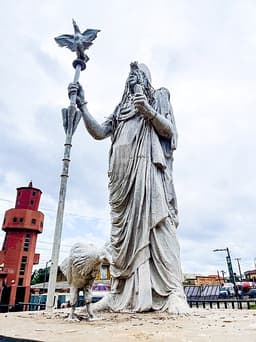
Oduduwa
Emperor · Medieval
59.7Total
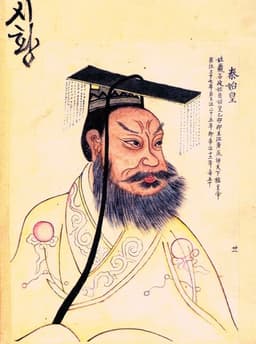
Qin Shi Huang
Emperor · Ancient
85.2Total
Basic Information
Born
950
-259
Died
1020
-210
Era
Medieval
Ancient
Nationality
Ife
China
Occupation
Emperor
Emperor
Civilization
Other
Eastern
Score Comparison
Military (10%)
50.0
80.0
Political (20%)
46.6
90.0
Influence (20%)
68.0
85.0
Legacy (20%)
68.0
90.0
Leadership (15%)
67.0
78.0
Strategy (15%)
36.8
82.0
TOTAL
59.7
85.2
Oduduwa — Complete Timeline
1000 AD
Foundation of the Yoruba civilization at Ile-IfeCultural
According to Yoruba oral tradition, Oduduwa descended from heaven at Ile-Ife and founded the Yoruba civilization. He is credited with establishing the first Yoruba kingdom and the sacred city of Ile-Ife, which became the spiritual and cultural heartland of the Yoruba people.
Impact: regionalconstructive
1010 AD
Establishment of the Yoruba royal dynastiesPolitical Action◆ Major
Oduduwa is said to have sent his sons and grandsons to found the various Yoruba kingdoms, including Oyo, Benin, and Ketu. This act established the royal lineages that ruled these states for centuries, creating a network of related kingdoms under the spiritual authority of the Ooni of Ife.
Impact: regionalconstructive
Qin Shi Huang — Complete Timeline
246 BC
Construction of the Mausoleum and Terracotta ArmyOther◆ Major
Qin Shi Huang commissioned a vast mausoleum complex near Xi'an, guarded by thousands of life-sized terracotta soldiers, horses, and chariots. The project employed hundreds of thousands of workers and reflected his obsession with immortality and imperial power.
Impact: global
230 BC
Conquest of the Six Warring StatesWar
From 230 to 221 BCE, Ying Zheng led the Qin state in a series of campaigns that conquered the Han, Zhao, Wei, Chu, Yan, and Qi states. This unified China under a single ruler for the first time, ending the Warring States period.
Impact: global
221 BC
Standardization of Writing, Currency, and MeasurementsReform◆ Major
Qin Shi Huang ordered the standardization of Chinese script, currency, and weights and measures across the unified empire. This facilitated administration, trade, and cultural integration, laying a foundation for future dynasties.
Impact: globalconstructive
Proclamation of the Qin DynastyPolitical Action
After conquering the last independent state, Ying Zheng declared himself Shi Huangdi (First Emperor), founding the Qin Dynasty. He adopted a new title to signify his supreme authority and initiated centralized imperial rule.
Impact: global
214 BC
Initiation of the Great Wall ConstructionOther◆ Major
Qin Shi Huang ordered the connection and extension of existing northern fortifications to create a unified defensive wall against nomadic Xiongnu raids. This project involved massive conscripted labor and became the precursor to the later Great Wall.
Impact: regional
213 BC
Burning of Books and Burying of ScholarsPolitical Action◆ Major
On the advice of Li Si, Qin Shi Huang ordered the burning of historical records and philosophical texts not aligned with Legalist doctrine. He also had 460 Confucian scholars buried alive to suppress dissent and consolidate ideological control.
Impact: nationaldestructive
Expert Analysis
oduduwa-vs-qin-shi-huang
# The First Emperor and the Sky Father: Two Founders, Two Worlds
On a winter morning in 221 BC, a thirty-eight-year-old king stood before his assembled army in the Wei River valley, having just crushed the last independent state of Qi. He declared himself *Shi Huangdi*—the First Emperor—and announced that his dynasty would rule for ten thousand generations. A thousand years later and half a world away, another founder was descending not from a war chariot but from heaven itself. According to Yoruba tradition, Oduduwa arrived at Ile-Ife carrying a handful of earth and a five-toed chicken, creating the first dry land from the primordial waters. These two figures—Qin Shi Huang of China and Oduduwa of the Yoruba—both stand at the foundations of their civilizations, yet their paths to power and the worlds they built could hardly be more different.
Origins
Qin Shi Huang was born into a world of brutal competition. The Warring States period had turned China into a chessboard of seven kingdoms locked in perpetual conflict for over two centuries. Ying Zheng, as he was then called, became king of Qin at thirteen, inheriting a state that had already perfected the arts of war and bureaucracy. His mother was a former concubine, his father a king who died young, and his childhood was shaped by court intrigue and the looming threat of assassination. The Qin state was a machine of Legalist philosophy—a system that valued order above all, rewarded farmers and soldiers, and crushed dissent without mercy.
Oduduwa emerged from a very different crucible. The Yoruba oral tradition speaks of him not as a conqueror but as a civilizer. He came from the sky—or, in some versions, from the east, perhaps from the ancient city of Mecca or the kingdom of Kush. What matters is not the literal truth but the symbolic one: Oduduwa arrived not to destroy but to build. He brought the arts of governance, the institution of kingship, and the sacred authority that would define Yoruba civilization for centuries. Where Qin Shi Huang’s origin story is one of blood and iron, Oduduwa’s is one of descent and creation.
Rise to Power
The path of Qin Shi Huang was a campaign of annihilation. From 230 to 221 BC, he unleashed his generals against the six rival kingdoms in a relentless sequence of conquests. The Han fell first, then Zhao, Wei, Chu, Yan, and finally Qi. Each victory was absolute—the royal families were captured or killed, their armies disbanded, their territories absorbed into a single administrative system. This was not a negotiation or a federation; it was the imposition of Qin’s will by the sword. By the time Ying Zheng declared himself Emperor, he had personally overseen the destruction of six ancient dynasties and the deaths of hundreds of thousands.
Oduduwa’s rise was the opposite: it was about foundation, not conquest. He established his seat at Ile-Ife, which became the spiritual and political heart of the Yoruba world. Rather than annihilating rivals, he sent his sons and grandsons to found new kingdoms—Oyo, Benin, Ketu, and others—each of which would develop its own traditions while acknowledging the sacred primacy of Ife. This was not empire in the Qin sense, but a network of related dynasties bound by kinship, ritual, and shared origin. Where Qin Shi Huang centralized, Oduduwa diffused.
Leadership & Governance
Qin Shi Huang’s genius was organizational. He understood that military conquest was meaningless without administrative consolidation. He standardized the Chinese script, creating a single written language that could unite a vast territory. He standardized currency, weights, and measures, so that a merchant in the far south could trade with a farmer in the far north using the same coins and the same units. He built roads and canals that tied the empire together. He also ordered the burning of books and the burying of scholars—an act of intellectual terror designed to erase alternative visions of governance. His Legalist philosophy was ruthless: the state was everything, the individual nothing.
Oduduwa’s governance was built on consensus and ritual. As the *Ooni* (king) of Ife, he was both a political leader and a spiritual figure, a living link between heaven and earth. The Yoruba system of kingship that he established was consultative, with councils of chiefs and elders balancing royal authority. The famous bronze and terracotta heads of Ife—among the greatest achievements of African art—depict kings with serene, idealized features, suggesting a leadership style based on wisdom and divine favor rather than terror. Where Qin Shi Huang ruled through fear and uniformity, Oduduwa ruled through sacred tradition and diversity.
Triumph & Tragedy
Qin Shi Huang’s greatest triumph was the unification itself—a feat that had eluded all previous Chinese rulers. He connected and extended the northern fortifications into what would become the Great Wall, a monument to his vision of a bounded, secure realm. His mausoleum, guarded by the Terracotta Army of thousands of life-sized soldiers, remains one of the most astonishing archaeological discoveries in history. But his tragedy was equally immense. His obsession with immortality led him to consume mercury pills prescribed by alchemists, which likely hastened his death at age forty-nine. Within three years of his passing, the Qin Dynasty collapsed in rebellion, destroyed by the very harshness of his rule.
Oduduwa’s triumph was the creation of a civilization that has endured for over a millennium. The Yoruba kingdoms he founded—Oyo, Benin, Ife itself—became centers of art, trade, and political sophistication. His descendants continue to occupy thrones across Nigeria and Benin to this day. But the tragedy of Oduduwa is the tragedy of all legendary founders: his story is more myth than history. We have no contemporary records, no archaeological proof of his existence, only the oral traditions that have been passed down through generations. He is a figure of faith, not fact.
Character & Destiny
Qin Shi Huang was paranoid, ruthless, and obsessed with control. He traveled constantly to inspect his empire, never sleeping in the same palace twice for fear of assassination. He ordered the construction of hidden passages and secret routes to protect himself. His character was shaped by the brutal world that produced him—a world where mercy was weakness and power was the only currency that mattered. His destiny was to create the template for Chinese imperial rule, but at the cost of his own dynasty.
Oduduwa, by contrast, is remembered as a wise and benevolent father. His character is that of the founder who gives rather than takes, who builds rather than destroys. His destiny was to plant the seeds of a civilization that would flourish without him, spreading across West Africa through the generations of his children. He did not need to conquer because his authority came from a higher source.
Legacy
Qin Shi Huang’s legacy is written in stone and iron. The administrative system he created—the commanderies and prefectures, the standardized writing, the unified empire—became the model for every Chinese dynasty that followed. The Great Wall, though rebuilt many times, still bears his name in the Chinese imagination. He is both reviled as a tyrant and honored as a unifier, a contradiction that reflects the complexity of his achievement.
Oduduwa’s legacy is written in lineage and ritual. Every Yoruba king traces his descent back to the Sky Father. Ile-Ife remains the spiritual capital of the Yoruba world, and the annual festivals in his honor continue to draw thousands. His legacy is not a wall or a mausoleum but a living tradition, a dynasty that has outlasted empires.
Conclusion
Two founders, two visions of power. Qin Shi Huang built an empire with blood and law, and it collapsed within a generation of his death. Oduduwa built a civilization with myth and kinship, and it has endured for a thousand years. The First Emperor sought to control everything and lost everything. The Sky Father gave everything away and gained immortality. Perhaps the deepest lesson of these two lives is that the most enduring foundations are not those built on fear and force, but those built on love and belief.
Rankings
🥇
Qin Shi HuangLeader
Mil: 80.0Pol: 90.0Inf: 85.0
85.2
🥈
Oduduwa
Mil: 50.0Pol: 46.6Inf: 68.0
59.7
+25.5 behind
How This Comparison Works
Algorithm
Each figure is scored on 6 dimensions (0—100 scale) based on structured historical data: Military (10%), Political (20%), Influence (20%), Legacy (20%), Leadership (15%), Strategy (15%). The weighted total produces the final ranking.
Data Sources
Scores are computed from structured sub-indicators in the database. Scale factors adjust for era (Ancient ×0.85, Modern ×1.0) and civilization size (Eastern ×1.05, Other ×0.80) to account for differences in population and military scale.
Maximum 3 Figures
Comparisons are limited to 2—3 figures to ensure readability and statistical meaningfulness.
Error Margins
±5 points per dimension — Sub-scores are derived from historical records with inherent uncertainty. Two figures within 5 points on a dimension should be considered roughly equivalent in that area.
Total Score Accuracy
±3 points overall — The weighted combination of 6 dimensions produces a total score with approximately ±3 points of uncertainty. Differences of less than 3 points are not statistically significant— the figures are effectively tied.
Known Limitations
- Historical records are incomplete and uneven across civilizations
- Figures from oral-tradition societies may be underrepresented
- Occupation labels can misclassify multi-role figures
- Scores measure capability and impact, not moral character
- Quantitative scoring is a comparison tool, not absolute truth
Capability Radar
Military (10%) — Battles & Warfare
Battles
10
85
Win Rate
10
90
Expansion
30
90
Political (20%) — Governance & Reform
Reform
50
95
Diplomacy
40
75
Economy
40
90
Influence (20%) — Cultural & Global Reach
Cultural
80
95
Global
70
85
Legacy (20%) — Historical Impact
Historical
80
95
Longevity
80
95
Leadership (15%) — Power & Stability
Tenure
40
70
Stability
50
65
Strategy (15%) — Tactics & Innovation
Strategy
10
85
Tactics
10
80
Reform
10
95
Similar Comparisons
Comments & Discussion
EmperorOfBronze6/17/2026
Qin Shi Huang was a brilliant conqueror but his obsession with immortality made him paranoid. He ordered scholars buried alive and books burned, all to control history. Oduduwa, by contrast, didn’t need to destroy anything—he created land from chaos. Which legacy matters more: control or creation?
IronYoke6/17/2026
秦始皇帝统一度量衡、修长城是现代国家的雏形,但奥杜杜瓦的神话更贴近人心。前者靠铁血统治,后者用一只鸡和一把泥土开启文明。我选奥杜杜瓦,因为神话比暴政更能延续千年。
ChickenClawCritic6/17/2026
Let’s be real: Oduduwa’s creation myth sounds like a cute bedtime story compared to the First Emperor’s actual military campaigns. A chicken scattering dirt? Qin Shi Huang threw 300,000 men at the Xiongnu. Myths are nice, but history is written in blood and bronze.
HeavenlyMandateSkeptic6/17/2026
把奥杜杜瓦和秦始皇对比就像比较苹果和橙子。一个靠神话说服部落遵从,另一个靠实用法律和火器统一六国。我不崇拜一个会下凡撒土的祖先,我敬重一个能调动五十万民工修长城的国君。神话无法替代管理。
LongevityLament6/17/2026
Both founders wanted legacy, but only one achieved it imperfectly. Qin’s empire collapsed 15 years after his death, while Oduduwa’s descendants still rule in spirit. Maybe a chicken and some dirt outlasts state terror after all.