Loading...
Nyatsimba Mutota vs Qin Shi Huang
Qin Shi Huang leads by 28.7 pts · 2 figures compared
…

Nyatsimba Mutota
Emperor · Medieval
56.5Total
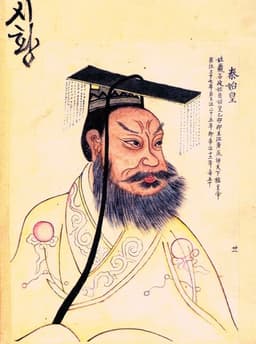
Qin Shi Huang
Emperor · Ancient
85.2Total
Basic Information
Born
1400
-259
Died
1450
-210
Era
Medieval
Ancient
Nationality
Mozambique
China
Occupation
Emperor
Emperor
Civilization
Other
Eastern
Score Comparison
Military (10%)
72.5
80.0
Political (20%)
68.0
90.0
Influence (20%)
59.0
85.0
Legacy (20%)
50.0
90.0
Leadership (15%)
40.0
78.0
Strategy (15%)
57.5
82.0
TOTAL
56.5
85.2
Nyatsimba Mutota — Complete Timeline
1430 AD
Founding of the Mutapa EmpirePolitical Action
Nyatsimba Mutota led a migration north from Great Zimbabwe and founded the Mutapa Empire in the Zambezi valley. He established a new capital at Zvongombe and began territorial expansion.
Impact: regionalconstructive
1440 AD
Conquest of the TavaraWar◆ Major
Nyatsimba Mutota conquered the Tavara people in the Zambezi valley, incorporating their territory into the Mutapa Empire. This victory secured control over fertile agricultural lands and trade routes.
Impact: regional
1445 AD
Establishment of the Mwenemutapa TitlePolitical Action◆ Major
Nyatsimba Mutota adopted the title Mwenemutapa, meaning 'lord of the conquered lands,' formalizing the imperial structure. This title became hereditary and defined the ruler's authority over conquered peoples.
Impact: regionalconstructive
Qin Shi Huang — Complete Timeline
246 BC
Construction of the Mausoleum and Terracotta ArmyOther◆ Major
Qin Shi Huang commissioned a vast mausoleum complex near Xi'an, guarded by thousands of life-sized terracotta soldiers, horses, and chariots. The project employed hundreds of thousands of workers and reflected his obsession with immortality and imperial power.
Impact: global
230 BC
Conquest of the Six Warring StatesWar
From 230 to 221 BCE, Ying Zheng led the Qin state in a series of campaigns that conquered the Han, Zhao, Wei, Chu, Yan, and Qi states. This unified China under a single ruler for the first time, ending the Warring States period.
Impact: global
221 BC
Standardization of Writing, Currency, and MeasurementsReform◆ Major
Qin Shi Huang ordered the standardization of Chinese script, currency, and weights and measures across the unified empire. This facilitated administration, trade, and cultural integration, laying a foundation for future dynasties.
Impact: globalconstructive
Proclamation of the Qin DynastyPolitical Action
After conquering the last independent state, Ying Zheng declared himself Shi Huangdi (First Emperor), founding the Qin Dynasty. He adopted a new title to signify his supreme authority and initiated centralized imperial rule.
Impact: global
214 BC
Initiation of the Great Wall ConstructionOther◆ Major
Qin Shi Huang ordered the connection and extension of existing northern fortifications to create a unified defensive wall against nomadic Xiongnu raids. This project involved massive conscripted labor and became the precursor to the later Great Wall.
Impact: regional
213 BC
Burning of Books and Burying of ScholarsPolitical Action◆ Major
On the advice of Li Si, Qin Shi Huang ordered the burning of historical records and philosophical texts not aligned with Legalist doctrine. He also had 460 Confucian scholars buried alive to suppress dissent and consolidate ideological control.
Impact: nationaldestructive
Expert Analysis
nyatsimba-mutota-vs-qin-shi-huang
### The First Emperor and the Great Builder: Qin Shi Huang and Nyatsimba Mutota
Imagine a scene of stark contrast: In the heart of ancient China, a vast army of life-sized terracotta soldiers stands silent guard over the tomb of a man who commanded the unification of a civilization. Thousands of miles away, in the Zambezi valley of southern Africa, a different kind of monument rises—not of clay, but of stone and gold, the foundations of a new empire carved from migration and conquest. These two figures, Qin Shi Huang of China and Nyatsimba Mutota of the Mutapa Empire, both forged empires from chaos, yet their paths, tools, and legacies could hardly be more different. What drove these two founders, separated by over a millennium and a continent, to such divergent outcomes?
### Origins: The Heir and the Wanderer
Qin Shi Huang was born into a world of war. In 259 BC, the Chinese landscape was fractured into the Warring States, a brutal era of constant conflict where survival demanded ruthless ambition. As a prince of the Qin state, he was raised in a culture of Legalist philosophy—a doctrine that prioritized state power, harsh laws, and absolute obedience over human sentiment. His father died when he was young, leaving him to navigate a court of intrigue and assassination attempts. This crucible forged a ruler who saw unity as the only path to peace, and control as the only guarantee of order.
Nyatsimba Mutota emerged from a different world. Born around 1400 AD, he was a prince of Great Zimbabwe, a powerful trading empire built on gold and cattle. Unlike the brutal competition of China, Mutota’s world was one of relative stability, but also of limits. Great Zimbabwe’s resources were finite, and its population was growing. Mutota was not a conqueror born from war, but a leader driven by necessity—a need for new land, new pastures, and new opportunities. His origin was not a palace of intrigue but a stone city on a hill, watching the horizon for a place to expand.
### Rise to Power: Conquest and Migration
Qin Shi Huang’s rise was a calculated, mechanical process. From 230 to 221 BC, he unleashed a series of military campaigns that systematically dismantled the six rival states: Han, Zhao, Wei, Chu, Yan, and Qi. Each conquest was a chess move, executed with cold precision. His generals employed iron weapons, disciplined infantry, and advanced siege tactics. When the last king surrendered, Ying Zheng did not simply declare victory—he reinvented himself. He proclaimed the title *Shi Huangdi*, the First Emperor, and proclaimed the Qin Dynasty. His power was not inherited; it was seized and sanctified through absolute victory.
Nyatsimba Mutota’s rise was a migration, not a war of annihilation. Around 1430, he led his followers north from Great Zimbabwe into the Zambezi valley. This was not a campaign of conquest but a journey of settlement. He encountered the Tavara people, a farming community. Instead of destroying them, Mutota conquered them—a word that here meant subjugation and incorporation into his growing realm. By 1440, he had absorbed their territory. By 1445, he formalized his rule by adopting the title *Mwenemutapa*, meaning "lord of the conquered lands." His power was built not on a single, decisive victory, but on the slow, steady expansion of influence and control.
### Leadership & Governance: The Bureaucrat and the Builder
Qin Shi Huang’s governance was a revolution. He did not just unify China; he standardized it. In 221 BC, he ordered that all writing, currency, and measurements be made uniform across the empire. This was not mere convenience—it was a weapon against regional identity. He built roads, canals, and a network of granaries. He also commissioned the Great Wall, beginning in 214 BC, connecting existing fortifications into a single barrier against northern nomads. But his rule had a dark side. In 213 BC, on the advice of his chancellor Li Si, he ordered the burning of books and the burying of scholars who opposed his Legalist policies. Knowledge was controlled; dissent was crushed. His leadership was efficient, but terrifying.
Nyatsimba Mutota’s governance was more organic. He did not impose a uniform script or currency; the Mutapa Empire’s economy was based on gold trade with Swahili merchants, and its administration was built on personal loyalty and tribute. He established a royal court, but it was not a bureaucratic machine. Instead, his power rested on his ability to distribute land and cattle, binding local chiefs to him through gifts and marriage. The Mwenemutapa title was not just a name; it was a symbol of a personal covenant between ruler and conquered. There were no burning of books, no standardization of thought. His rule was flexible, allowing local customs to persist under imperial oversight.
### Triumph & Tragedy: The Monument and the Mystery
Qin Shi Huang’s greatest triumph was the unification itself—a feat that set the template for Chinese civilization for two millennia. His mausoleum, begun in 246 BC, is a testament to his ambition: thousands of life-sized terracotta soldiers, each with unique features, guard his tomb to this day. Yet his greatest tragedy was his own mortality. Obsessed with immortality, he consumed mercury pills prescribed by alchemists, which likely hastened his death in 210 BC at age 49. His dynasty collapsed within four years of his death, undone by its own brutality and the hatred of the people he had crushed.
Nyatsimba Mutota’s triumph was building a stable, enduring state. The Mutapa Empire thrived for centuries after his death, controlling gold routes and maintaining independence until the Portuguese arrival in the 1500s. His tragedy is that we know so little of him. No grand tomb, no written chronicle from his own time. His legacy survives in oral traditions and the ruins of stone structures, but the man himself remains a shadow. He built an empire, but not a monument to himself.
### Character & Destiny: The Tyrant and the Patriarch
Qin Shi Huang’s character was forged in paranoia and ambition. He was a tyrant who believed that only absolute control could prevent chaos. His decisions—standardization, book burning, wall building—all reflect a mind that saw the world as a problem to be solved through force. His destiny was to create a unified China, but his personality ensured that his dynasty would not survive him. He could not trust, and so he could not build a system that could outlast his own iron will.
Nyatsimba Mutota’s character was more pragmatic. He was a leader who saw opportunity in movement, not conquest. He did not seek to erase the people he conquered; he sought to incorporate them. His destiny was to found a dynasty that would last for generations, precisely because he did not try to control everything. He was a patriarch, not a tyrant, and his empire reflected that: flexible, adaptive, and enduring.
### Legacy: The Shadow and the Stone
Qin Shi Huang’s legacy is the foundation of China itself. The name "China" derives from his Qin dynasty. His standardization of writing and currency made Chinese civilization coherent. The Great Wall became a national symbol. He is remembered as both a unifier and a monster, a figure of awe and horror. His tomb remains unopened, a mystery that continues to haunt the imagination.
Nyatsimba Mutota’s legacy is the Mutapa Empire, a state that shaped the history of southern Africa. He is remembered in oral tradition as a wise founder, a bringer of order to the Zambezi valley. But his legacy is less visible to the world. No terracotta army guards his memory; no Great Wall marks his domain. His monuments are the ruins of stone enclosures, the names of chiefs, and the gold that once flowed from his lands.
### Conclusion: Two Kinds of Power
The differences between Qin Shi Huang and Nyatsimba Mutota are not merely of scale or geography; they are of philosophy. One believed that unity required uniformity, that control demanded cruelty. The other believed that empire could be built through incorporation, that power could be shared. Both succeeded in founding states that changed history. But one built a monument to himself that still stands; the other built a legacy that endures in the quiet continuity of a people. Their stories remind us that there is no single path to greatness—only the choices we make, and the worlds we leave behind.
Rankings
🥇
Qin Shi HuangLeader
Mil: 80.0Pol: 90.0Inf: 85.0
85.2
🥈
Nyatsimba Mutota
Mil: 72.5Pol: 68.0Inf: 59.0
56.5
+28.7 behind
How This Comparison Works
Algorithm
Each figure is scored on 6 dimensions (0—100 scale) based on structured historical data: Military (10%), Political (20%), Influence (20%), Legacy (20%), Leadership (15%), Strategy (15%). The weighted total produces the final ranking.
Data Sources
Scores are computed from structured sub-indicators in the database. Scale factors adjust for era (Ancient ×0.85, Modern ×1.0) and civilization size (Eastern ×1.05, Other ×0.80) to account for differences in population and military scale.
Maximum 3 Figures
Comparisons are limited to 2—3 figures to ensure readability and statistical meaningfulness.
Error Margins
±5 points per dimension — Sub-scores are derived from historical records with inherent uncertainty. Two figures within 5 points on a dimension should be considered roughly equivalent in that area.
Total Score Accuracy
±3 points overall — The weighted combination of 6 dimensions produces a total score with approximately ±3 points of uncertainty. Differences of less than 3 points are not statistically significant— the figures are effectively tied.
Known Limitations
- Historical records are incomplete and uneven across civilizations
- Figures from oral-tradition societies may be underrepresented
- Occupation labels can misclassify multi-role figures
- Scores measure capability and impact, not moral character
- Quantitative scoring is a comparison tool, not absolute truth
Capability Radar
Military (10%) — Battles & Warfare
Battles
55
85
Win Rate
60
90
Expansion
65
90
Political (20%) — Governance & Reform
Reform
50
95
Diplomacy
55
75
Economy
50
90
Influence (20%) — Cultural & Global Reach
Cultural
45
95
Global
40
85
Legacy (20%) — Historical Impact
Historical
55
95
Longevity
50
95
Leadership (15%) — Power & Stability
Tenure
60
70
Stability
55
65
Strategy (15%) — Tactics & Innovation
Strategy
55
85
Tactics
50
80
Reform
40
95
Similar Comparisons
Comments & Discussion
TerracottaTyrant6/17/2026
Anyone romanticizing Qin Shi Huang as a mere "unifier" is ignoring the Legalist brutality that built the Terracotta Army. He literally buried 460 scholars alive and forced millions into labor. Mutota’s stone citadels, by contrast, reflect organic growth—his migration was a response to resource pressure, not a campaign of total cultural erasure. One hoarded gold and clay soldiers; the other built a trading empire on gold and cattle. I know which legacy I’d rather inherit.
数据拆解师6/17/2026
我不管皇帝们谁更伟大,看数据就行:秦朝统一后仅14年就崩了,而Mutota的Mutapa帝国延续了300多年。Qin的官僚系统太依赖个人独裁——他死后三年,帝国就炸了。Mutota留下的氏族联盟更有弹性。你说兵马俑很壮观?那玩意又没帮他保住王朝。真正的生命力不在规模,而在承上启下的制度。数据不会撒谎。
GoldAndStone6/17/2026
The comparison misses the fundamental divide: Qin standardized writing, currency, and axle widths—he engineered a civilization. Mutota built a tributary state around gold exports and military raids, largely leaving local cultures intact. One was a revolutionary architect of state infrastructure; the other was a charismatic warlord who expanded through clan alliances. They’re both "founders" in name only. Qin’s ghost still haunts Chinese governance; Mutota’s legacy is more a family myth than a po
史诗对照客6/17/2026
别光看权力,看他们死后怎么被人记住。Qin shi huang被历代史官反复鞭挞为暴君,但后世皇帝们学的都是他的集权手段——讽刺又真实。Mutota在津巴布韦几乎是神话人物,没有儒家那套道德审判。这说明什么?秦朝那套写字记史的方式,既是荣耀也是枷锁。而Mutota的缺失记录,反而让他成了自由想象的象征。故事本身就是不同的帝国。
ReformistLens6/17/2026
Both men faced similar structural challenges—fractured polities, unstable succession—but their tools tell the story. Qin deployed total literacy, codified law, and iron-age infrastructure. Mutota relied on oral tradition, sacred stone structures, and the prestige of gold trade with Swahili city-states. The true difference isn't cruelty vs. charisma; it’s the depth of administrative technology. Qin created a state that could replicate itself; Mutota created one dependent on a single leader’s aura