Loading...
This comparison has not been analyzed yet.
One-time AI generation (~1 minute). Scores and timeline are already available below.
Nur ibn Mujahid vs Sabah Al-Ahmad Al-Jaber
Sabah Al-Ahmad Al-Jaber leads by 3.0 pts · 2 figures compared
…

Nur ibn Mujahid
Emperor · Modern
49.1Total
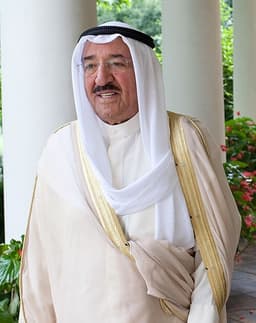
Sabah Al-Ahmad Al-Jaber
Emperor · Modern
52.1Total
Basic Information
Born
1510
1929
Died
1567
—
Era
Modern
Modern
Nationality
Somalia
Kuwait
Occupation
Emperor
Emperor
Civilization
Other
Middle Eastern
Score Comparison
Military (10%)
45.0
11.9
Political (20%)
54.7
72.0
Influence (20%)
50.2
59.0
Legacy (20%)
40.0
44.2
Leadership (15%)
67.0
78.0
Strategy (15%)
38.3
26.5
TOTAL
49.1
52.1
Nur ibn Mujahid — Complete Timeline
1550 AD
Became Emir of AdalPolitical Action◆ Major
Nur ibn Mujahid became emir of the Adal Sultanate after the death of Ahmed Gurey. He rebuilt the state and continued the war against Ethiopia, seeking to avenge Gurey's defeat.
Adal SultanateSuccessionWar
Impact: regional
1559 AD
Siege of HararWar◆ Major
Nur ibn Mujahid successfully defended Harar, the Adal capital, against Ethiopian forces led by Emperor Gelawdewos. The Ethiopian emperor was killed in the battle, a major victory for Adal.
Adal-Ethiopian WarBattleVictory
Impact: regional
1560 AD
Built the Wall of HararCultural◆ Major
Nur ibn Mujahid ordered the construction of the defensive wall around Harar, known as the 'Jugol'. The wall protected the city from Ethiopian attacks and became a symbol of Adal resilience.
ArchitectureDefenseHarar
constructive
Sabah Al-Ahmad Al-Jaber — Complete Timeline
2003 AD
Appointed as Deputy Prime Minister and Foreign MinisterPolitical Action◆ Major
Sabah Al-Ahmad Al-Jaber was appointed Deputy Prime Minister and Minister of Foreign Affairs of Kuwait in 2003. He played a key role in shaping Kuwait's foreign policy, focusing on Gulf diplomacy and regional stability.
DiplomacyGulf Cooperation Council
Impact: regionalconstructive
2006 AD
Accession as Emir of KuwaitPolitical Action◆ Major
Sabah Al-Ahmad Al-Jaber became Emir of Kuwait on January 29, 2006, after the death of Emir Jaber Al-Ahmad Al-Jaber. His accession was confirmed by the National Assembly, marking a smooth succession.
SuccessionKuwaiti Monarchy
Impact: national
2010 AD
Oversaw Economic Reforms and DevelopmentReform
Under Emir Sabah's rule, Kuwait implemented economic reforms including the Kuwait Development Plan (2010-2015) aimed at diversifying the economy away from oil. The plan included infrastructure projects and private sector growth.
Economic ReformDevelopment
Impact: nationalconstructive
2013 AD
Hosted International Humanitarian ConferencesPolitical Action◆ Major
Emir Sabah convened the International Humanitarian Pledging Conference for Syria in Kuwait in 2013, raising over $1.5 billion for humanitarian aid. This established Kuwait as a major humanitarian donor and mediator.
Humanitarian AidSyrian Civil War
Impact: globalconstructive
2014 AD
Mediated Gulf Diplomatic CrisisPolitical Action◆ Major
Emir Sabah mediated the 2014 diplomatic rift between Qatar and other Gulf states, helping to restore relations. His efforts reinforced his reputation as a regional peacemaker and architect of Gulf diplomacy.
DiplomacyGulf Cooperation Council
Impact: regionalconstructive
This comparison has not been analyzed yet.
One-time AI generation (~1 minute). Scores and timeline are already available below.
Rankings
🥇
Sabah Al-Ahmad Al-JaberLeader
Mil: 11.9Pol: 72.0Inf: 59.0
52.1
🥈
Nur ibn Mujahid
Mil: 45.0Pol: 54.7Inf: 50.2
49.1
+3.0 behind
How This Comparison Works
Algorithm
Each figure is scored on 6 dimensions (0—100 scale) based on structured historical data: Military (10%), Political (20%), Influence (20%), Legacy (20%), Leadership (15%), Strategy (15%). The weighted total produces the final ranking.
Data Sources
Scores are computed from structured sub-indicators in the database. Scale factors adjust for era (Ancient ×0.85, Modern ×1.0) and civilization size (Eastern ×1.05, Other ×0.80) to account for differences in population and military scale.
Maximum 3 Figures
Comparisons are limited to 2—3 figures to ensure readability and statistical meaningfulness.
Error Margins
±5 points per dimension — Sub-scores are derived from historical records with inherent uncertainty. Two figures within 5 points on a dimension should be considered roughly equivalent in that area.
Total Score Accuracy
±3 points overall — The weighted combination of 6 dimensions produces a total score with approximately ±3 points of uncertainty. Differences of less than 3 points are not statistically significant— the figures are effectively tied.
Known Limitations
- Historical records are incomplete and uneven across civilizations
- Figures from oral-tradition societies may be underrepresented
- Occupation labels can misclassify multi-role figures
- Scores measure capability and impact, not moral character
- Quantitative scoring is a comparison tool, not absolute truth
Capability Radar
Military (10%) — Battles & Warfare
Battles
25
7
Win Rate
30
7
Expansion
20
10
Political (20%) — Governance & Reform
Reform
45
60
Diplomacy
35
85
Economy
30
65
Influence (20%) — Cultural & Global Reach
Cultural
25
45
Global
15
50
Legacy (20%) — Historical Impact
Historical
30
40
Longevity
20
35
Leadership (15%) — Power & Stability
Tenure
40
70
Stability
30
75
Strategy (15%) — Tactics & Innovation
Strategy
25
14
Tactics
20
19
Reform
35
18
Similar Comparisons
Comments & Discussion
No comments yet. Be the first to share your thoughts!