Loading...
This comparison has not been analyzed yet.
One-time AI generation (~1 minute). Scores and timeline are already available below.
Nirmala Sitharaman vs Tran Duc Luong
Nirmala Sitharaman leads by 7.0 pts · 2 figures compared
…

Nirmala Sitharaman
Politician · Modern
54.2Total
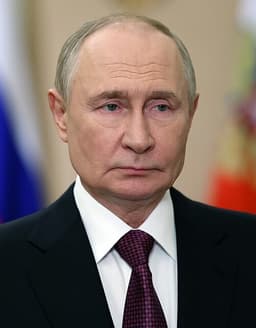
Tran Duc Luong
Politician · Modern
47.2Total
Basic Information
Born
1959
1937
Died
—
—
Era
Modern
Modern
Nationality
India
Vietnam
Occupation
Politician
Politician
Civilization
Indian
Eastern
Score Comparison
Military (10%)
44.2
37.0
Political (20%)
53.8
43.7
Influence (20%)
56.4
47.1
Legacy (20%)
43.3
37.5
Leadership (15%)
72.0
67.0
Strategy (15%)
60.0
57.4
TOTAL
54.2
47.2
Nirmala Sitharaman — Complete Timeline
2019 AD
Appointed first full-time female Finance Minister of IndiaPolitical Action◆ Major
Nirmala Sitharaman was appointed as India's Finance Minister, the first woman to hold the full-time portfolio. She presented the Union Budget in 2019, introducing corporate tax cuts and the 'Vivad se Vishwas' scheme for tax dispute resolution.
FinanceBudgetWomen
Impact: nationalconstructive
2020 AD
Announced the 'Atmanirbhar Bharat' economic packagePolitical Action◆ Major
During the COVID-19 pandemic, Sitharaman announced the
COVID-19StimulusEconomy
Impact: nationalconstructive
2021 AD
Faced criticism over rising fuel prices and inflationPolitical Action
Sitharaman faced public criticism as fuel prices and inflation rose sharply in 2021. She defended the government's policies, citing global factors, but the issue became a political challenge for the BJP government.
InflationFuelEconomy
Impact: nationaldestructive
Tran Duc Luong — Complete Timeline
1992 AD
Appointed Deputy Prime MinisterPolitical Action◆ Major
Tran Duc Luong was appointed Deputy Prime Minister of Vietnam in 1992, overseeing economic affairs during the early stages of Doi Moi. He played a role in implementing market reforms and managing foreign investment.
Deputy Prime MinisterEconomic ReformVietnam
Impact: national
1997 AD
Elected President of VietnamPolitical Action◆ Major
Tran Duc Luong was elected President of Vietnam by the National Assembly on September 24, 1997, succeeding Le Duc Anh. He served as head of state until 2006, focusing on economic development and international integration.
PresidentVietnamHead of State
Impact: national
2000 AD
Oversaw Normalization of US-Vietnam RelationsPolitical Action◆ Major
During Luong's presidency, the United States and Vietnam signed a Bilateral Trade Agreement in 2000, normalizing trade relations. The agreement boosted Vietnam's exports and paved the way for its entry into the World Trade Organization in 2007.
US-VietnamTrade AgreementNormalization
Impact: globalconstructive
2006 AD
Hosted APEC Summit in HanoiPolitical Action◆ Major
Luong presided over the APEC summit in Hanoi in November 2006, showcasing Vietnam's economic reforms and international engagement. The summit enhanced Vietnam's regional standing and attracted foreign investment.
APECSummitVietnam
Impact: regionalconstructive
This comparison has not been analyzed yet.
One-time AI generation (~1 minute). Scores and timeline are already available below.
Rankings
🥇
Nirmala SitharamanLeader
Mil: 44.2Pol: 53.8Inf: 56.4
54.2
🥈
Tran Duc Luong
Mil: 37.0Pol: 43.7Inf: 47.1
47.2
+7.0 behind
How This Comparison Works
Algorithm
Each figure is scored on 6 dimensions (0—100 scale) based on structured historical data: Military (10%), Political (20%), Influence (20%), Legacy (20%), Leadership (15%), Strategy (15%). The weighted total produces the final ranking.
Data Sources
Scores are computed from structured sub-indicators in the database. Scale factors adjust for era (Ancient ×0.85, Modern ×1.0) and civilization size (Eastern ×1.05, Other ×0.80) to account for differences in population and military scale.
Maximum 3 Figures
Comparisons are limited to 2—3 figures to ensure readability and statistical meaningfulness.
Error Margins
±5 points per dimension — Sub-scores are derived from historical records with inherent uncertainty. Two figures within 5 points on a dimension should be considered roughly equivalent in that area.
Total Score Accuracy
±3 points overall — The weighted combination of 6 dimensions produces a total score with approximately ±3 points of uncertainty. Differences of less than 3 points are not statistically significant— the figures are effectively tied.
Known Limitations
- Historical records are incomplete and uneven across civilizations
- Figures from oral-tradition societies may be underrepresented
- Occupation labels can misclassify multi-role figures
- Scores measure capability and impact, not moral character
- Quantitative scoring is a comparison tool, not absolute truth
Capability Radar
Military (10%) — Battles & Warfare
Battles
41
51
Win Rate
47
53
Expansion
52
57
Political (20%) — Governance & Reform
Reform
60
30
Diplomacy
55
40
Economy
60
35
Influence (20%) — Cultural & Global Reach
Cultural
30
10
Global
40
10
Legacy (20%) — Historical Impact
Historical
30
15
Longevity
20
10
Leadership (15%) — Power & Stability
Tenure
65
30
Stability
55
40
Strategy (15%) — Tactics & Innovation
Strategy
53
59
Tactics
54
64
Reform
58
67
Similar Comparisons
Comments & Discussion
No comments yet. Be the first to share your thoughts!